CONSEIL EN ART GRATUIT

x
Commander l'impression Commander l'impressionAcheter l'image haute résolution Acheter l'image haute résolution PartagerPartager
DetailsDetails Ajouter aux favoris Ajouter aux favoris TéléchargerTélécharger Articles similairesArticles similaires X-RayX-Ray DiaporamaDiaporama

So called

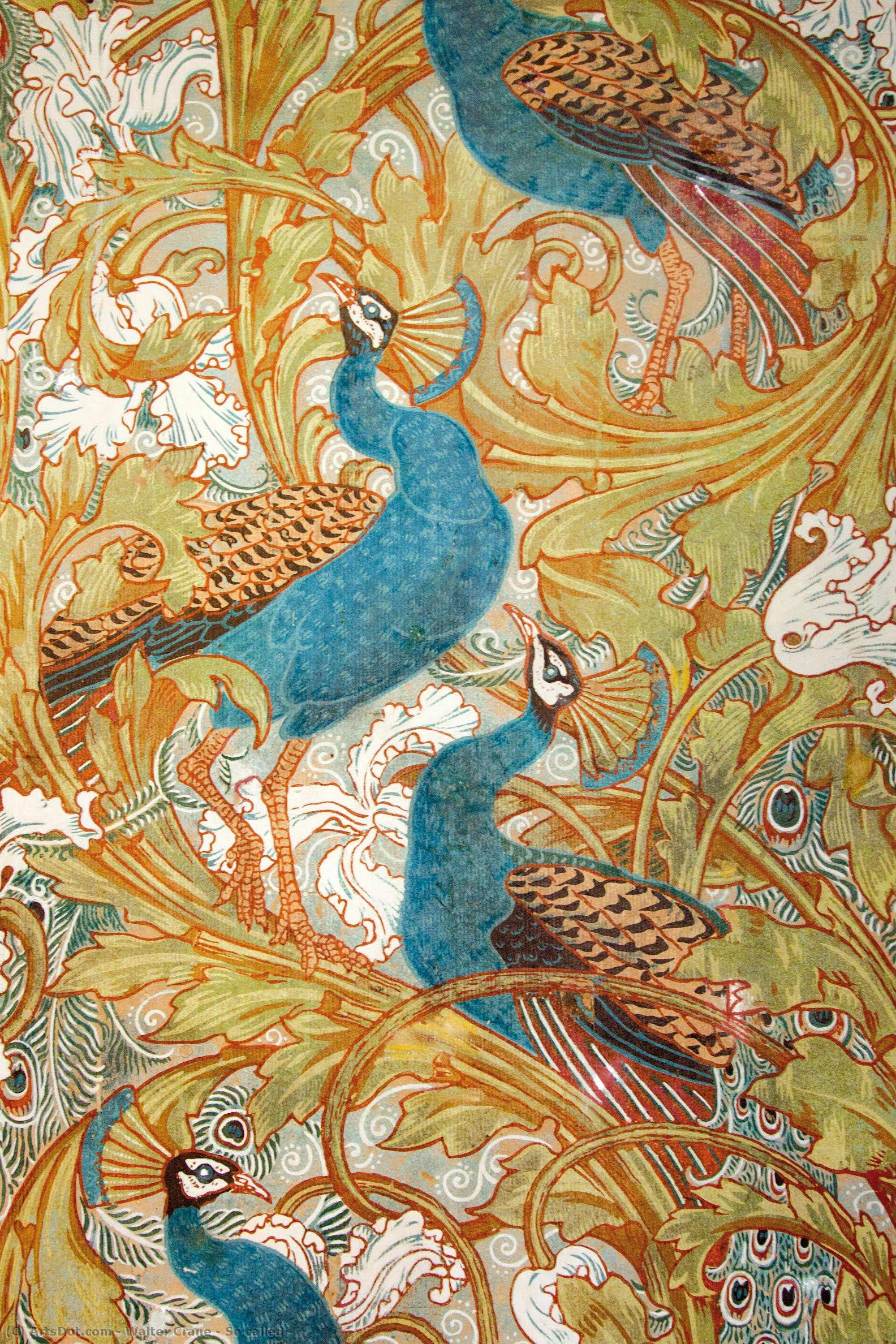
A vibrant wallpaper design by Walter Crane, 'Peacock Garden,' showcasing exotic birds and lush foliage from 1898 Budapest. A beautiful example of Arts & Crafts style.

Découvrez Walter Crane (1845-1915) ! Illustrations enfantines vibrantes, influences préraphaélites & design Arts and Crafts. L'art chez WahooArt !

Reproduction à l'huile faite à la main

Huile sur toile peinte à la main, avec cadre et dimensions personnalisés, réalisée sur commande par nos artistes.

P118B $10
P118H $10
P118W $10
P438Z $10
P508JH $12
P508YH $12
P805H $10
P805Z $10
P919BZ $10
P919G $10
P919XJ $10
P959ZH $10
P968JZ $12
W106C $8
W218G $10
W218JH $8
W218Y $10
W307PJ $10
W316G $10
W316PJ $8
W316Y $10
W398PJ $8
W4111J $10
W500HY $15
W500JH $15
W692G $12
W849H $8
W940BG $15
W953PJ $8

Standard
custom
CM
INCH

Choisissez parmi nos formats prédéfinis qui respectent les proportions originales de l’œuvre.

largeur
hauteur

Vous pouvez saisir vos propres dimensions pour l'adapter à un cadre ou à un espace spécifique. Si la taille sélectionnée ne correspond pas aux proportions de l'image d'origine, nous recadrerons l'œuvre ou prolongerons la peinture avec des éléments peints à la main supplémentaires. Une maquette numérique vous sera envoyée pour approbation avant le début de la production.
Veuillez noter que l'aperçu à l'écran ne reflète pas le recadrage ou l'extension réels. Seule la maquette montrera fidèlement la composition finale.
Bien que des tailles personnalisées soient disponibles, nous vous recommandons de sélectionner une dimension dans la liste prédéfinie afin de préserver les proportions d'origine.

Exemples de personnalisation : remplacer un visage par la photo du client ; ajouter un animal de compagnie (par exemple, remplacer un chat par un chien) ; inclure un message caché en arrière-plan ; modifier le paysage ou les éléments de l'arrière-plan.
Après la commande, l’équipe WahooArt.com contactera le client par e-mail pour obtenir ses instructions et lui fournira une maquette d’aperçu.

Livraison dans le monde entier () en 3 à 4 semaines au lieu des 5 semaines habituelles. (2 juillet). Aucune concession sur la qualité.

why_choose_icon
Livraison express gratuite dans le monde entier

why_choose_icon
Toile de lin de haute qualité
why_choose_icon
Assurance transport complète
why_choose_icon
Garantie de remboursement des frais de douane
why_choose_icon
Garantie de fidélité des couleurs
why_choose_icon
Politique de retour de 60 jours (uniquement en cas de défaut)
why_choose_icon
Garantie de remboursement à 100%
why_choose_icon
Réduction sur les achats groupés

Prix total

-

reproduction

So called

Technique de reproduction

Format de reproduction

-

Prix total final

-

En bref

  • Influences: Walter Crane
  • Year: 1898-1900
  • Notable elements or techniques: Intricate floral design
  • Medium: Wallpaper
  • Subject or theme: Peacocks and foliage
  • Artist: Walter Crane
  • Movement: Arts & Crafts

Quiz d'art

Chaque question ne comporte qu'une seule bonne réponse.

Question 1:
What is the primary subject matter depicted in Walter Crane’s ‘So Called Peacock Garden’?
Question 2:
Walter Crane was associated with which artistic movement?
Question 3:
In what year was Walter Crane’s ‘Peacock Garden’ wallpaper designed?
Question 4:
The ‘Peacock Garden’ wallpaper was originally located in which building?
Question 5:
What is a key characteristic of Walter Crane’s artistic style?

Description de l'œuvre

The Echoes of the Arts and Crafts Movement

Within the walls of the Museum of Applied Arts in Budapest resides a fragment of Victorian eccentricity – a section of wallpaper, dubbed “So Called,” that offers a captivating glimpse into the world of Walter Crane and the burgeoning aesthetic sensibilities of late 19th-century Europe. More than just decorative surface, this vibrant panel is a testament to Crane’s mastery of color, pattern, and his deep engagement with the Arts and Crafts movement, a reaction against the perceived soullessness of industrialization and a fervent return to handcrafted beauty.

Crane, born in Liverpool in 1845, was a pivotal figure bridging the gap between traditional illustration and modern design. His early apprenticeship with William James Linton instilled within him a profound respect for wood-engraving – a painstaking process demanding meticulous observation and an understanding of line and texture. This foundation proved crucial as he evolved into a celebrated artist, producing not only intricate children’s books but also ambitious wallpaper designs that sought to infuse the domestic sphere with artistic merit. The “Peacock Garden” is a prime example of this ambition, showcasing Crane's ability to translate complex ideas – in this case, the revival of decorative arts – into a visually arresting and emotionally resonant surface.

A Symphony of Color and Form

The wallpaper’s design immediately commands attention. Bold peacock feathers dominate the composition, their iridescent blues, greens, and hints of gold cascading across a background of swirling floral motifs and geometric patterns. Crane's use of color is particularly noteworthy; it’s not merely decorative but imbued with a sense of movement and vitality. The layering of hues creates an illusion of depth, drawing the eye into the intricate details of each feather and blossom. The border itself, meticulously rendered in a contrasting palette, further enhances the overall impact, establishing a clear visual hierarchy that guides the viewer’s gaze.

Technically, Crane employed a sophisticated approach to pattern creation. The individual elements – the feathers, flowers, and geometric shapes – are not simply repeated identically; instead, they are subtly varied in scale, orientation, and color, generating a dynamic and engaging visual experience. This careful attention to detail speaks to Crane’s artistic rigor and his desire to elevate wallpaper from a mere functional element to a work of art.

A Window into Budapest's Artistic Soul

The story behind the “Peacock Garden” is as compelling as the design itself. It’s believed that Jenő Radisics, the Museum of Applied Arts’ director at the time, acquired the wallpaper in or around 1898, reflecting his admiration for Walter Crane and the English Arts & Crafts movement. Radisics's conviction that this movement represented a model for Hungarian applied arts is evident not only in his acquisition of the wallpaper but also in the museum’s subsequent exhibitions featuring Crane’s work. The small, windowless room where the wallpaper was originally installed – a director’s residence – further underscores its significance as a symbol of artistic patronage and cultural exchange.

The wallpaper's survival is a remarkable testament to the Museum’s dedication to preserving its collection. It offers a tangible link to a pivotal moment in Hungarian art history, demonstrating how European artistic trends were embraced and adapted within the local context. It also provides a fascinating insight into the personal tastes of a prominent cultural figure – Jenő Radisics – and his commitment to fostering a vibrant and innovative artistic environment.

Symbolism and Emotional Resonance

Beyond its aesthetic qualities, the “Peacock Garden” is rich in symbolism. The peacock itself has long been associated with beauty, pride, and immortality—a fitting emblem for a decorative surface designed to adorn a space of importance. The swirling floral motifs evoke notions of abundance, fertility, and the cyclical nature of life. The overall composition suggests a harmonious blend of natural and artificial elements, reflecting the Arts & Crafts movement’s desire to reconcile industrial production with handcrafted artistry.

Ultimately, “So Called” is more than just a wallpaper; it's an evocative work of art that captures the spirit of its time. It invites us to step into a world of vibrant color, intricate detail, and artistic aspiration—a window into the dreams of Walter Crane and the cultural landscape of Budapest at the turn of the 20th century.


Biographie de l'artiste

Premières années et influences

  • Né: 15 août 1845, Liverpool, Royaume-Uni
  • Décédé: 14 mars 1915

Walter Crane est né dans une famille profondément immergée dans les arts. Son père, Thomas Crane, était un peintre de portraits et miniaturiste respecté, tandis que son frère, également nommé Thomas, a poursuivi une carrière d'illustrateur. Cet environnement familial a favorisé une atmosphère créative dès son plus jeune âge.

Le développement artistique de Crane a été considérablement façonné par l’exposition à divers mouvements artistiques, notamment la Fraternité Prérraphaélite. L’accent mis par les Prérraphaélites sur le détail, les couleurs vibrantes et la narration a profondément influencé ses sensibilités esthétiques.

Il était également un étudiant dévoué de John Ruskin, un artiste et critique renommé dont les écrits ont défendu l’artisanat et l’intégration de l’art dans la vie quotidienne. Les idées de Ruskin sur la responsabilité sociale dans l’art ont résonné chez Crane tout au long de sa carrière.

Carrière artistique : Peinture, illustration et arts décoratifs

Le parcours artistique de Crane s’étendait à divers domaines, notamment la peinture, l’illustration et les arts décoratifs. Il a démontré une polyvalence dans différents médiums.

Il est peut-être le plus connu pour ses contributions aux illustrations de livres pour enfants. Son travail dans ce domaine se caractérisait par des couleurs vibrantes, des détails complexes et des représentations imaginatives du monde naturel.

Un motif récurrent dans les illustrations de Crane était le thème de « l’enfant dans le jardin », qui est devenu un trait distinctif de la littérature pour enfants anglaise à l’époque victorienne. Cette focalisation reflétait une vision idéalisée de l’innocence enfantine et du lien avec la nature.

  • Œuvres notables: "Walter Crane : De A à Z", "The Sweep" (Le Ramasseur) et "Summer" (L’Été).

Les talents artistiques de Crane s’étendaient au-delà des livres pour enfants ; il a également créé des carreaux en céramique, des papiers peints et d’autres arts décoratifs, démontrant son engagement envers les idéaux du mouvement Arts and Crafts visant à intégrer l’art dans la vie quotidienne.

Style artistique et techniques

Le style de Crane se caractérisait par un souci du détail méticuleux, des plans de couleurs plats et un fort sens du design. Il utilisait souvent des techniques de gravure sur bois et de lithographie pour obtenir ses effets visuels distinctifs.

Ses illustrations intégraient fréquemment des éléments d’art japonais, reflétant l’influence croissante du japonisme en Angleterre victorienne. Cela se manifeste dans son utilisation de contours audacieux, de formes simplifiées et de motifs décoratifs.

Crane a su marier avec brio les influences prérraphaélites, le réalisme social et l'esthétique japonaise pour créer un style unique et immédiatement reconnaissable.

Héritage et influence

L’héritage de Walter Crane s’étend bien au-delà de sa propre production artistique. Il est considéré comme un pionnier de l’illustration de livres pour enfants, ayant considérablement façonné le développement du genre.

Son insistance sur le design et le détail a contribué à établir l’illustration de livres pour enfants comme un domaine distinct au sein du monde de l’art plus large.

Crane a influencé des générations d’artistes et d’illustrateurs, dont Randolph Caldecott et Kate Greenaway, qui ont davantage popularisé les livres illustrés pour enfants.

Il a défendu l’intégration de l’art dans la vie quotidienne grâce à son travail dans les arts décoratifs, conformément aux principes du mouvement Arts and Crafts. Son engagement envers le socialisme et sa volonté d'utiliser son art comme un outil de changement social ont également laissé une marque durable.

Expositions et collections

Les œuvres de Walter Crane sont exposées dans des musées prestigieux à travers le monde, témoignant de la reconnaissance internationale de son talent. On peut admirer ses illustrations au Christ's Hospital Museum à Horsham, au Royaume-Uni, au British Museum et au Victoria and Albert Museum.

Ses œuvres font également partie de collections privées, contribuant à maintenir vivant l’héritage de cet artiste majeur du XIXe siècle.

Walter Crane

Walter Crane

1845 - 1915 , Royaume-Uni

En bref

  • Artistes Influencés:
    • Randolph Caldecott
    • Kate Greenaway
  • Artistes Influents:
    • John Ruskin
    • William James Linton
  • Date De Décès: 14 mars 1915
  • Date De Naissance: 15 août 1845
  • Lieu De Naissance: Liverpool, Royaume-Uni
  • Mouvement Artistique:
    • Prérraphaélisme
    • Arts and Crafts
  • Nationalité: Britannique
  • Nom Complet: Walter Crane
  • Oeuvres Notables:
    • Walter Crane : De A à Z
    • The Sweep (Le Ramasseur)
    • Summer (L’Été)