Aperçu en situation Aperçu en RA Passer au format impression Passer au format image numérique Partager
Détails Guide imprimable Ajouter aux favoris Télécharger Articles similaires Radiographie Voir le diaporama Statistiques

Soldiers Gambling

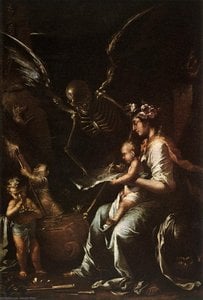
Salvator Rosa's 'Soldiers Gambling' captures a clandestine scene of camaraderie amidst dark barracks – a Baroque study of human nature and fleeting pleasures. Explore this iconic painting.

Découvrez Salvator Rosa (1615-1673), peintre baroque italien rebelle ! Paysages dramatiques, thèmes philosophiques & influence sur Luca Giordano. Explorez ses chefs-d'œuvre !

Reproduction à l'huile faite à la main

Huile sur toile peinte à la main, avec cadre et dimensions personnalisés, réalisée sur commande par nos artistes. ( Passer au format impression Passer au format image numérique)

P118B $10
P118H $10
P118W $10
P438Z $10
P508JH $12
P508YH $12
P805H $10
P805Z $10
P919BZ $10
P919G $10
P919XJ $10
P959ZH $10
P968JZ $12
W106C $8
W218G $10
W218JH $8
W218Y $10
W307PJ $10
W316G $10
W316PJ $8
W316Y $10
W398PJ $8
W4111J $10
W500HY $15
W500JH $15
W692G $12
W849H $8
W940BG $15
W953PJ $8

Format standard
personnalisé
CM
INCH

Choisissez parmi nos formats prédéfinis qui respectent les proportions originales de l’œuvre.

largeur
hauteur

Vous pouvez saisir vos propres dimensions pour l'adapter à un cadre ou à un espace spécifique. Si la taille sélectionnée ne correspond pas aux proportions de l'image d'origine, nous recadrerons l'œuvre ou prolongerons la peinture avec des éléments peints à la main supplémentaires. Une maquette numérique vous sera envoyée pour approbation avant le début de la production.
Veuillez noter que l'aperçu à l'écran ne reflète pas le recadrage ou l'extension réels. Seule la maquette montrera fidèlement la composition finale.
Bien que des tailles personnalisées soient disponibles, nous vous recommandons de sélectionner une dimension dans la liste prédéfinie afin de préserver les proportions d'origine.

Exemples de personnalisation possibles : remplacer un visage par la photo du client ; ajouter un animal de compagnie (par exemple, remplacer un chat par un chien) ; inclure un message caché en arrière-plan ; modifier le paysage ou les éléments de l'arrière-plan.
Après la commande, l’équipe WahooArt.com contactera le client par e-mail pour recueillir ses instructions et lui fournira une maquette d’aperçu

Livraison dans le monde entier () en 3 à 4 semaines au lieu des 5 semaines habituelles. (26 septembre). Aucun compromis sur la qualité.

why_choose_icon
Livraison express gratuite dans le monde entier
why_choose_icon
Toile de lin de haute qualité
why_choose_icon
Assurance transport complète
why_choose_icon
Garantie de remboursement des droits de douane
why_choose_icon
Garantie de fidélité des couleurs
why_choose_icon
Garantie de retour de 100 jours (uniquement en cas de défaut)
why_choose_icon
Garantie de remboursement à 100%
why_choose_icon
Tarifs dégressifs sur quantité

Prix total

$ 272

reproduction

Soldiers Gambling

Technique de reproduction

Format de la reproduction

-

Prix total final

$ 272

L'essentiel de l'œuvre

  • Title: Soldiers Gambling
  • Dimensions: 77.1 x 61.6 cm
  • Medium: Oil on canvas
  • Subject or theme: Gambling, soldiers
  • Artist: Salvator Rosa
  • Movement: Baroque
  • Year: 1656-8

Quiz d'art

Chaque question ne comporte qu'une seule bonne réponse.

Question 1:
What is the primary setting depicted in Salvator Rosa’s ‘Soldiers Gambling’?
Question 2:
The presence of a book on the dining table in the painting most likely suggests what activity?
Question 3:
Salvator Rosa is primarily associated with which artistic movement?
Question 4:
Which of the following best describes Salvator Rosa’s style as compared to other artists of his time?
Question 5:
Based on the painting’s atmosphere, what mood does Salvator Rosa seem to be conveying?

A Shadowed Encounter in the Baroque Night

In the dim, flickering light of a secluded chamber, Salvator Rosa’s Soldiers Gambling unfolds as a masterclass in Baroque tension and atmospheric storytelling. The scene pulls the viewer into a clandestine world where the boundaries between camaraderie and conflict blur within the shadows. Four figures are anchored in this nocturnal setting, their forms emerging from the darkness with a dramatic intensity characteristic of the 17th-century Neapolitan school. One man kneels in focused concentration, while others stand vigil around him, creating a tight, intimate composition that feels both private and voyeuristic. The presence of a simple chair and a dining table, upon which rests a solitary book, suggests a momentary pause in the rigors of military life—a brief, intellectual, or perhaps even desperate diversion amidst the chaos of war.

The technique employed by Rosa is nothing short of evocative, utilizing chiaroscuro to sculpt the figures out of an enveloping gloom. The interplay of light and deep shadow does more than just define shape; it breathes life into the very air of the room, suggesting a heavy, musk-filled atmosphere where every movement feels weighted with significance. As a painter known for his rebellious spirit and unorthodox style, Rosa eschews the polished perfection of his contemporaries in favor of a rugged naturalism. The brushwork, though controlled, possesses an energy that mirrors the restless nature of the soldiers themselves, making the textures of cloth, wood, and skin feel palpably real to the observer.

Symbolism and the Human Condition

Beyond the immediate narrative of a card game, the painting serves as a profound meditation on the fleeting nature of pleasure and the unpredictability of fate. The act of gambling, set within such a somber environment, acts as a powerful metaphor for the precariousness of life during the Baroque era. Each card turned and each wager placed carries the weight of destiny, mirroring the soldiers' own lives which could be altered by a single moment of fortune or misfortune. The inclusion of the book on the table introduces a fascinating layer of symbolism; it hints at the duality of the soldier’s existence—the tension between the raw, instinctual drive for survival and the lingering presence of civilization and intellect.

For the discerning collector or interior designer, this piece offers an unparalleled emotional depth. It is not merely a depiction of a historical moment, but an invitation to contemplate the shadows within the human psyche. The painting’s dark palette and dramatic composition make it a commanding centerpiece for a sophisticated study, a library, or a formal lounge, where its moody elegance can anchor the room's aesthetic. Owning a high-quality reproduction of this masterpiece allows one to bring the haunting beauty and historical gravity of Salvator Rosa’s vision into a modern space, providing a window into an era defined by passion, peril, and the enduring search for light amidst the dark.


Biographie de l'artiste

La Jeunesse et la Formation

Salvator Rosa, peintre baroque italien, poète et graveur, est né à Arenella, près de Naples, soit le 20 juin, soit le 21 juillet 1615. Sa mère, Giulia Greca Rosa, était issue d'une famille grecque sicilienne. Malgré les aspirations de son père à ce qu’il devienne avocat ou prêtre, Salvator manifesta très tôt une préférence pour les arts.

L'Ascension Artistique

La carrière artistique de Salvator Rosa se caractérisa par un style non conventionnel et extravagant qui le distinguait de ses contemporains. Il fut actif à Naples, Rome et Florence, son œuvre étant influencée par le naturalisme de Ribera et le classicisme de Poussin. Cependant, il refusa d'être lié à un style ou un mouvement particulier.
  • Pythagore émergeant des enfers (Kimbell Art Museum, Fort Worth, États-Unis), l’une de ses œuvres les plus célèbres, illustre son mélange unique de thèmes philosophiques et artistiques.
  • Le Baptême de l'eunuque (Chrysler Museum of Art, Norfolk, États-Unis) témoigne de sa capacité à insuffler un drame intense même dans des récits bibliques mineurs.

Influences et Héritage

L’œuvre de Salvator Rosa eut une influence significative sur le développement de l'art baroque. Son impact se retrouve dans les œuvres d'artistes ultérieurs, tels que Luca Giordano, qui continuaient à repousser les limites de l'expression artistique. Liens importants : Profil de Salvator Rosa sur WahooArt Wikipédia: Salvatore Rosa

Un Artiste Rebelle et Innovant

Rosa était un artiste profondément rebelle, défiant les conventions artistiques de son époque. Ses paysages sombres et sauvages, souvent peuplés de figures marginales, étaient une rupture avec les vues classiques et idéalisées de Claude Lorrain. Il est considéré comme un précurseur du romantisme, anticipant l'accent mis sur la puissance brute de la nature et l'exploration des émotions intenses. Son œuvre a connu un regain d’intérêt à la fin du XXe siècle, bien qu’il ne soit pas classé parmi les plus grands peintres baroques par les historiens de l'art contemporains, il est reconnu comme un peintre de paysages innovant et un pionnier du mouvement romantique.

Conclusion

La vie et l'œuvre de Salvator Rosa continuent de fasciner les amateurs d’art et les historiens. Son style non conventionnel et sa rébellion constante contre les normes de son temps ont consolidé sa place dans l'histoire de l'art baroque. En tant que peintre, poète et graveur, il demeure une figure énigmatique, et son œuvre continue d'inspirer de nouvelles générations d’artistes et d’amateurs d’art. Musées : Kimbell Art Museum, Chrysler Museum of Art
Salvator Rosa

Salvator Rosa

1615 - 1673 , Italie

En bref

  • Artistic Movement Or Style: Baroque
  • Artists Or Movements Influenced By This Artist:
    • Luca Giordano
    • Romantisme
  • Artists Who Influenced This Artist:
    • Ribera
    • Poussin
  • Date Of Birth: 20 juin ou 21 juillet 1615
  • Date Of Death: 15 mars 1673
  • Full Name: Salvator Rosa
  • Nationality: Italien
  • Notable Artworks:
    • Pythagore sortant des enfers
    • Le baptême de l'eunuque
  • Place Of Birth (City And Country): Arénèlle, Italie
Explorez des œuvres d'art classées par thèmes, styles et caractéristiques.