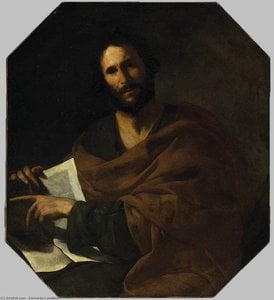
Bernardo Cavallino : Le Visionnaire Baroque de Naples
Bernardo Cavallino demeure l'une des figures les plus énigmatiques et captivantes de l'histoire de l'art baroque italien. Né à Naples le 25 août 1616, il émerge d'une cité bouillonnante de ferveur artistique sous le règne des Habsbourg, pourtant sa vie reste enveloppée du même mystère qui entoure ses toiles. Si les détails biographiques sont d'une rareté frustrante — contraignant les chercheurs à reconstruire son parcours par des indices circonstanculations et des analyses stylistiques — ses œuvres survivantes s'expriment avec un éclat indéniable. Cavallino possédait un talent singulier pour capturer la tension dramatique, créant un langage visuel qui semblait à la fois intensément personnel et profondément épique. Sa production peut paraître remarquablement éparse comparée aux maîtres prolifiques de son époque, mais chaque coup de pinceau porte un poids de puissance expressive qui lui a permis de perdurer dans les annales de l'histoire de l'art.
Les fondements de la maîtrise de Cavallino furent posés au sein de la vibrante école napolitaine, probablement sous la tutelle de Massimo Stanzione. Cette association fut cruciale, car Stanzione était un géant des commandes religieuses, reconnu pour son usage monumental du clair-obscur. De cette formation, Cavallino hérita une compréhension profonde du jeu dramatique entre l'ombre et la lumière, une technique qui deviendrait la pierre angulaire de son identité. Son vocabulaire visuel fut enrichi par ses liens avec des artistes tels qu'Andrea Vaccaro, favorisant un esprit de collaboration qui élargit sa palette technique. Cependant, l'influence la plus transformatrice fut sans doute celle d'Anthony van Dyck. En absorbant l'élégance et le portrait sophistiqué du maître flamand, Cavallino introduisit une esthétique raffinée, presque lyrique, dans la tradition napolitaine plus brute, créant ainsi une synthèse de styles unique.
Une Synthèse de Lumière et d'Émotion
Ce qui distingue Cavallino de ses contemporains est sa capacité à jeter un pont entre deux mondes apparemment opposés : le ténébrisme sombre et chargé d'ombres du Caravage et l'idéalisme serein et lumineux propre aux œuvres de Murillo. Cette alchimie stylistique lui permit de dépeindre des scènes d'extase spirituelle profonde et de souffrance humaine déchirante avec une égale grâce. Sa technique ne visait jamais la simple imitation ; elle recherchait la résonance émotionnelle. Entre ses mains, la lumière ne se contente pas d'éclairer une scène — elle la sanctifie ou expose la vulnérabilité brute de ses sujets.
Cette maîtrise est peut-être plus évidente dans ses célèbres compositions bibliques et hagiographiques :
- La Guérison de Tobie : Peinte entre 1640 et 1644, cette œuvre sert d'exemple radiant de sa capacité à utiliser un détail méticuleux et une lumière magistrale pour insuffler la vie aux récits sacrés.
- Lot et ses filles : Dans ce chef-d'œuvre de 1644, Cavallino présente un paysage d'une désolation hantante, utilisant la rudesse du cadre caverneux pour accentuer le poids psychologique du récit biblique.
- Le Martyre de Saint Étienne : Ici, l'artiste atteint le sommet du drame baroque, mêlant des ombres intenses à un sentiment de présence divine pour explorer l'intersection entre la foi et l'agonie mortelle.
Héritage et Importance Historique
Bien que sa vie fut fauchée en 1656 — une année marquée par la tragédie à Naples — Cavallino a laissé derrière lui un héritage qui continue de fasciner les historiens de l'art. Il ne s'est pas contenté de suivre les tendances du baroque napolitain ; il les a affinées, injectant un sentiment d'intimité et une élégance poétique dans un genre souvent caractérisé par la grandiosité. Sa capacité à équilibrer les ombres lourdes de la tradition caravagesque avec une source lumineuse délicate, presque éthérée, a créé un pont entre le réalisme intense du début du XVIIe siècle et les styles plus décoratifs et émotifs qui suivirent.
Aujourd'hui, Cavallino est célébré comme un artiste d'une profonde sensibilité. Ses œuvres, conservées dans des institutions prestigieuses telles que le Musée du Prado à Madrid, servent de fenêtres sur une période de transition spirituelle et artistique intense. Il demeure le maître du chef-d'œuvre "à petite échelle", prouvant que même au sein d'un corpus limité, un artiste peut capturer les complexités infinies de l'âme humaine par la manipulation soigneuse de la lumière, de l'ombre et de la grâce.
Questions et réponses
Où puis-je consulter l'ensemble des œuvres de Bernardo Cavallino ?
Retrouvez toutes les œuvres de Bernardo Cavallino sur ce site en consultant sa page Toutes les œuvres d'art.
Où puis-je admirer les œuvres de Bernardo Cavallino dans une galerie en 3D ?
Une visite virtuelle est possible : la page Musée en 3D de Bernardo Cavallino présente les œuvres de l'artiste dans une galerie en trois dimensions.
Comment trouver des œuvres de Bernardo Cavallino par thème ?
Pour trouver des œuvres de Bernardo Cavallino sur un thème spécifique, consultez la page Par mots-clés de l'artiste, qui regroupe les œuvres par mot-clé.