x
Aperçu en situationAperçu en situation Visualiser en RAVisualiser en RA Commander l'impression Commander l'impressionAcheter l'image haute résolution Acheter l'image haute résolution EnvoyerEnvoyer
Détails de l'œuvreDétails de l'œuvre Ajouter aux favoris Ajouter aux favoris TéléchargerTélécharger Articles similairesArticles similaires RadiographieRadiographie DiaporamaDiaporama

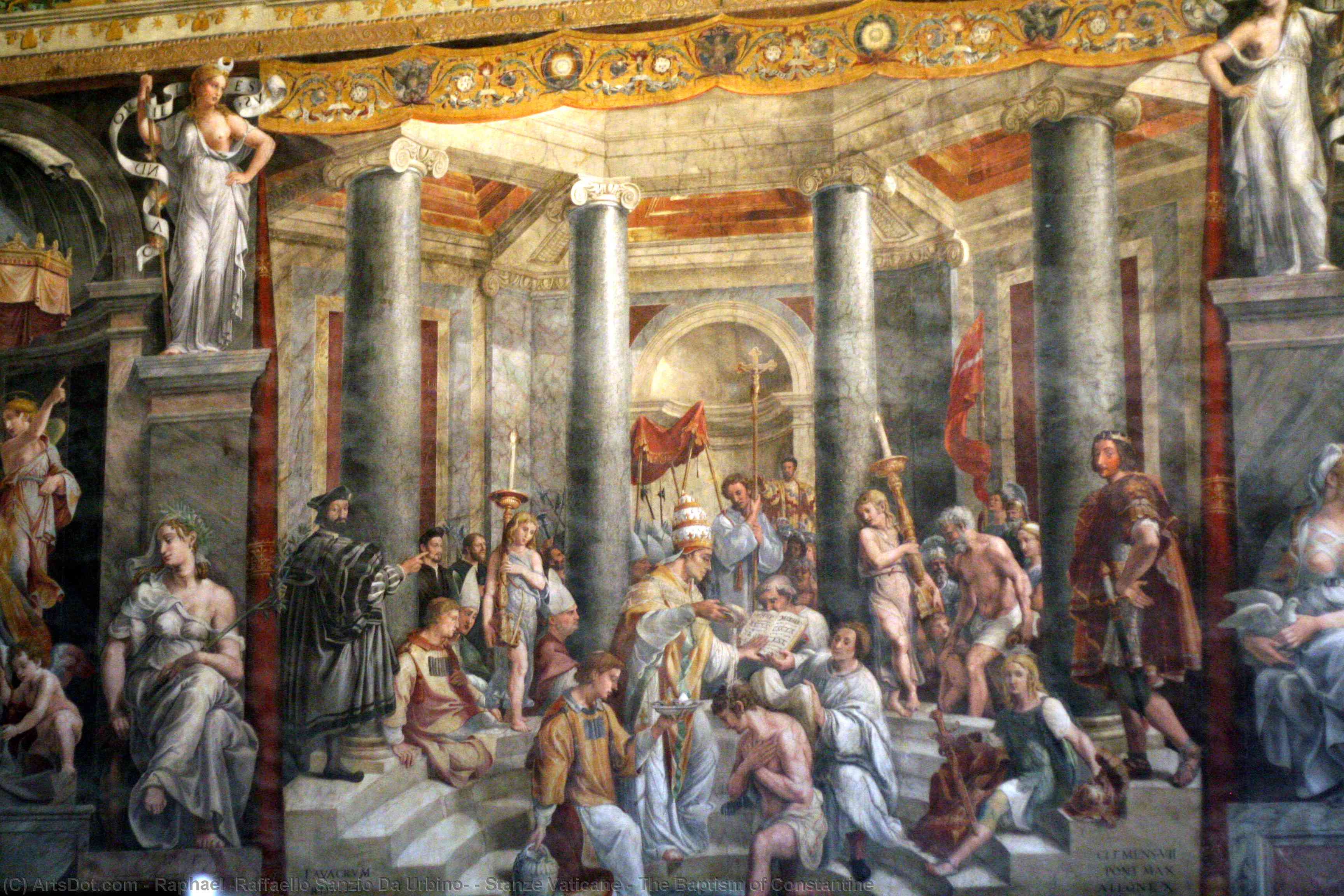
Stanze Vaticane - The Baptism of Constantine

Raphael’s breathtaking Stanze Vaticane – The Baptism of Constantine captures the solemn grandeur of Early Byzantine art, showcasing harmonious composition and luminous color palettes within a masterful fresco depicting Constantine's pivotal baptism.

Découvrez Raphaël (1483-1520), le maître de la Renaissance italienne réputé pour son élégance, sa clarté et ses compositions harmonieuses. Explorez les œuvres emblématiques telles que 'La Scuola di Atene', les Madones et les fresques qui définissent la beauté classique. #ArtRenaissance #Italie

Reproduction à l'huile faite à la main

Huile sur toile peinte à la main, avec cadre et dimensions personnalisés, réalisée sur commande par nos artistes. (Commander l'impression Commander l'impressionAcheter l'image haute résolution Acheter l'image haute résolution)

P118B $10
P118H $10
P118W $10
P438Z $10
P508JH $12
P508YH $12
P805H $10
P805Z $10
P919BZ $10
P919G $10
P919XJ $10
P959ZH $10
P968JZ $12
W106C $8
W218G $10
W218JH $8
W218Y $10
W307PJ $10
W316G $10
W316PJ $8
W316Y $10
W398PJ $8
W4111J $10
W500HY $15
W500JH $15
W692G $12
W849H $8
W940BG $15
W953PJ $8

Format standard
sur mesure
CM
INCH

Choisissez parmi nos formats prédéfinis qui respectent les proportions originales de l’œuvre.

largeur
hauteur

Vous pouvez saisir vos propres dimensions pour l'adapter à un cadre ou à un espace spécifique. Si la taille sélectionnée ne correspond pas aux proportions de l'image d'origine, nous recadrerons l'œuvre ou prolongerons la peinture avec des éléments peints à la main supplémentaires. Une maquette numérique vous sera envoyée pour approbation avant le début de la production.
Veuillez noter que l'aperçu à l'écran ne reflète pas le recadrage ou l'extension réels. Seule la maquette montrera fidèlement la composition finale.
Bien que des tailles personnalisées soient disponibles, nous vous recommandons de sélectionner une dimension dans la liste prédéfinie afin de préserver les proportions d'origine.

Exemples de personnalisation possibles : remplacer un visage par la photo du client ; ajouter un animal de compagnie (par exemple, remplacer un chat par un chien) ; inclure un message caché en arrière-plan ; modifier le paysage ou les éléments de l'arrière-plan.
Après la commande, l’équipe WahooArt.com contactera le client par e-mail pour recueillir ses instructions et lui fournira une maquette d’aperçu

Livraison dans le monde entier () en 3 à 4 semaines au lieu des 5 semaines habituelles. (5 septembre). Aucun compromis sur la qualité.

why_choose_icon
Livraison express gratuite dans le monde entier

why_choose_icon
Toile de lin de qualité supérieure
why_choose_icon
Assurance transport complète
why_choose_icon
Garantie de remboursement des droits de douane
why_choose_icon
Garantie de fidélité des couleurs
why_choose_icon
Politique de retour de 60 jours (uniquement en cas de défaut)
why_choose_icon
Garantie de remboursement à 100%
why_choose_icon
Offre de tarifs dégressifs

Prix total

$ 272

reproduction

Stanze Vaticane - The Baptism of Constantine

Technique de reproduction

Format de la reproduction

-

Prix total

$ 272

Informations clés

  • Notable elements or techniques: Classical forms & harmonious comp.
  • Year: 1511
  • Medium: Fresco
  • Influences: Federico da Montefeltro
  • Movement: Early Byzantine Art
  • Title: Stanze Vaticane - The Baptism of Constantine
  • Subject or theme: Christianity

Stanze Vaticane - The Baptism of Constantine: A Symphony of Faith and Classical Grace

The Stanze Vaticane – The Baptism of Constantine by Raphael stands as an enduring testament to the artistic brilliance of the High Renaissance, a fresco that transcends mere depiction to embody the spiritual fervor of its time. Located within the Apostolic Palace in Rome, this monumental artwork is not simply a visual record; it’s a carefully crafted narrative designed to communicate profound theological concepts through masterful technique and harmonious composition. Its enduring appeal lies in its ability to resonate with viewers across centuries, captivating imaginations with its luminous colors and serene beauty.

Historical Context: Constantine's Conversion and the Dawn of Christian Patronage

The painting commemorates a pivotal moment in European history – Emperor Constantine I’s conversion to Christianity in 312 AD. Prior to this event, Christianity faced persecution under Roman emperors; however, Constantine’s victory at Milvian Bridge marked a dramatic shift, propelling Christianity into the mainstream of imperial power and ushering in an era of unprecedented patronage for religious art. Pope Sylvester I commissioned Raphael to depict this transformative occasion, recognizing the importance of commemorating such a significant spiritual milestone. The fresco reflects the burgeoning humanist spirit of the Renaissance alongside deep-seated Christian beliefs, demonstrating how intellectual curiosity fueled artistic innovation.

Style and Technique: Raphael’s Classical Influence

Raphael's distinctive style is immediately recognizable—a harmonious blend of classical ideals with Byzantine influences. He meticulously studied the sculptures of antiquity, particularly those of Michelangelo Buonarroti, incorporating elements of sculptural form into his fresco cycle. The use of *sfumato*, a technique pioneered by Leonardo da Vinci, lends an ethereal quality to the figures and drapery, blurring outlines and creating subtle gradations of light and shadow that imbue the scene with depth and realism. Raphael’s masterful handling of color—particularly the rich reds and blues—creates a vibrant palette that enhances the emotional impact of the composition. The fresco employs linear perspective, skillfully positioning the viewer within the space depicted and reinforcing the sense of grandeur and solemnity.

Symbolism: Representing Divine Grace and Imperial Legitimacy

The Stanze Vaticane is replete with symbolic imagery designed to convey theological significance. Constantine’s baptism represents purification from sin and acceptance of divine grace—a central tenet of Christian faith. The horse, traditionally associated with imperial power, symbolizes the emperor's dominion over pagan rulers and his embrace of Christianity as a unifying force. Pope Sylvester I stands as a figure of authority and piety, representing the Church’s role in guiding humanity towards spiritual enlightenment. Furthermore, the architectural setting—the Vatican Basilica—underscores the sanctity of the occasion and reinforces its importance within Christian tradition.

Emotional Impact: Tranquility Amidst Triumph

Despite depicting a momentous historical event, Raphael achieves an extraordinary feat of artistic serenity. The figures are rendered with dignified composure, conveying both solemn reverence and palpable emotion. The luminous colors and harmonious composition evoke a sense of tranquility that contrasts sharply with the turbulent political landscape of Constantine’s time. Viewing this fresco inspires contemplation on faith, conversion, and the enduring power of art to communicate profound spiritual truths—a legacy that continues to captivate audiences today.

Biographie de l'artiste

**Jeunesse et formation**

Raphaël (Raffaello Sanzio da Urbino), un peintre et architecte italien renommé, est né entre le 28 mars et le 6 avril 1483, dans la petite mais culturellement significative ville d'Urbino. Son père, Giovanni Santi, était peintre de cour du duc, lui offrant une exposition précoce au monde artistique. Après le décès de son père à l’âge de onze ans, Raphaël a vraisemblablement géré l’atelier familial, consolidant ainsi sa base artistique.

**Carrière artistique et influences**

Le parcours artistique de Raphaël peut être divisé en trois phases distinctes, chacune marquée par un style unique :
  • Premières années à Umbrie : caractérisée par l'influence de son père et l'ambiance culturelle d’Urbino.
  • Période florentine (1504-1508) : absorbant les traditions artistiques de Florence, qui a considérablement façonné son style.
  • Période romaine (1508-1520) : travaillant pour deux papes et leurs associés, produisant certaines de ses œuvres les plus célèbres, notamment l’école des Athènes dans la stanza della segnatura du Vatican.

**Œuvres notables et héritage**

Certaines des œuvres notables de Raphaël comprennent :

**Influence et héritage**

L'influence de Raphaël sur l'art est profonde, avec son œuvre constituant un pilier du grand Siècle. Son style serein et harmonieux a servi de modèle à la peinture néoclassique, comme le note l’historien d’art Johann Joachim Winckelmann. Malgré l'influence ultérieure du style de Michel-Ange, Raphaël reste l'un des artistes les plus vénérés de l'histoire. Voir le profil de Raphaël sur WahooArt
Raphaël

Raphaël

1483 - 1520 , Italie

L'essentiel de l'artiste

  • Artistes Influents:
    • Giovanni Santi
    • Pietro Perugino
  • Date De Décès: 6 avril 1520
  • Date De Naissance: 28 mars 1483
  • Influences Artistiques: Peinture néoclassique
  • Lieu De Naissance: Urbino, Italie
  • Mouvement Artistique: Haute Renaissance
  • Nationalité: Italienne
  • Nom Complet: Raphaël (Raffaello Sanzio)
  • Œuvres Notables:
    • L'École d'Athènes
    • Madone Esterházy
    • La Transfiguration
    • Les Stanze Vaticanes
Explorez des œuvres d'art classées par thèmes, styles et caractéristiques.