CONSEIL EN ART GRATUIT

x
Commander la reproduction Commander la reproductionAcheter l'image haute résolution Acheter l'image haute résolution PartagerPartager
DétailsDétails Ajouter aux favoris Ajouter aux favoris TéléchargerTélécharger Articles similairesArticles similaires RadiographieRadiographie DiaporamaDiaporama

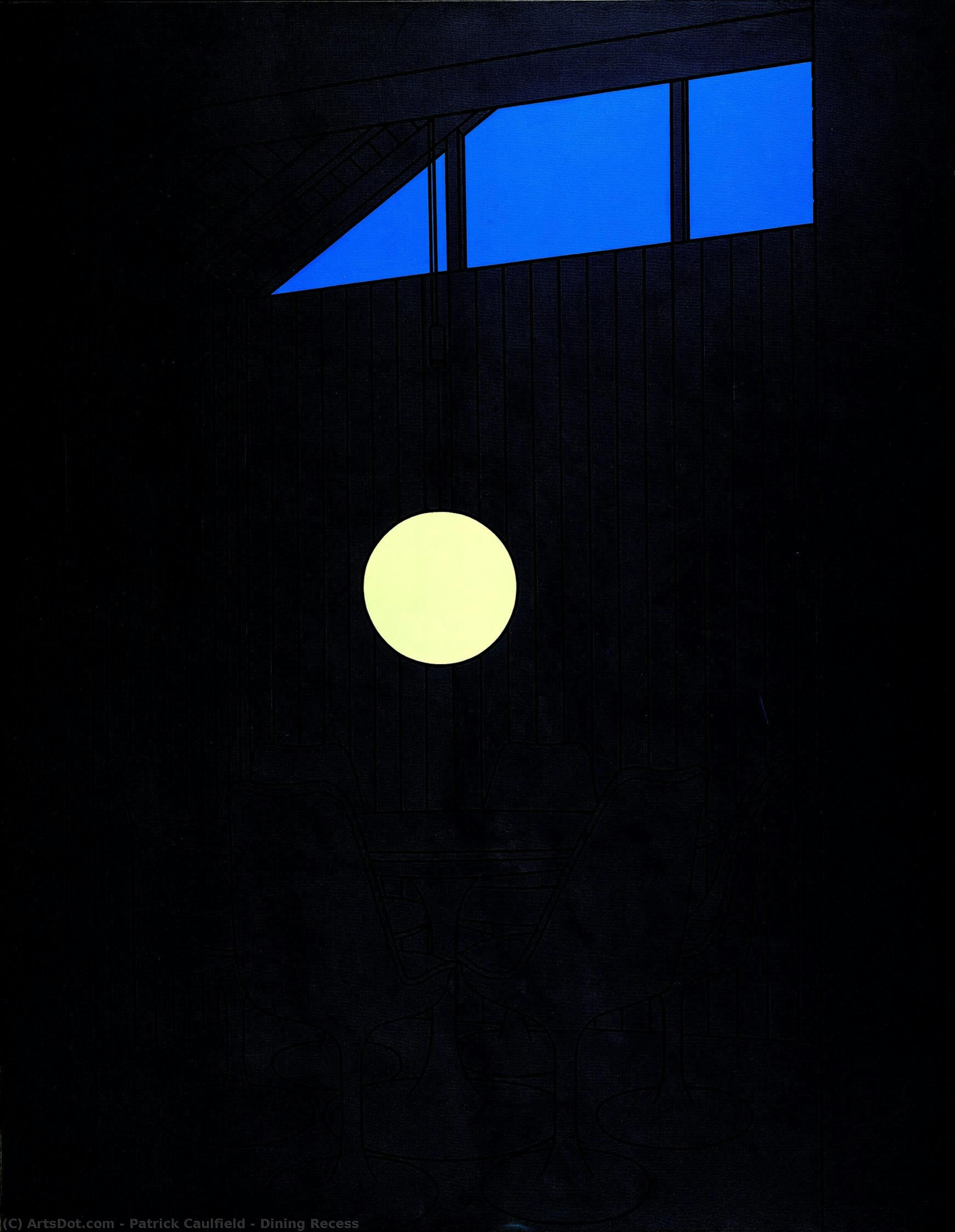
Dining Recess

Patrick Caulfield’s ‘Dining Recess,’ a stark black-and-white masterpiece from 1972, presents an eerie, minimalist dining scene with a dominant globe lamp and molded tulip chairs, capturing the loneliness of observation within British Pop Art.

Découvrez le tableau emblématique 'Cross' de Patrick Caulfield – une œuvre minimaliste audacieuse et magistrale. Explorez cette pièce unique de Pop Art et son importance historique.

Giclée / Impression d'art

Impression giclée ou sur toile de qualité musée, avec une production rapide et des finitions au choix.

P118B $10
P118H $10
P118W $10
P438Z $10
P508JH $12
P508YH $12
P805H $10
P805Z $10
P919BZ $10
P919G $10
P919XJ $10
P959ZH $10
P968JZ $12
W106C $8
W218G $10
W218JH $8
W218Y $10
W307PJ $10
W316G $10
W316PJ $8
W316Y $10
W398PJ $8
W4111J $10
W500HY $15
W500JH $15
W692G $12
W849H $8
W940BG $15
W953PJ $8

Standard
custom
CM
INCH

Choisissez parmi nos formats prédéfinis qui respectent les proportions originales de l’œuvre.

largeur
hauteur

Vous pouvez saisir vos propres dimensions pour vous adapter à un cadre ou à un espace spécifique. Si la taille sélectionnée ne correspond pas aux proportions de l'image originale, nous recadrerons l'œuvre ou étendrons l'image avec une bordure en miroir ou une couleur unie. Une maquette numérique vous sera envoyée pour approbation avant le début de la production.
Veuillez noter que l'aperçu à l'écran ne reflète pas le recadrage ou l'extension réelle. Seule la maquette montrera avec précision la composition finale.
Bien que des tailles personnalisées soient disponibles, nous vous recommandons de choisir une dimension dans la liste prédéfinie afin de préserver les proportions originales.

Livraison dans le monde entier () en 2 semaines au lieu des 4/5 semaines habituelles. (4 juillet)

why_choose_icon
Livraison express gratuite dans le monde entier

why_choose_icon
Toile de lin de haute qualité
why_choose_icon
Assurance transport complète
why_choose_icon
Garantie de remboursement des frais de douane
why_choose_icon
Garantie de fidélité des couleurs
why_choose_icon
Politique de retour de 60 jours (uniquement en cas de défaut)
why_choose_icon
Garantie de remboursement à 100%
why_choose_icon
Réduction sur les achats groupés

Prix total

-

reproduction

Dining Recess

Giclée / Impression d'art

Format de reproduction

-

Prix total final

-

En bref

  • Medium: Painting
  • Title: Dining Recess
  • Influences:
    • Magritte
    • Duchamp
  • Subject or theme: Dining, Loneliness
  • Artist: Patrick Caulfield
  • Notable elements: Circular lamp, tulip chairs
  • Year: 1972

Description de l'œuvre

Patrick Caulfield’s ‘Dining Recess’: A Study in Isolation and Design

Patrick Caulfield's “Dining Recess,” completed in 1972, is more than just a depiction of a dining room; it’s a meticulously crafted meditation on loneliness, observation, and the subtle power of design. Measuring an imposing 274 x 213 cm, this large-scale work immediately commands attention with its stark simplicity – a brilliant white globe lamp dominating the center, juxtaposed against the muted grey tones of the interior space. This deliberate contrast isn’t merely aesthetic; it actively heightens the sense of mystery and unease that permeates the entire composition.

  • The Iconography of Absence: Caulfield famously stated his intention to present “something that’s either happened or is about to happen,” creating a palpable feeling of anticipation and, crucially, isolation. The absence of human figures amplifies this effect, forcing the viewer into an uncomfortable role as detached observer.
  • A Dialogue with Design History: The inclusion of Eero Saarinen's iconic ‘tulip’ chairs – frequently featured in design books of the era – isn’t accidental. Caulfield was deeply interested in the social implications of interior design, using these familiar objects to ground the scene in a specific historical context while simultaneously questioning their function and purpose within this unsettling tableau.
  • Technique and Impact: Caulfield's signature style—characterized by flat areas of color and bold black outlines—is employed with masterful precision here. The meticulous rendering of the lamp, the chairs, and even the wall texture creates a deceptively realistic effect, further emphasizing the strangeness of the scene.

Exploring the Roots of Minimalism

Caulfield’s artistic journey was profoundly shaped by his early exposure to Surrealism and Dada movements, particularly the work of René Magritte and Marcel Duchamp. This influence is evident in “Dining Recess” through its conceptual approach – a deliberate rejection of traditional representational art in favor of exploring ideas and emotions through simplified forms and carefully considered compositions. The minimalist aesthetic, so central to Caulfield’s work, was a direct response to the burgeoning Pop Art movement of the 1960s, which sought to challenge established artistic conventions by embracing popular culture imagery.

Symbolism and Emotional Resonance

The dominant image of the lamp within “Dining Recess” is particularly evocative. It functions as a visual metaphor for illumination – both literal and metaphorical – yet its inability to dispel the gloom of the room suggests a deeper, perhaps unresolvable, sense of darkness. The empty dining table itself becomes a symbol of missed connections, lost opportunities, or simply the quiet contemplation of solitude. The clock on the wall adds another layer of complexity, hinting at the passage of time and the inevitability of change – themes frequently explored in Caulfield’s work.

Historical Context and Significance

Created in 1972, “Dining Recess” reflects a pivotal moment in British art history. Caulfield was part of a generation of artists who were pushing the boundaries of traditional painting while simultaneously engaging with the social and cultural shifts of the time. His work is now recognized as a key example of minimalist Pop Art, demonstrating a unique ability to combine conceptual rigor with striking visual impact. This piece represents a significant contribution to Caulfield’s oeuvre and offers a compelling insight into his artistic vision.


Biographie de l'artiste

Patrick Caulfield: The Minimalist Maestro of Bold Color

Patrick Joseph Caulfield (1936-2005) stands as a pivotal figure in British Pop Art, recognized for his distinctive aesthetic – deceptively simple compositions dominated by flat areas of color and punctuated by stark black outlines. Born in Acton, London, Caulfield’s artistic journey began with an early fascination for graphic design and sculpture, shaping the trajectory of his groundbreaking visual language. He honed his skills at Chelsea School of Art before graduating from Wimbledon College of Arts in 1960, establishing himself as a freelance illustrator and designer. Early Influences: Caulfield’s formative years were steeped in Surrealism and Dada movements, particularly the unsettling explorations of René Magritte and Marcel Duchamp. These artists challenged conventional notions of representation, fostering within Caulfield a rebellious spirit and an unwavering appreciation for conceptual art—a conviction that questioned established artistic hierarchies and championed intellectual rigor alongside visual impact. This initial exposure profoundly shaped his stylistic sensibilities, informing his later embrace of minimalist principles. The Rise of Pop Art: Embracing the burgeoning Pop Art movement in the mid-1960s, Caulfield swiftly adopted its core tenets – a deliberate engagement with popular culture and an audacious deployment of bold visual elements to convey meaning beyond mere surface appearance. His seminal ‘Cross’ painting exemplifies this approach brilliantly; distilling complex philosophical ideas into a deceptively uncomplicated graphic form, it became an emblem of the movement's commitment to clarity and intellectual provocation. The stark black outline against vibrant color served as a deliberate antithesis to traditional artistic conventions, signaling Caulfield’s desire to disrupt established aesthetic norms. Signature Style: Caulfield’s signature style quickly solidified into a recognizable visual idiom: geometric shapes rendered in flat hues against black backgrounds. This technique prioritized absolute clarity of form and color over laborious detail—a conscious decision rooted in his belief that “the simplest thing is often the most powerful.” He famously stated, "I want to make things as simple as possible." This unwavering dedication to reductive aesthetics distinguished Caulfield from many of his contemporaries and established a lasting stylistic legacy within British art history. It’s a style characterized by its uncompromising elegance and its ability to communicate profound ideas with remarkable efficiency. Notable Works & Achievements: Caulfield's artistic output extended far beyond painting, demonstrating his versatility as an artist and designer. He conceived striking stained glass windows for Ivy Restaurant, integrating color and geometric forms into architectural spaces—a testament to his collaborative spirit and his understanding of art’s role in shaping environments. Furthermore, he contributed significantly to set designs for theatrical productions like ‘Party Game’ and ‘Rhapsody’ at the Royal Opera House, cementing his reputation as a multidisciplinary creative visionary. His inclusion in the 2004 Saatchi Collection fire tragically resulted in the loss of numerous artworks—a poignant reminder of the vulnerability inherent in artistic legacies—yet Caulfield's enduring influence continues to resonate within the art world. He was awarded Commander of the Order of the British Empire (CBE) by Queen Elizabeth II in 1996, recognizing his distinguished service to the arts and culture. His work is held in prominent collections worldwide, ensuring that his distinctive vision persists as a testament to the enduring power of understated artistry. Legacy & Influence: Patrick Caulfield’s artistic legacy transcends individual artworks; he profoundly impacted subsequent generations of artists with his unwavering commitment to simplicity and bold visual expression. His reductive style served as inspiration for countless designers and illustrators, establishing a lasting aesthetic tradition rooted in clarity and impactful color palettes—a stylistic influence that continues to shape contemporary visual culture. Caulfield’s work remains celebrated for its intellectual rigor combined with its arresting beauty, securing his place among Britain’s most influential artists of the 20th century.
Patrick Caulfield

Patrick Caulfield

1936 - 2005 , Royaume-Uni

En bref

  • Artistic Movement Or Style: Pop Art
  • Artists Or Movements Influenced By This Artist: ['Minimalisme']
  • Artists Who Influenced This Artist:
    • Andy Warhol
    • Jasper Johns
  • Date Of Birth: 29 janvier 1936
  • Date Of Death: 29 septembre 2005
  • Full Name: Patrick Joseph Caulfield
  • Nationality: Britannique
  • Notable Artworks:
    • Cross
    • Greece expiring…
    • Les demoiselles d’Avignon vues de derrière
  • Place Of Birth: Acton, Royaume-Uni
Explorez des œuvres d'art classées par thèmes, styles et caractéristiques.