Aperçu en situation Aperçu en RA Passer au format impression Passer au format image numérique Partager
Détails Guide Ajouter aux favoris Télécharger Articles similaires Radiographie Voir le diaporama Statistiques

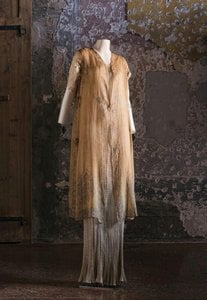
Experience Mariano Fortuny’s iconic Delphos gown, a luxurious 1910s pleated dress inspired by ancient Greece and celebrated for its flowing silhouette and shimmering textures – perfect for adding timeless elegance to your collection.

Mariano Fortuny (1871-1949) était un peintre espagnol renommé pour ses tissus innovants, le modèle Delphos et ses créations éclairages théâtraux révolutionnaires. Découvrez son influence orientaliste et son héritage artistique durable.

Reproduction à l'huile faite à la main

Huile sur toile peinte à la main, avec cadre et dimensions personnalisés, réalisée sur commande par nos artistes. ( Passer au format impression Passer au format image numérique)

P118B $10
P118H $10
P118W $10
P438Z $10
P508JH $12
P508YH $12
P805H $10
P805Z $10
P919BZ $10
P919G $10
P919XJ $10
P959ZH $10
P968JZ $12
W106C $8
W218G $10
W218JH $8
W218Y $10
W307PJ $10
W316G $10
W316PJ $8
W316Y $10
W398PJ $8
W4111J $10
W500HY $15
W500JH $15
W692G $12
W849H $8
W940BG $15
W953PJ $8

Format standard
personnalisé
CM
INCH

Choisissez parmi nos formats prédéfinis qui respectent les proportions originales de l’œuvre.

largeur
hauteur

Vous pouvez saisir vos propres dimensions pour l'adapter à un cadre ou à un espace spécifique. Si la taille sélectionnée ne correspond pas aux proportions de l'image d'origine, nous recadrerons l'œuvre ou prolongerons la peinture avec des éléments peints à la main supplémentaires. Une maquette numérique vous sera envoyée pour approbation avant le début de la production.
Veuillez noter que l'aperçu à l'écran ne reflète pas le recadrage ou l'extension réels. Seule la maquette montrera fidèlement la composition finale.
Bien que des tailles personnalisées soient disponibles, nous vous recommandons de sélectionner une dimension dans la liste prédéfinie afin de préserver les proportions d'origine.

Exemples de personnalisation possibles : remplacer un visage par la photo du client ; ajouter un animal de compagnie (par exemple, remplacer un chat par un chien) ; inclure un message caché en arrière-plan ; modifier le paysage ou les éléments de l'arrière-plan.
Après la commande, l’équipe WahooArt.com contactera le client par e-mail pour recueillir ses instructions et lui fournira une maquette d’aperçu

Livraison dans le monde entier () en 3 à 4 semaines au lieu des 5 semaines habituelles. (21 septembre). Aucun compromis sur la qualité.

why_choose_icon
Livraison express gratuite dans le monde entier
why_choose_icon
Toile de lin de haute qualité
why_choose_icon
Assurance transport complète
why_choose_icon
Garantie de remboursement des droits de douane
why_choose_icon
Garantie de fidélité des couleurs
why_choose_icon
Garantie de retour de 100 jours (uniquement en cas de défaut)
why_choose_icon
Garantie de remboursement à 100%
why_choose_icon
Tarifs dégressifs sur quantité

Prix total

$ 272

reproduction

None

Technique de reproduction

Format de la reproduction

-

Prix total final

$ 272

An example of the renowned Delphos gown of the multifaceted artist Mariano Fortuny (1871–1949) came into the collection of the Museum of Applied Arts in 2001. The original owner of this casual dress made in the 1910s was Klára Zichy (1875–1946), the wife of Endre Hadik-Barkóczy and considered one of Hungary’s most beautiful women. This dress was considered a luxury item and was made fashionable by the famous celebrities of the day, the dancer Isadora Duncan and the actress Sarah Bernhardt. The person who dreamt up the Delphos gown was Fortuny’s wife, Henriette Negrin (1877–1965), and so the patent was registered under her name.This pleated dress created in 1907 and called the Delphos was probably inspired by the statue “The Charioteer of Delphi,” which was discovered in 1896 in three parts. The original purpose of this richly pleated dress was to show off the natural beauty of the female body without a corset. A genuine movement had begun in several areas of Europe to free women from this unhealthy piece of attire, however it remained in style despite this.This Greek-inspired dress was at first only worn as a housedress, but it proved to be too long for this. It was possible to adjust the length and width of the gown by pulling a cord adorned with glass Murano beads running along the side seams and the arm holes. The dense, vertical pleating, which may have contained as many as 450 folds, was first made by hand, and then by using heated copper or ceramic rods. Fortuny also designed dress materials himself. Besides black, the Delphos gown was also available in coral red or ultramarine blue. It was worn with a belt or some other Fortuny creation, such as a Knossos scarf or a tunic inspired by the Greek Peplos.

Biographie de l'artiste

Early Life and Inspiration

Mariano Fortuny y Marsal (1838-1874), painter orientalist spanish, was born in Grenada on May 5, 1838, to a modest family of artists. When Fortuny was three, his father died suddenly — a loss he carried the rest of his life. After his father’s death, his mother moved the family first to Paris, france, where mariano's mother introduced him to various textiles and fabrics that would later influence his creativity.

Artistic Talents and Inventions

Mariano Fortuny showcased his artistic talents from a young age, demonstrating skills in painting, photography, sculpting, architecture, etching, and theatrical stage lighting. His inventions, including over twenty patented between 1901 and 1934, revolutionized the world of theater design.
  • He developed the fortuny cyclorama dome, a quarter dome-shaped structure of plaster or cloth, which used indirect lighting to create a seamless transition between scenes.
  • His treatise "eclairage scenique" (1904) described his discovery of reflecting light off different surfaces, changing its color, intensity, and properties.

Notable Contributions and Collaborations

Mariano Fortuny's work gained widespread recognition in the 1920s. He collaborated with notable figures, including:
  • Richard Wagner, a german composer, whose operas inspired mariano to paint scenes.
  • The famous opera house, La Scala of Milan, where he installed his dome, adapting it for the larger theater and inventing a suction fan to maintain its taut structure.

Legacy and Later Life

Mariano Fortuny passed away on May 3, 1949, in venice, italy. His work inspired french novelist Marcel Proust, and his life was depicted in pere gimferrer's novel "fortuny." Mariano’s legacy continues to influence the world of theatrical design.
  • Explore more about mariano fortuny's inventions and designs at WahooArt's collection.
  • Discover the impact of his work on theatrical lighting in The Museum Destroyed by Fire (united states), a story of an unfortunate event that shaped american art history, available at WahooArt's blog.

Selected Paintings by Mariano Fortuny and Other Artists

  • Mariano Fortuny: Teagown (museum of fine arts, boston, united states), available at WahooArt's collection.
  • Marc Chagall: Study to 'song of songs iv' (naive art / primitivism), available at WahooArt.com/@@/8xyhdc-marc-chagall-study-to-song-of-songs-iv
  • Pablo Picasso: Clarinet (analytical cubism, oil on canvas), available at WahooArt.com/@@/8xz53k-vincent-van-gogh-tree-roots
  • Vincent van Gogh: Tree Roots (50 x 100 cm, post-impressionism, oil on canvas), available at WahooArt.com/@@/8xz53k-vincent-van-gogh-tree-roots

Mariano Fortuny

Mariano Fortuny

1871 - 1949 , Espagne

En bref

  • Artistic Movement Or Style: Orientalism art
  • Artists Or Movements Influenced By This Artist: ['Marcel Proust']
  • Artists Who Influenced This Artist: ['Richard Wagner']
  • Date Of Birth: May 11, 1871
  • Date Of Death: May 3, 1949
  • Full Name: Mariano Fortuny y Marsal
  • Nationality: Spanish
  • Notable Artworks:
    • Teagown
    • Portrait of Henriette Fortuny
  • Place Of Birth: Granada, Spain
Explorez des œuvres d'art classées par thèmes, styles et caractéristiques.