Aperçu en situation Visualiser en RA Passer au format impression Passer au format numérique Envoyer
Détails de l'œuvre Guide Ajouter aux favoris Télécharger l'image Articles similaires Radiographie Diaporama Statistiques

Autoportrait

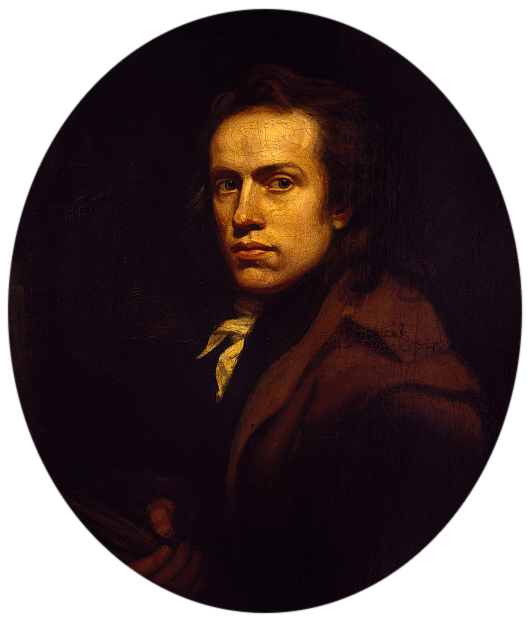
Découvrez l'Autoportrait de John Opie (1789), chef-d'œuvre baroque au clair-obscur intense. Huile sur toile, histoire de l'art cornish.

John Opie RA (1761-1807) était un peintre cornique renommé pour ses portraits de personnalités importantes et son style rappelant Rembrandt. Académicien royal et écrivain artistique.

Reproduction à l'huile faite à la main

Huile sur toile peinte à la main, avec cadre et dimensions personnalisés, réalisée sur commande par nos artistes. ( Passer au format impression Passer au format numérique)

Corner sample of the P118B picture frame: polystyrène moulé, 5 cm wide and 3 cm thick
P118B €10
Corner sample of the P118H picture frame: polystyrène moulé, 5 cm wide and 3 cm thick
P118H €10
Corner sample of the P118W picture frame: polystyrène moulé, 5 cm wide and 3 cm thick
P118W €10
Corner sample of the P438Z picture frame: polystyrène moulé, 5.5 cm wide and 3.5 cm thick
P438Z €10
Corner sample of the P508JH picture frame: polystyrène moulé, 7 cm wide and 3.5 cm thick
P508JH €12
Corner sample of the P508YH picture frame: polystyrène moulé, 7 cm wide and 3.5 cm thick
P508YH €12
Corner sample of the P805H picture frame: polystyrène moulé, 5 cm wide and 3.5 cm thick
P805H €10
Corner sample of the P805Z picture frame: polystyrène moulé, 5 cm wide and 3.5 cm thick
P805Z €10
Corner sample of the P919BZ picture frame: polystyrène moulé, 7 cm wide and 3.5 cm thick
P919BZ €10
Corner sample of the P919G picture frame: polystyrène moulé, 7 cm wide and 3.5 cm thick
P919G €10
Corner sample of the P919XJ picture frame: polystyrène moulé, 7 cm wide and 3.5 cm thick
P919XJ €10
Corner sample of the P959ZH picture frame: polystyrène moulé, 5 cm wide and 3 cm thick
P959ZH €10
Corner sample of the P968JZ picture frame: polystyrène moulé, 6 cm wide and 4 cm thick
P968JZ €12
Corner sample of the W106C picture frame: bois massif, 5 cm wide and 3 cm thick
W106C €8
Corner sample of the W218G picture frame: bois massif, 5 cm wide and 3 cm thick
W218G €10
Corner sample of the W218JH picture frame: bois massif, 5 cm wide and 3 cm thick
W218JH €8
Corner sample of the W218Y picture frame: bois massif, 5 cm wide and 3 cm thick
W218Y €10
Corner sample of the W307PJ picture frame: bois massif, 6 cm wide and 3 cm thick
W307PJ €10
Corner sample of the W316G picture frame: bois massif, 6 cm wide and 3 cm thick
W316G €10
Corner sample of the W316PJ picture frame: bois massif, 6 cm wide and 3 cm thick
W316PJ €8
Corner sample of the W316Y picture frame: bois massif, 6 cm wide and 3 cm thick
W316Y €10
Corner sample of the W398PJ picture frame: bois massif, 5 cm wide and 3 cm thick
W398PJ €8
Corner sample of the W4111J picture frame: bois massif, 6.5 cm wide and 3.5 cm thick
W4111J €10
Corner sample of the W500HY picture frame: bois massif, 7 cm wide and 5 cm thick
W500HY €15
Corner sample of the W500JH picture frame: bois massif, 7 cm wide and 5 cm thick
W500JH €15
Corner sample of the W692G picture frame: bois massif, 8 cm wide and 4 cm thick
W692G €12
Corner sample of the W849H picture frame: bois massif, 5 cm wide and 3 cm thick
W849H €8
Corner sample of the W940BG picture frame: bois massif, 7.5 cm wide and 4.5 cm thick
W940BG €15
Corner sample of the W953PJ picture frame: bois massif, 6 cm wide and 3.5 cm thick
W953PJ €8

Format standard
sur mesure
CM
INCH

Choisissez parmi nos formats prédéfinis qui respectent les proportions originales de l’œuvre.

largeur
hauteur

Saisissez la largeur et la hauteur souhaitées, pour s'adapter à votre cadre ou à votre mur. Cette œuvre est peinte à la main ; ainsi, pour un format de forme différente, l'artiste peut peindre un peu plus autour du tableau ou réduire légèrement les bords — c'est vous qui choisissez. Nous vous envoyons une maquette numérique pour approbation avant que la peinture ne commence. L'image présentée sur cette page ne reflète pas le résultat réel — seule la maquette le fait.

Exemples de personnalisation possibles : remplacer un visage par la photo du client ; ajouter un animal de compagnie (par exemple, remplacer un chat par un chien) ; inclure un message caché en arrière-plan ; modifier le paysage ou les éléments de l'arrière-plan.
Après la commande, l’équipe WahooArt.com contactera le client par e-mail pour recueillir ses instructions et lui fournira une maquette d’aperçu

Livraison dans le monde entier () en 3 à 4 semaines au lieu des 5 semaines habituelles. (27 octobre). Aucun compromis sur la qualité.

Livraison express gratuite dans le monde entier
Toile de lin de qualité supérieure
Assurance transport complète
Garantie de remboursement des droits de douane
Garantie de fidélité des couleurs
Politique de retour de 100 jours (uniquement en cas de défaut)
Garantie de remboursement à 100%
Offre de tarifs dégressifs

Prix total

€ 239

Autoportrait

Technique de reproduction

Format de la reproduction

-

Prix total

€ 239

Informations clés

  • Dimensions: 70 x 60 cm
  • Medium: Huile sur toile
  • Title: Autoportrait
  • Subject or theme: Autoportrait
  • Notable elements or techniques: Clair-obscur, éclairage dramatique

Quiz d'art

Chaque question ne comporte qu'une seule bonne réponse.

Question 1:
Quel mouvement artistique est le plus fortement reflété dans l'« Autoportrait » de John Opie ?
Question 2:
L'arrière-plan sombre dans l'« Autoportrait » sert principalement à :
Question 3:
D'après le texte fourni, quel était le début de la carrière de John Opie avant de devenir peintre ?
Question 4:
En quelle année John Opie est-il né ?
Question 5:
Le texte mentionne que le succès précoce d'Opie était largement dû au mentorat de quelle figure ?

Le Regard Enigmatique : Dévoiler l'Autoportrait de John Opie

L'« Autoportrait » de John Opie, peint en 1789, n'est pas une simple ressemblance ; c'est une fenêtre soigneusement construite sur l'âme d'un talent artistique en pleine éclosion. Réalisée à l'huile sur toile, cette composition ovale capte immédiatement l'attention par son clair-obscur dramatique — une manipulation magistrale de la lumière et de l'ombre qui plonge le spectateur dans une atmosphultère de profonde introspection. Le portrait dépeint Opie lui-même, non pas comme une figure triomphante, mais comme un homme contemplatif, le regard fixé directement sur l'observateur, nous invitant à partager ses pensées et ses émotions. Le choix de cette pose particulière — une légère inclinaison de la tête, un froncement de sourcils subtil — suggère un esprit aux prises avec des idées, une intensité tranquille qui contraste avec la gloire naissante du jeune artiste.

Self-Portrait by John Opie

Drame Baroque et Racines Cornoises

Le style d'Opie est profondément ancré dans la tradition baroque, un mouvement célèbre pour sa théâtralité, son intensité émotionnelle et son usage dramatique de la lumière. L'influence de Caravage et de Rembrandt — des maîtres incontestés du clair-obscur — est manifeste dans l'œuvre d'Opie. Le contraste saisissant entre les zones éclairées du visage et des vêtements et les ombres profondes qui enveloppent l'arrière-plan crée une sensation de profondeur et de volume, attirant notre attention vers la figure centrale. Cette technique n'était pas purement esthétique ; c'était un choix délibéré pour transmettre un état émotionnel puissant — ici, un mélange de sérieux, d'intelligence et peut-être même de mélancolie. Né à Trevellas, en Cornouailles, la sensibilité artistique d'Opie a été profondément façonnée par son héritage cornique, ce qui se révèle dans la rudesse de ses traits et les tons terreux qui dominent la palette.

Une Étude de Forme et de Texture

Au-delà de l'éclairage dramatique, un examen plus attentif révèle la méticulosité d'Opie. L'artiste utilise habilement les lignes pour définir les contours du visage, des vêtements et des cheveux, créant une impression de solidité et de forme. La superposition de la peinture — une technique connue sous le nom d'empâtement — ajoute de la texture à la surface, particulièrement dans le rendu du tissu drapé sur ses épaules et les détails délicats de ses mains. On remarque les subtiles variations de couleur et de ton qui suggèrent le jeu de la lumière sur différentes surfaces. Cette observation et cette exécution minutieuses témoignent de l'engagement d'Opie envers le réalisme, véritable signature de son style.

Symbolisme et Portraiture de l'Esprit

Le portrait transcende la simple ressemblance ; il s'agit d'une représentation symbolique du monde intérieur de l'artiste. Le regard direct invite à l'engagement, suggérant qu'Opie ne se contente pas de se présenter, mais propose une invitation à partager ses réflexions. L'expression sérieuse — caractéristique de nombreux autoportraits de cette période — laisse entrevoir l'intelligence, l'introspection et peut-un soupçon de mélancolie. Compte tenu du contexte historique — la fin du XVIIIe siècle étant une époque de ferment intellectuel et de changements sociaux — le portrait d'Opie peut être interprété comme une exploration de l'identité dans un monde en pleine mutation. Le choix de se représenter seul renforce ce sentiment de réflexion interne, suggérant que l'artiste est aux prises avec des questions profondes sur sa place dans la société et son rôle en tant que force créatrice.

Pour Aller Plus Loin

Questions et réponses

Quelle technique et quel style caractérisent «Autoportrait» de John Opie ?

Dans « Autoportrait », la technique du Huile sur toile rencontre le mouvement Baroque.

Comment le mouvement et l'époque se rencontrent-ils dans «Autoportrait» de John Opie ?

« Autoportrait » appartient au mouvement Baroque, et son créateur a œuvré à l'époque L'époque moderne.

Quelle est la technique utilisée pour « Autoportrait » ?

« Autoportrait » est réalisé en Huile sur toile.


Biographie de l'artiste

A Cornish Prodigy Ascends: The Life and Art of John Opie

John Opie, born in the humble surroundings of Harmony Cottage, Trevellas, Cornwall in 1761, emerged as one of the most remarkable artistic figures of his generation. His story is a compelling narrative of raw talent nurtured against the odds, rising from a carpenter’s son to become a celebrated portraitist and history painter, a Royal Academician, and an influential voice within the British art world. Opie's early life was marked by a precocious aptitude for both drawing and mathematics – a duality that perhaps informed his meticulous approach to composition and form. Even as a young boy, he demonstrated an independent spirit, establishing an evening school to teach reading, writing, and arithmetic to local children while simultaneously mastering Euclid’s geometry. This thirst for knowledge, coupled with his artistic inclination, was initially met with resistance from his father, who insisted on an apprenticeship in carpentry. However, fate intervened in the form of Dr. John Wolcot, known as Peter Pindar, a physician and satirist whose discerning eye recognized the extraordinary potential within the young Opie. Wolcot became Opie’s champion, securing his release from the carpentry apprenticeship and providing him with invaluable guidance, encouragement, and crucial introductions. This mentorship proved pivotal in launching Opie's career. In 1781, they journeyed to London together, where Wolcot shrewdly presented Opie as a self-taught prodigy – a “Cornish wonder” untouched by formal artistic training. This narrative captivated the London art scene, drawing comparisons to masters like Caravaggio and Velázquez from none other than Sir Joshua Reynolds himself. The initial success was swift and dazzling. Commissions poured in, including portraits of members of the British royal family—the Duke and Duchess of Gloucester, Lady Salisbury, and Mary Delany among them. Opie’s residence on Castle Street became a hub of fashionable society, his talent commanding attention and admiration. However, the partnership with Wolcot eventually dissolved as Opie asserted his independence, seeking to forge his own path without the constraints of their profit-sharing agreement. This period solidified Opie's reputation, establishing him as a leading portraitist capable of capturing not only physical likeness but also the character and social standing of his sitters.

Mentorship, London, and Royal Patronage

Reynolds recognized Opie’s talent immediately, praising his “natural genius” and comparing him favorably to Rembrandt. He championed Opie's cause, securing him a place at the Royal Academy and fostering his artistic development. Reynolds’ influence extended beyond mere encouragement; he instilled in Opie a profound understanding of artistic technique—particularly the use of dramatic lighting—a stylistic hallmark that would characterize Opie’s later works. This dedication to mastering Rembrandt’s chiaroscuro – the interplay between light and shadow – became a defining feature of Opie's oeuvre, elevating his paintings beyond mere representation to convey emotion and psychological depth. The Royal Academy’s patronage ensured Opie’s continued success and provided him with access to influential circles within London’s artistic community.

Beyond Portraiture: Historical Paintings and Academic Recognition

Opie’s ambition transcended the realm of portraiture; he longed to engage with grand historical narratives, seeking to establish himself as a painter of significant subjects. This aspiration led him to explore history painting, culminating in works like *The Assassination of James I* (1786) and *The Murder of Rizzio* (1787). The latter proved particularly impactful, earning him immediate election as an Associate of the Royal Academy and full membership the following year. These historical paintings demonstrated a growing mastery of composition, dramatic lighting—often referencing Rembrandt’s style—and a commitment to conveying emotional intensity. Opie's meticulous attention to detail—evident in his depiction of textures and fabrics—further distinguished his work from many of his contemporaries. He skillfully employed techniques honed during his apprenticeship to achieve remarkable realism and expressive power.

A Legacy of Artistry and Thought

Opie’s later life was marked by both professional success and personal challenges. His first marriage ended in divorce, leaving him heartbroken. However, he found lasting happiness with Amelia Alderson, a writer and abolitionist whom he married in 1798. Their partnership fostered mutual support and intellectual stimulation. Opie's unwavering belief in the transformative power of art extended beyond his own practice; he actively advocated for the establishment of a national gallery—a visionary undertaking that would ultimately realize his lifelong ambition. He eloquently articulated his convictions on artistic education and championed the importance of fostering creativity within society. John Boydell’s Shakespeare Gallery provided Opie with an invaluable platform to showcase his talent and disseminate his ideas, cementing his position as a respected figure among artists and intellectuals alike. His lectures delivered in 1806 and published posthumously in 1809 revealed a thoughtful and articulate mind deeply engaged with the principles of artistic creation—a testament to the enduring legacy of John Opie RA.

John Opie

John Opie

1761 - 1807 , Royaume-Uni

L'essentiel de l'artiste

  • Artistic Movement Or Style: Histoire et portraiture
  • Artists Who Influenced This Artist:
    • Caravage
    • Vélasquez
  • Date Of Birth: 1761
  • Full Name: John Opie
  • Nationality: Britannique
  • Notable Artworks: ['Œuvres de la Galerie Shakespearienne']
  • Place Of Birth: Trevellas, UK
Explorez des œuvres d'art classées par thèmes, styles et caractéristiques.