A Glimpse of Dusk – The Doge’s Palace and Riva degli Schiavoni
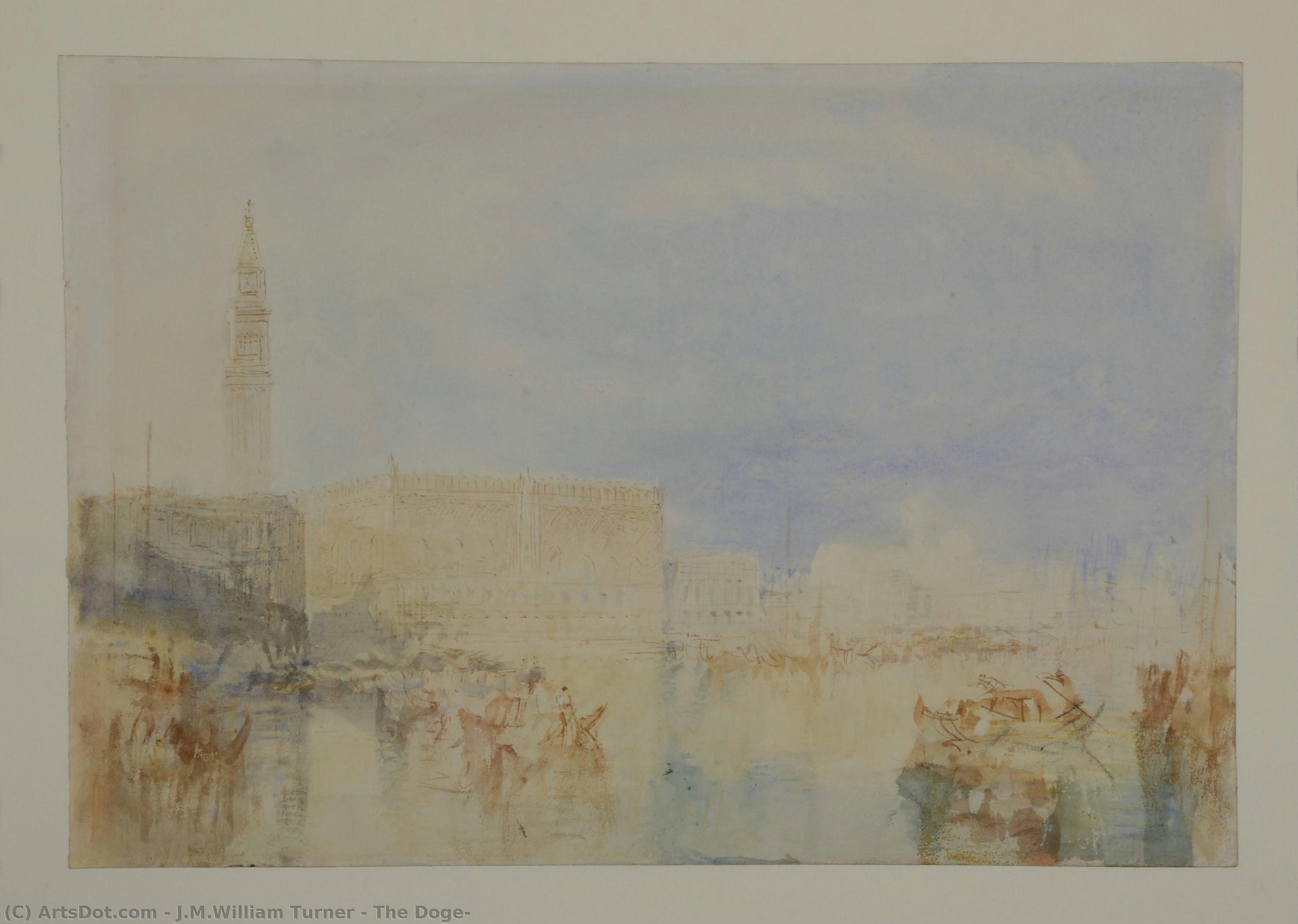
J.M.W. Turner's “The Doge’s Palace and Riva degli Schiavoni” isn’t merely a depiction of Venice; it’s an immersion into the city’s very soul, captured in a fleeting moment of twilight. Painted in 1840 during his final Venetian sojourn, this watercolor study transcends simple landscape painting, becoming a profound meditation on light, atmosphere, and the ephemeral beauty of a fading day. The scene unfolds along the Grand Canal, dominated by the imposing Doge’s Palace – a symbol of Venetian power and history – and framed by the bustling Riva degli Schiavoni, a vibrant waterfront teeming with gondolas and activity. Turner doesn't strive for photographic accuracy; instead, he prioritizes conveying an emotional response to the scene, utilizing his signature technique to dissolve form and emphasize feeling.
- Subject Matter: The painting focuses on the interplay between architecture, water, and light in Venice.
- Date: 1840
- Medium: Watercolor with scraping (a technique where paint is scraped off the paper to reveal the underlying surface)
The Language of Light – Turner’s Revolutionary Technique
Turner's genius lies in his masterful manipulation of watercolor. He employs a layered approach, beginning with washes of yellow to represent the buildings and their reflections shimmering on the water. Crucially, he applies these washes immediately after laying down the blue for the foreground, resulting in occasional patches of green – a testament to the speed and spontaneity of his process. This technique, combined with ‘scraping,’ creates a remarkable sense of texture and luminosity. The scraping reveals the white paper beneath the paint, adding a subtle sheen and enhancing the atmospheric effect. It’s as if Turner is capturing not just what he sees, but the very essence of light itself, transforming the scene into an impressionistic dream.
Turner's use of color is particularly striking – muted blues and greens dominate, creating a sense of melancholy and mystery, while subtle hints of gold suggest the warmth of the setting sun.
Symbolism and Venetian Identity
Beyond its aesthetic beauty, “The Doge’s Palace and Riva degli Schiavoni” is rich in symbolic meaning. The Doge's Palace, with its towering campanile (bell tower), represents Venice’s long and illustrious history as a maritime republic. The bustling Riva degli Schiavoni, filled with gondolas and merchants, embodies the city’s vibrant commercial life. However, Turner doesn’t romanticize this scene; he presents it with a sense of detachment, almost as if observing from afar. The hazy atmosphere suggests a fleeting moment in time, hinting at the impermanence of beauty and power. The painting can be interpreted as a reflection on Venice's past glory juxtaposed against its inevitable decline – a theme that resonated deeply with Turner’s own artistic vision.
A Timeless Masterpiece – Capturing Emotion
“The Doge’s Palace and Riva degli Schiavoni” is more than just a painting; it's an experience. It evokes a sense of tranquility, mystery, and the profound beauty of Venice’s atmosphere. Turner’s ability to capture light and emotion with such delicate brushstrokes remains unparalleled. This watercolor study offers a glimpse into the heart of a city steeped in history and legend, inviting viewers to lose themselves in its timeless charm. Reproductions of this work retain much of the original's evocative power, making it a treasured addition to any art collection or interior space – a reminder that true beauty lies not just in representation, but in the feeling it inspires.


 Aperçu en situation
 Commander la reproduction peinte à la main
 Envoyer
 Partager
 Détails de l'œuvre

 Télécharger
 Articles similaires
 Radiographie
 Diaporama
 Statistiques


 Lire la suite






































 L'option verre n'est disponible que pour les dimensions inférieures à 110 cm.