x
Aperçu en situationAperçu en situation Visualiser en RAVisualiser en RA Commander l'impression Commander l'impressionCommander la reproduction peinte à la main Commander la reproduction peinte à la main EnvoyerEnvoyer
Détails de l'œuvreDétails de l'œuvre Ajouter aux favoris Ajouter aux favoris TéléchargerTélécharger Articles similairesArticles similaires RadiographieRadiographie DiaporamaDiaporama

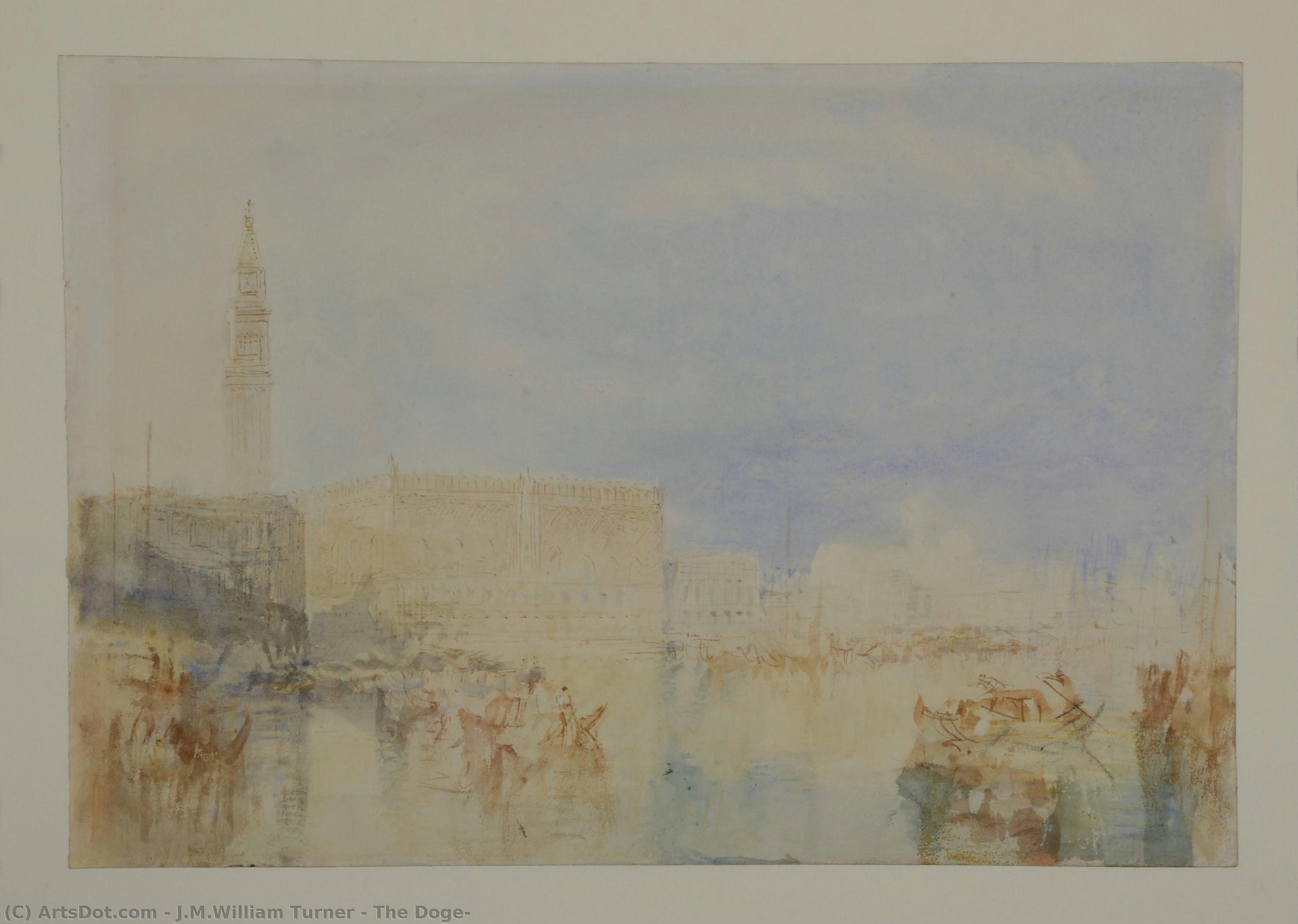
The Doge

Discover J.M.W. Turner’s ‘The Doge,’ a stunning 1840 watercolor study of Venice's Grand Canal. Explore atmospheric Romanticism & Turner’s unique technique.

Découvrez J.M.W. Turner (1775-1851), pionnier de la peinture romantique ! Explorez ses paysages expressifs, ses marines tourmentées et son influence sur l'Impressionnisme. Admirez ses œuvres & apprenez-en davantage sur ce maître britannique.

Acquérez une image numérique haute résolution et optimisée, d'une qualité bien supérieure à l'aperçu en ligne.

Chaque fichier est méticuleusement préparé par nos spécialistes internes à l'aide d'outils avancés et d'une retouche manuelle experte. Nous garantissons que chaque image possède une clarté exceptionnelle, une précision des couleurs irréprochable et un niveau de détail fin.

Le fichier final est livré par e-mail sous 72 heures, optimisé pour une utilisation immédiate dans des contextes professionnels, éditoriaux et d'impression. Il offre la même qualité de confiance que celle utilisée par les plus grands studios de création, éditeurs et galeries.

Image numérique

Téléchargez un fichier haute résolution pour votre usage personnel, l'impression et vos projets créatifs. (Commander l'impression Commander l'impressionCommander la reproduction peinte à la main Commander la reproduction peinte à la main)

Prix total

$ 24,90

Inclus avec chaque commande d'image numérique

Livraison numérique experte, garantie.

En choisissant WahooArt.com, vous n'obtenez pas seulement une simple image : vous recevez une œuvre numérique sublimée avec professionnalisme, conçue avec précision et accompagnée d'une garantie de satisfaction. Voici tout ce qui accompagne automatiquement votre commande :

shipping_icon
Envoi rapide par e-mail

Votre fichier d'image numérique haute résolution vous sera envoyé par e-mail sous 72 heures après votre commande — prêt à un usage immédiat.

canvas_icon
Fichier numérique optimisé par l'IA

Votre œuvre d'art bénéficie d'une optimisation professionnelle grâce à des outils d'IA avancés et une retouche manuelle, garantissant un niveau maximal de détail, de clarté et de fidélité chromatique.

insurance_icon
Réexpédition gratuite à vie

Vous avez accidentellement supprimé ou perdu votre fichier ? Pas d'inquiétude — nous vous le renverrons gratuitement, quand vous le souhaitez.

tax_icon
Aucuns frais de douane — À jamais

Profitez de votre œuvre d'art instantanément sans frais de douane ni de livraison — les téléchargements numériques sont toujours exonérés de taxes.

color_icon
Garantie de fidélité des couleurs

Nous garantissons que votre image numérique reproduit les couleurs de l'original aussi fidèlement que possible grâce à des outils professionnels et une gestion rigoureuse des couleurs.

return_icon
Garantie satisfaction 60 jours

Si vous n'êtes pas satisfait de votre image numérique, nous la retoucherons ou vous rembourserons 100% sous 60 jours — sans poser de questions.

guarantee_icon
Garantie de remboursement à 100%

Pas satisfait ? Obtenez un remboursement intégral dans les 60 jours suivant la réception de votre fichier numérique — sans aucune question posée.

discount_icon
Réductions sur les commandes groupées

Achetez 3 images, économisez 10% - Achetez 5, économisez 15% - Achetez 10+, économisez 20%. Idéal pour les projets créatifs, les galeries et les agences.

Informations clés

  • Influences: Turner's style
  • Dimensions: 22 x 32 cm
  • Artist: J.M.W. Turner
  • Artistic style: Watercolor wash
  • Movement: Romanticism
  • Year: 1840
  • Title: The Doge

Quiz d'art

Chaque question ne comporte qu'une seule bonne réponse.

Question 1:
What is the primary subject of J.M.W. Turner’s ‘The Doge’?
Question 2:
The watercolor ‘The Doge’ primarily utilizes what technique to create its atmospheric effect?
Question 3:
According to the image description, what is a key characteristic of Turner’s use of perspective in this painting?
Question 4:
In what year was ‘The Doge’ painted, based on the provided information?
Question 5:
What is suggested by the description of the painting’s intended purpose – as a ‘colour study for Turner’s future reference’?

A Glimpse of Dusk – The Doge’s Palace and Riva degli Schiavoni

J.M.W. Turner's “The Doge’s Palace and Riva degli Schiavoni” isn’t merely a depiction of Venice; it’s an immersion into the city’s very soul, captured in a fleeting moment of twilight. Painted in 1840 during his final Venetian sojourn, this watercolor study transcends simple landscape painting, becoming a profound meditation on light, atmosphere, and the ephemeral beauty of a fading day. The scene unfolds along the Grand Canal, dominated by the imposing Doge’s Palace – a symbol of Venetian power and history – and framed by the bustling Riva degli Schiavoni, a vibrant waterfront teeming with gondolas and activity. Turner doesn't strive for photographic accuracy; instead, he prioritizes conveying an emotional response to the scene, utilizing his signature technique to dissolve form and emphasize feeling.

  • Subject Matter: The painting focuses on the interplay between architecture, water, and light in Venice.
  • Date: 1840
  • Medium: Watercolor with scraping (a technique where paint is scraped off the paper to reveal the underlying surface)

The Language of Light – Turner’s Revolutionary Technique

Turner's genius lies in his masterful manipulation of watercolor. He employs a layered approach, beginning with washes of yellow to represent the buildings and their reflections shimmering on the water. Crucially, he applies these washes immediately after laying down the blue for the foreground, resulting in occasional patches of green – a testament to the speed and spontaneity of his process. This technique, combined with ‘scraping,’ creates a remarkable sense of texture and luminosity. The scraping reveals the white paper beneath the paint, adding a subtle sheen and enhancing the atmospheric effect. It’s as if Turner is capturing not just what he sees, but the very essence of light itself, transforming the scene into an impressionistic dream.

Turner's use of color is particularly striking – muted blues and greens dominate, creating a sense of melancholy and mystery, while subtle hints of gold suggest the warmth of the setting sun.

Symbolism and Venetian Identity

Beyond its aesthetic beauty, “The Doge’s Palace and Riva degli Schiavoni” is rich in symbolic meaning. The Doge's Palace, with its towering campanile (bell tower), represents Venice’s long and illustrious history as a maritime republic. The bustling Riva degli Schiavoni, filled with gondolas and merchants, embodies the city’s vibrant commercial life. However, Turner doesn’t romanticize this scene; he presents it with a sense of detachment, almost as if observing from afar. The hazy atmosphere suggests a fleeting moment in time, hinting at the impermanence of beauty and power. The painting can be interpreted as a reflection on Venice's past glory juxtaposed against its inevitable decline – a theme that resonated deeply with Turner’s own artistic vision.

A Timeless Masterpiece – Capturing Emotion

“The Doge’s Palace and Riva degli Schiavoni” is more than just a painting; it's an experience. It evokes a sense of tranquility, mystery, and the profound beauty of Venice’s atmosphere. Turner’s ability to capture light and emotion with such delicate brushstrokes remains unparalleled. This watercolor study offers a glimpse into the heart of a city steeped in history and legend, inviting viewers to lose themselves in its timeless charm. Reproductions of this work retain much of the original's evocative power, making it a treasured addition to any art collection or interior space – a reminder that true beauty lies not just in representation, but in the feeling it inspires.


Biographie de l'artiste

A Life Painted in Light: The World of J.M.W. Turner

Joseph Mallord William Turner, known to the world as J.M.W. Turner, was more than just a painter; he was a visionary who redefined landscape art and paved the way for modern abstraction. Born in Maiden Lane, Covent Garden, London, in 1775, his beginnings were humble – the son of a barber and wig maker. Yet, even as a child, a remarkable talent blossomed within him. By age fourteen, he was enrolled at the Royal Academy, exhibiting his first work just a year later. This early promise wasn’t merely technical skill; it hinted at an innate understanding of light, color, and atmosphere that would become the hallmarks of his extraordinary career. He supplemented his artistic education with practical experience as an architectural draftsman, honing his perspective and compositional abilities – skills that would prove invaluable in rendering both detailed topographical views and vast, emotive landscapes. Turner’s early life was marked by a dedication to his craft, fueled by a natural aptitude and a relentless pursuit of artistic excellence.

The Romantic Tempest: Style and Influences

Turner emerged during the height of the Romantic era, but he wasn’t simply a follower of its conventions. He absorbed influences from various sources – the Dutch masters like Claude Lorrain and Aelbert Cuyp for their luminous landscapes, and artists such as Richard Wilson for his poetic approach to nature. However, Turner didn’t merely imitate; he synthesized these influences into something entirely new. His work is characterized by an expressive use of color, often employing bold contrasts and vibrant hues to convey emotion and atmosphere. He was fascinated by the power and drama of nature – turbulent seascapes, fiery sunsets, and swirling storms became recurring motifs in his paintings. He wasn’t interested in simply depicting what he saw; he sought to capture the *feeling* of a place, the sublime awe inspired by the natural world. This pursuit led him to experiment with increasingly loose brushwork, dissolving forms into washes of color and light – techniques that would anticipate the Impressionist movement decades later. From 1840, his work gained significant recognition thanks to the championing of John Ruskin, who elevated landscape painting to a new level of critical acclaim.

A Prolific Legacy: The Scope of Turner’s Output

The sheer volume of Turner’s artistic output is astonishing. He created over 550 oil paintings, nearly 2,000 watercolors, and an astounding 30,000 works on paper. This prolificacy wasn’t simply a matter of quantity; it reflected his tireless exploration of different subjects, techniques, and styles. His paintings range from detailed topographical views of British landscapes to dramatic historical scenes and evocative maritime paintings. He was equally adept at capturing the tranquility of a pastoral scene and the terrifying power of a raging storm. Works like “Fort Vimieux” exemplify his mastery of depicting atmospheric effects – the swirling clouds, the crashing waves, and the intense light all contribute to a sense of drama and sublime beauty. Similarly, "Scene in the Campagna" showcases his ability to capture the warmth and serenity of the Italian countryside with delicate brushwork and luminous colors. Beyond painting, Turner was also a skilled printmaker, further disseminating his artistic vision through engravings and lithographs.

Turner's Artistic Vision: Light and Atmosphere

Turner’s genius lay in his unparalleled understanding of light and atmosphere—concepts that would become central to the Impressionist movement. He meticulously studied how sunlight interacted with surfaces, capturing fleeting moments of illumination and shadow with astonishing accuracy. His canvases pulsated with color, reflecting the shifting moods of the natural world. Unlike earlier painters who sought to represent landscapes realistically, Turner prioritized conveying emotion and sensation above all else. He achieved this through a revolutionary technique—loose brushstrokes blended together to create luminous washes of color that seemed to dissolve into the air. This approach challenged conventional artistic standards and established Turner as a pioneer of modern art.

Recognition and Influence: A Lasting Impact

Turner’s work garnered considerable acclaim during his lifetime, particularly from John Ruskin, who recognized his visionary spirit and championed his artistic achievements. Despite facing criticism for his unconventional style and perceived lack of polish, Turner remained steadfast in his pursuit of artistic excellence. His legacy extends far beyond the canvases he created; he profoundly influenced subsequent generations of artists—inspiring them to embrace experimentation and explore new expressive possibilities. Today, J.M.W. Turner is regarded as one of Britain’s greatest landscape painters—a true titan of Romantic art whose enduring vision continues to captivate audiences worldwide. His paintings are celebrated for their beauty, boldness, and emotional depth—testaments to his extraordinary talent and unwavering dedication to the transformative power of art.
J.M.W. Turner

J.M.W. Turner

1775 - 1851 , Royaume-Uni

En bref

  • Date De Décès: 19 décembre 1851
  • Date De Naissance: 23 avril 1775
  • Influence Sur Les Artistes: ['Impressionnisme']
  • Lieu De Naissance: Londres, Royaume-Uni
  • Mouvement Artistique: Romantisme
  • Nationalité: Britannique
  • Nom Complet: J.M.W. Turner
  • Œuvres Notables:
    • Le Combattant téméraire
    • Pluie, Vapeur et Vitesse
    • Carisbrook Castle, Île de Wight
    • Paysage