x
Aperçu en situationAperçu en situation Aperçu en RAAperçu en RA Acheter l'impression Acheter l'impressionAcheter l'image Acheter l'image PartagerPartager
DétailsDétails Ajouter aux favoris Ajouter aux favoris Télécharger l'imageTélécharger l'image Articles similairesArticles similaires RadiographieRadiographie Voir le diaporamaVoir le diaporama

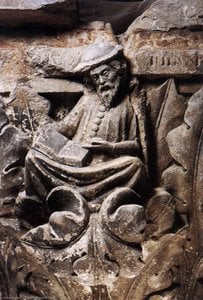
Plato

  • Date de création1478
  • Dimensions200.0 x 78.0 cm

Explore les œuvres cellulaires de Giovanni Antonio Piatti (1822-1901), un celliste italien reconnu pour sa virtuosité et son influence sur la musique classique britannique. Découvrez ses compositions emblématiques et son rôle dans l'histoire musicale italienne !

Reproduction à l'huile faite à la main

Huile sur toile peinte à la main, avec cadre et dimensions personnalisés, réalisée sur commande par nos artistes. (Acheter l'impression Acheter l'impressionAcheter l'image Acheter l'image)

Standard
custom
CM
INCH

Choisissez parmi nos formats prédéfinis qui respectent les proportions originales de l’œuvre.

largeur
hauteur

Vous pouvez saisir vos propres dimensions pour l'adapter à un cadre ou à un espace spécifique. Si la taille sélectionnée ne correspond pas aux proportions de l'image d'origine, nous recadrerons l'œuvre ou prolongerons la peinture avec des éléments peints à la main supplémentaires. Une maquette numérique vous sera envoyée pour approbation avant le début de la production.
Veuillez noter que l'aperçu à l'écran ne reflète pas le recadrage ou l'extension réels. Seule la maquette montrera fidèlement la composition finale.
Bien que des tailles personnalisées soient disponibles, nous vous recommandons de sélectionner une dimension dans la liste prédéfinie afin de préserver les proportions d'origine.

Exemples de personnalisation possibles : remplacer un visage par la photo du client ; ajouter un animal de compagnie (par exemple, remplacer un chat par un chien) ; inclure un message caché en arrière-plan ; modifier le paysage ou les éléments de l'arrière-plan.
Après la commande, l’équipe WahooArt.com contactera le client par e-mail pour recueillir ses instructions et lui fournira une maquette d’aperçu

Livraison dans le monde entier () en 3 à 4 semaines au lieu des 5 semaines habituelles. (26 août). Aucun compromis sur la qualité.

why_choose_icon
Livraison express gratuite dans le monde entier

why_choose_icon
Toile de lin de haute qualité
why_choose_icon
Assurance transport complète
why_choose_icon
Garantie de remboursement des droits de douane
why_choose_icon
Garantie de fidélité des couleurs
why_choose_icon
Politique de retour de 60 jours (uniquement en cas de défaut)
why_choose_icon
Garantie de remboursement à 100%
why_choose_icon
Tarifs dégressifs sur quantité

Prix total

$ 272

reproduction

Plato

Technique de reproduction

Format de la reproduction

-

Prix total final

$ 272

Description de l'œuvre

From Casa Piatti, in Via Piatti in the centre of Milan, this sculpture portrays the Greek philosopher Plato, whom genealogical mythology held to be the family founder (it was said that the surname “Piatti” derived from the Latin name of the philosopher “Plato”). The inscriptions that accompany the sculpture are important: the name of the Greek philosopher appears on the lunette at the top, and it returns very clearly at the base of the niche, next to the head. A long inscription along the edges of the niche gives us the name of the sculptor, who was himself a member of the Piatti family, and the date the work was made (1478). Lastly, the cartouche in the philosopher’s hand bears a text that sums up Plato’s theory of the body as the prison of the soul.

Biographie de l'artiste

Giovanni Antonio Piatti: A Venetian Cellist Shaping the Sound of His Time

Giovanni Antonio Piatti (1822-1901) stands as a pivotal figure in late 19th-century Italian music, primarily recognized for his exceptional cello artistry and profound contribution to cello technique. Born in Milan, Italy, Piatti’s musical journey began with early instruction and swiftly ascended to mastery, establishing him as one of the era's most celebrated cellists. His influence extended beyond performance, shaping pedagogical approaches and fostering a generation of skilled musicians.

Early Life & Musical Training

Piatti’s formative years were marked by rigorous training under Giuseppe Tartini, arguably the father of cello technique. Tartini instilled in Piatti a dedication to precision, expressive nuance, and an unwavering pursuit of musical excellence—principles that would define Piatti's entire career. This foundational education propelled him toward a distinguished academic path at Milan’s Conservatorio di Musica Giuseppe Verdi, where he honed his skills further and cultivated a deep understanding of orchestral repertoire. Tartini’s insistence on meticulous bowing control and accurate intonation became the cornerstone of Piatti’s musical philosophy—a legacy that would resonate throughout his subsequent pedagogical endeavors.

A Parisian Exile & Artistic Flourishing

Seeking greater artistic freedom and exposure, Piatti relocated to Paris in 1853, immersing himself in the vibrant musical landscape of the Belle Époque. Here, he established himself as a respected teacher and performer, attracting students from across Europe and solidifying his reputation as a pedagogue dedicated to nurturing talent. Notably, he mentored Alfredo Piatti, his son, ensuring the continuation of his cello legacy—a testament to Piatti’s commitment to musical excellence and mentorship. His Parisian residence allowed him to collaborate with prominent composers and musicians of the time, broadening his artistic horizons and enriching the cultural tapestry of the Belle Époque.

Compositional Output & Orchestral Recognition

Beyond his performances, Giovanni Antonio Piatti was a prolific composer, producing an impressive body of work encompassing cello solos, chamber music ensembles (particularly quartets), and orchestral pieces. His compositions are characterized by melodic beauty, harmonic sophistication, and masterful orchestration—reflecting the stylistic trends of Romanticism while retaining a distinctly Italian sensibility. Pieces like “Sonata No. 1 in E Major” exemplify his technical prowess and expressive depth, securing him a place among the foremost cello composers of his era. He performed frequently at prestigious venues such as the Crystal Palace in London, captivating audiences with his virtuosity and establishing himself as a cornerstone of musical culture during Victorian times.

Legacy & Influence

Giovanni Antonio Piatti’s impact on cello technique remains undeniable. His pedagogical methods emphasized meticulous bowing control, precise intonation, and expressive interpretation—principles that continue to inform cello instruction today. Furthermore, his compositions serve as invaluable resources for cellists worldwide, inspiring generations of musicians to explore the instrument's expressive potential. Piatti’s enduring legacy resides not only in his musical achievements but also in his role as a champion of cello artistry and a pivotal figure in shaping the soundscape of the 19th century—a testament to his unwavering dedication to musical excellence and artistic innovation. He is remembered as a visionary who elevated cello performance to new heights, leaving an indelible mark on the history of music.
Giovanni Antonio Piatti

Giovanni Antonio Piatti

1822 - 1901 , Italie

En bref

  • Artistic Movement Or Style: Romantic Era Music
  • Artists Or Movements Influenced By This Artist: ['Classical Cello Works']
  • Artists Who Influenced This Artist:
    • Alfredo Piatti
    • William Henry Squire
  • Date Of Birth: 1822 Milan, Italy
  • Date Of Death: 1901
  • Full Name: Giovanni Antonio Piatti
  • Nationality: Italian
  • Notable Artworks: ['Plato']
  • Place Of Birth: Milan