Aperçu en situation Aperçu en RA Passer au format impression Passer au format image numérique Partager
Détails Guide imprimable Ajouter aux favoris Télécharger Articles similaires Radiographie Voir le diaporama Statistiques

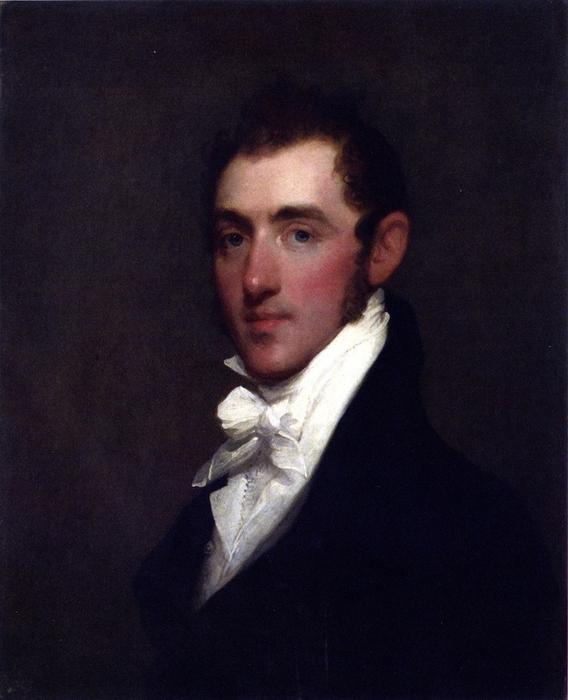
Henry Rice

Experience the Romantic elegance of Gilbert Stuart's 1815 portrait, capturing dignified American life with masterful chiaroscuro; discover this timeless piece today.

Découvrez Gilbert Stuart (1755-1828), portraitiste américain emblématique ! Explorez son style néoclassique et son héritage, notamment le célèbre portrait de Washington.

Reproduction à l'huile faite à la main

Huile sur toile peinte à la main, avec cadre et dimensions personnalisés, réalisée sur commande par nos artistes. ( Passer au format impression Passer au format image numérique)

Corner sample of the P118B picture frame: moulded polystyrene, 5 cm wide and 3 cm thick
P118B 10
Corner sample of the P118H picture frame: moulded polystyrene, 5 cm wide and 3 cm thick
P118H 10
Corner sample of the P118W picture frame: moulded polystyrene, 5 cm wide and 3 cm thick
P118W 10
Corner sample of the P438Z picture frame: moulded polystyrene, 5.5 cm wide and 3.5 cm thick
P438Z 10
Corner sample of the P508JH picture frame: moulded polystyrene, 7 cm wide and 3.5 cm thick
P508JH 12
Corner sample of the P508YH picture frame: moulded polystyrene, 7 cm wide and 3.5 cm thick
P508YH 12
Corner sample of the P805H picture frame: moulded polystyrene, 5 cm wide and 3.5 cm thick
P805H 10
Corner sample of the P805Z picture frame: moulded polystyrene, 5 cm wide and 3.5 cm thick
P805Z 10
Corner sample of the P919BZ picture frame: moulded polystyrene, 7 cm wide and 3.5 cm thick
P919BZ 10
Corner sample of the P919G picture frame: moulded polystyrene, 7 cm wide and 3.5 cm thick
P919G 10
Corner sample of the P919XJ picture frame: moulded polystyrene, 7 cm wide and 3.5 cm thick
P919XJ 10
Corner sample of the P959ZH picture frame: moulded polystyrene, 5 cm wide and 3 cm thick
P959ZH 10
Corner sample of the P968JZ picture frame: moulded polystyrene, 6 cm wide and 4 cm thick
P968JZ 12
Corner sample of the W106C picture frame: solid wood, 5 cm wide and 3 cm thick
W106C 8
Corner sample of the W218G picture frame: solid wood, 5 cm wide and 3 cm thick
W218G 10
Corner sample of the W218JH picture frame: solid wood, 5 cm wide and 3 cm thick
W218JH 8
Corner sample of the W218Y picture frame: solid wood, 5 cm wide and 3 cm thick
W218Y 10
Corner sample of the W307PJ picture frame: solid wood, 6 cm wide and 3 cm thick
W307PJ 10
Corner sample of the W316G picture frame: solid wood, 6 cm wide and 3 cm thick
W316G 10
Corner sample of the W316PJ picture frame: solid wood, 6 cm wide and 3 cm thick
W316PJ 8
Corner sample of the W316Y picture frame: solid wood, 6 cm wide and 3 cm thick
W316Y 10
Corner sample of the W398PJ picture frame: solid wood, 5 cm wide and 3 cm thick
W398PJ 8
Corner sample of the W4111J picture frame: solid wood, 6.5 cm wide and 3.5 cm thick
W4111J 10
Corner sample of the W500HY picture frame: solid wood, 7 cm wide and 5 cm thick
W500HY 15
Corner sample of the W500JH picture frame: solid wood, 7 cm wide and 5 cm thick
W500JH 15
Corner sample of the W692G picture frame: solid wood, 8 cm wide and 4 cm thick
W692G 12
Corner sample of the W849H picture frame: solid wood, 5 cm wide and 3 cm thick
W849H 8
Corner sample of the W940BG picture frame: solid wood, 7.5 cm wide and 4.5 cm thick
W940BG 15
Corner sample of the W953PJ picture frame: solid wood, 6 cm wide and 3.5 cm thick
W953PJ 8

Format standard
personnalisé
CM
INCH

Choisissez parmi nos formats prédéfinis qui respectent les proportions originales de l’œuvre.

largeur
hauteur

Vous pouvez saisir vos propres dimensions pour l'adapter à un cadre ou à un espace spécifique. Si la taille sélectionnée ne correspond pas aux proportions de l'image d'origine, nous recadrerons l'œuvre ou prolongerons la peinture avec des éléments peints à la main supplémentaires. Une maquette numérique vous sera envoyée pour approbation avant le début de la production.
Veuillez noter que l'aperçu à l'écran ne reflète pas le recadrage ou l'extension réels. Seule la maquette montrera fidèlement la composition finale.
Bien que des tailles personnalisées soient disponibles, nous vous recommandons de sélectionner une dimension dans la liste prédéfinie afin de préserver les proportions d'origine.

Exemples de personnalisation possibles : remplacer un visage par la photo du client ; ajouter un animal de compagnie (par exemple, remplacer un chat par un chien) ; inclure un message caché en arrière-plan ; modifier le paysage ou les éléments de l'arrière-plan.
Après la commande, l’équipe WahooArt.com contactera le client par e-mail pour recueillir ses instructions et lui fournira une maquette d’aperçu

Livraison dans le monde entier () en 3 à 4 semaines au lieu des 5 semaines habituelles. (10 octobre). Aucun compromis sur la qualité.

Livraison express gratuite dans le monde entier

Toile de lin de haute qualité
Assurance transport complète
Garantie de remboursement des droits de douane
Garantie de fidélité des couleurs
Garantie de retour de 100 jours (uniquement en cas de défaut)
Garantie de remboursement à 100%
Tarifs dégressifs sur quantité

Prix total

€ 234

Henry Rice

Technique de reproduction

Format de la reproduction

-

Prix total final

€ 234

L'essentiel de l'œuvre

  • Dimensions: 26 1/2 x 21"
  • Title: Henry Rice
  • Subject or theme: Portrait of Newton Henry Rice
  • Artist: Gilbert Stuart
  • Movement: Neoclassicism
  • Year: 1815
  • Medium: Oil on wood

Quiz d'art

Chaque question ne comporte qu'une seule bonne réponse.

Question 1:
What artistic movement is Gilbert Stuart associated with?
Question 2:
Where did Gilbert Stuart receive significant training during his formative years?
Question 3:
What is the primary subject depicted in 'Henry Rice'?
Question 4:
Approximately when was ‘Henry Rice’ painted?
Question 5:
What is notable about the man's expression in the portrait?

A Glimpse into Romantic Elegance

In the quiet, commanding presence of Gilbert Stuart’s 1815 portrait, Henry Rice, one finds much more than a mere historical record; it is an intimate window into the soul of the Romantic era. The painting presents us with Newton Henry Rice, a man whose very countenance seems to bridge the gap between the structured dignity of the past and the burgeoning emotional depth of a new American identity. As we gaze upon his face, we are met with a directness that is both unsettling and deeply captivating. Stuart does not merely capture a likeness; he orchestrates an encounter. The subject’s steady gaze, framed by a meticulously rendered beard and mustache, invites the viewer into a silent dialogue, suggesting a character forged in the crucible of leadership and thoughtful reflection.

The composition of the work possesses a subtle, layered complexity that rewards the lingering eye. While Rice stands as the undeniable protagonist, the presence of figures receding into the soft-focus background hints at a larger narrative of lineage and social connection. This arrangement creates a sense of depth that transcends the two-dimensional plane, suggesting the weight of family and the interconnectedness of the Rhode Island elite during this transformative period. For the collector or the interior designer, this piece offers a profound sense of gravity, making it an ideal centerpiece for spaces that demand a touch of historical prestige and intellectual weight.

The Mastery of Light and Shadow

Technically, Henry Rice is a masterclass in the use of chiaroscuro. Stuart, a titan of American portraiture, employs the dramatic interplay of light and shadow to sculpt the subject’s features with breathtaking realism. The way the light catches the texture of the clothing and the subtle contours of the face creates an illusion of three-dimensional vitality that feels almost tactile. This technique does more than just define form; it imbues the portrait with a luminous, ethereal quality, as if the subject were emerging from the shadows of history into the light of the present moment.

Though Stuart’s roots are firmly planted in the Neoclassical tradition—characterized by order, clarity, and restraint—this particular work whispers of the Romantic movement's arrival. There is a palpable emotional resonance found in the tonal gradations and the soft, expressive lighting that moves away from the austere rigidity of earlier decades. The artist’s brushwork, though smooth and refined, possesses an underlying energy that breathes life into the oil on wood, ensuring that the painting remains vibrant and emotionally accessible even centuries after its completion.

A Legacy for the Discerning Collector

To possess a reproduction of such a significant work is to bring a piece of American heritage into one's personal environment. Henry Rice serves as an evocative symbol of transition—a moment when the old world’s formal structures began to merge with the raw, expressive spirit of the new. It is a work that speaks of strength, stability, and the enduring power of character. Whether placed in a sophisticated study, a grand hallway, or a curated gallery wall, this portrait provides an anchor of timeless elegance.

For those seeking to inspire others through art, this piece offers a rich tapestry of historical context and aesthetic beauty. It is not merely a decoration; it is a conversation starter, a testament to the skill of Gilbert Stuart, and a profound tribute to the dignity of the human spirit. In every stroke of the brush, there is an invitation to contemplate the legacies we leave behind and the enduring grace of a well-lived life.

Questions et réponses

Quel niveau de contraste présente «Henry Rice» de Gilbert Stuart ?

Le contraste clair-obscur de « Henry Rice » est évalué à Gentle. Le contraste décrit l'intensité de la différence entre les zones claires et les zones sombres.

Qui a créé "Henry Rice" ?

« Henry Rice » est attribué à Gilbert Stuart.

Où devrait être accrochée une reproduction de «Henry Rice» de Gilbert Stuart ?

Le format (Portrait) et l'espace recommandé (Living Room) sont les deux caractéristiques de disposition enregistrées pour «Henry Rice» de Gilbert Stuart.

Quelle taille et quel format sont recommandés pour un tirage de «Henry Rice» de Gilbert Stuart ?

Pour « Henry Rice », la configuration d'impression recommandée est un format Medium avec une orientation Portrait.

Quel âge avait Gilbert Stuart lors de la création de « Henry Rice » ?

Gilbert Stuart avait 60 ans lors de la création de « Henry Rice » en 1815. L'âge est calculé à partir de l'année de naissance de l'artiste, 1755.

En quelle année "Henry Rice" a-t-il été réalisé ?

«Henry Rice» date de 1815. Cette date inscrit l'œuvre dans la carrière de Gilbert Stuart ainsi que dans son époque.

De quoi est fait « Henry Rice » ?

Gilbert Stuart a utilisé la technique du Oil pour "Henry Rice". Cette technique définit la nature matérielle de l'œuvre originale.


Biographie de l'artiste

Gilbert Stuart : Une Vie au Service du Portrait

  • Né: 3 décembre 1755, Saunderstown, Rhode Island
  • Décédé: 9 juillet 1828, Boston, Massachusetts
  • Nationalité: Américain
  • Mouvement: Néo-classicisme
  • Connu pour: Le portrait, en particulier les portraits de figures importantes de l'histoire américaine précoce.

Jeunesse et Formation

  • Gilbert Stuart est né dans une famille d’origine écossaise ; son père, également nommé Gilbert, était un inventeur qui a établi la première usine à tabac de Rhode Island.
  • Son talent artistique s'est manifesté dès son plus jeune âge, démontrant des compétences même encore enfant.
  • À 14 ans, il a peint "Dr. Hunter's Spaniels", témoignant d’une promesse précoce.
  • Il s'est rendu en Écosse vers 1771 pour étudier sous la direction de Cosmo Alexander, mais est retourné après le décès d'Alexander en 1775.
  • Une formation supplémentaire a eu lieu à Londres avec Benjamin West, un peintre américain important résidant en Angleterre, de 1775 à 1780. Cette période a été cruciale pour développer son style artistique et gagner une reconnaissance au sein de la Royal Academy.

Carrière Artistique et Œuvres Majeures

  • La carrière de Stuart a rencontré des difficultés pendant la Révolution américaine, ce qui l'a incité à déménager en Angleterre en 1775.
  • Il a obtenu un succès précoce avec "The Skater" (1782), un portrait qui a établi sa réputation.
  • Son œuvre la plus célèbre est le portrait inachevé de George Washington, connu sous le nom de portrait de l'Athénée (commencé en 1796). Cette image est devenue emblématique, apparaissant sur la monnaie et les timbres américains. Stuart a produit de nombreux copies de ce portrait pour des mécènes à travers l’Amérique et l’Europe.
  • Il a peint les portraits de plusieurs autres figures importantes, notamment John Adams, Thomas Jefferson, James Madison et de nombreux membres de l'élite fédéraliste.
  • Le style de Stuart était caractérisé par une approche néoclassique, mettant l'accent sur le réalisme et capturant la ressemblance et le caractère de ses sujets. Il utilisait souvent un usage dramatique de la lumière et de l’ombre pour améliorer l’impact des portraits.

Influences et Développement

  • Cosmo Alexander a fourni une formation précoce en technique et composition.
  • L'influence de Benjamin West était significative, façonnant la compréhension de Stuart du portrait et des principes artistiques.
  • Le mouvement néoclassique, avec son insistance sur les formes classiques et les idéaux, a fortement influencé son style.
  • Les propres observations et interactions de Stuart avec ses sujets ont contribué à la profondeur psychologique et au réalisme dans ses portraits. Il visait à capturer non seulement une ressemblance mais aussi le caractère et la personnalité de ceux qu'il peignait.

Signification Historique et Héritage

  • Gilbert Stuart est considéré comme l’un des plus grands portraitistes américains, jouant un rôle essentiel dans la documentation des premières années des États-Unis.
  • Le portrait de George Washington de l'Athénée est devenu un symbole durable de l'identité et du leadership américain.
  • Ses portraits fournissent des informations historiques précieuses sur les vies et les apparences de figures importantes de la fin du XVIIIe et du début du XIXe siècle.
  • L’œuvre de Stuart est représentée dans les principaux musées des États-Unis et d'Europe, garantissant que son héritage continue d’être apprécié par les générations futures.
  • Il a établi un style américain distinctif de portraiture qui mélangeait les techniques européennes avec une sensibilité américaine unique.
Gilbert Stuart

Gilbert Stuart

1755 - 1828 , Royaume-Uni

En bref

  • Artistes Influents:
    • Cosmo Alexander
    • Benjamin West
  • Date De Décès: 9 juillet 1828
  • Date De Naissance: 3 décembre 1755
  • Lieu De Naissance: Saunderstown, Royaume-Uni
  • Mouvement Artistique: Néoclassicisme
  • Nationalité: Américaine
  • Nom Complet: Gilbert Charles Stuart
  • Oeuvres Notables:
    • Dr. Hunter's Spaniels
    • The Skater
    • Athenaeum Portrait de Washington
Explorez des œuvres d'art classées par thèmes, styles et caractéristiques.