jeunesse et début de carrière
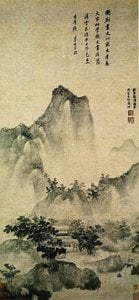
dai jin, artiste chinois de grande renommée, vit entre 1388 et 1462. Il s'imposa comme une figure de proue de la renaissance du style Ma-Xia au début de la dynastie Ming, un mouvement également connu sous le nom d'école Zhe, issu des traditions de peinture de paysage de la période Song méridionale. Dans sa jeunesse, dai jin voyagea jusqu'à la capitale, nanjing, accompagné de son père qui occupait des fonctions officielles. Bien qu'il ne parvînt pas à s'imposer au sein de la capitale, il retourna à qiantang pour reprendre ses études picturales, probablement sous l'égide d'un artisan local du zhejiang.
l'ascension vers la gloire
La réputation de dai jin connut une ascension fulgurante vers 1425, lorsqu'il fut recommandé auprès de l'empereur xuande. Il se rendit à beijing avec l'espoir d'obtenir un poste académique prestigieux. Cependant, ses ambitions furent brisées par des peintres déjà établis, et plus particulièrement par
xie huan, qui prétendit déceler un parti pris anti-gouvernemental dans les œuvres de dai. Un exemple frappant est la peinture de dai jin,
seven worthies passing the barrier (vers 1425-35), inspirée d'un ancien conte relatant la fuite de sept hommes d'un État en plein tumulte. Cette œuvre, ainsi qu'une autre pièce représentant un pêcheur vêtu d'un manteau rouge, précipitèrent la chute de dai jin.
œuvres notables et héritage
voir les œuvres de dai jin sur WahooArt.com en apprendre davantage sur dai jin sur wikipedia explorer l'influence de l'
école Zhe sur la peinture de paysage chinoise sur
the museum destroyed by fire (united states) conclusion
Malgré les épreuves et la persécution, les contributions de dai jin à l'école Zhe et à la peinture de paysage chinoise demeurent essentielles. Ses œuvres continuent d'être célébrées pour leur style unique et leurs techniques novatrices.
important : pour approfondir vos connaissances sur dai jin et ses créations, visitez la
page de dai jin sur WahooArt.com.



 Aperçu en situation
 Acheter la peinture faite à la main
 Partager
 Partager
 Détails
 Guide imprimable

 Télécharger
 Articles similaires
 Radiographie
 Voir le diaporama
 Statistiques


 Afficher la suite






































 L'option verre n'est disponible que pour les dimensions inférieures à 110 cm.