Aperçu en situation Aperçu en RA Passer au format impression Passer au format image numérique Partager
Détails Guide imprimable Ajouter aux favoris Télécharger Articles similaires Radiographie Voir le diaporama Statistiques

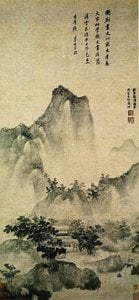
Returning Late from a Spring Outing

Discover "Returning Late from a Spring Outing" by Dai Jin (1644). A serene Ming Dynasty landscape painting in ink & color, showcasing Zhe School style & tranquil beauty. #ChineseArt #LandscapePainting

Découvrez Dai Jin : maître de la peinture de paysage chinoise de la dynastie Ming. Explorez son style innovant de l'école Zhe et ses œuvres emblématiques comme 'Seven Worthies'. #DaiJin #ChineseArt

Reproduction à l'huile faite à la main

Huile sur toile peinte à la main, avec cadre et dimensions personnalisés, réalisée sur commande par nos artistes. ( Passer au format impression Passer au format image numérique)

Corner sample of the P118B picture frame: polystyrène moulé, 5 cm wide and 3 cm thick
P118B €10
Corner sample of the P118H picture frame: polystyrène moulé, 5 cm wide and 3 cm thick
P118H €10
Corner sample of the P118W picture frame: polystyrène moulé, 5 cm wide and 3 cm thick
P118W €10
Corner sample of the P438Z picture frame: polystyrène moulé, 5.5 cm wide and 3.5 cm thick
P438Z €10
Corner sample of the P508JH picture frame: polystyrène moulé, 7 cm wide and 3.5 cm thick
P508JH €12
Corner sample of the P508YH picture frame: polystyrène moulé, 7 cm wide and 3.5 cm thick
P508YH €12
Corner sample of the P805H picture frame: polystyrène moulé, 5 cm wide and 3.5 cm thick
P805H €10
Corner sample of the P805Z picture frame: polystyrène moulé, 5 cm wide and 3.5 cm thick
P805Z €10
Corner sample of the P919BZ picture frame: polystyrène moulé, 7 cm wide and 3.5 cm thick
P919BZ €10
Corner sample of the P919G picture frame: polystyrène moulé, 7 cm wide and 3.5 cm thick
P919G €10
Corner sample of the P919XJ picture frame: polystyrène moulé, 7 cm wide and 3.5 cm thick
P919XJ €10
Corner sample of the P959ZH picture frame: polystyrène moulé, 5 cm wide and 3 cm thick
P959ZH €10
Corner sample of the P968JZ picture frame: polystyrène moulé, 6 cm wide and 4 cm thick
P968JZ €12
Corner sample of the W106C picture frame: bois massif, 5 cm wide and 3 cm thick
W106C €8
Corner sample of the W218G picture frame: bois massif, 5 cm wide and 3 cm thick
W218G €10
Corner sample of the W218JH picture frame: bois massif, 5 cm wide and 3 cm thick
W218JH €8
Corner sample of the W218Y picture frame: bois massif, 5 cm wide and 3 cm thick
W218Y €10
Corner sample of the W307PJ picture frame: bois massif, 6 cm wide and 3 cm thick
W307PJ €10
Corner sample of the W316G picture frame: bois massif, 6 cm wide and 3 cm thick
W316G €10
Corner sample of the W316PJ picture frame: bois massif, 6 cm wide and 3 cm thick
W316PJ €8
Corner sample of the W316Y picture frame: bois massif, 6 cm wide and 3 cm thick
W316Y €10
Corner sample of the W398PJ picture frame: bois massif, 5 cm wide and 3 cm thick
W398PJ €8
Corner sample of the W4111J picture frame: bois massif, 6.5 cm wide and 3.5 cm thick
W4111J €10
Corner sample of the W500HY picture frame: bois massif, 7 cm wide and 5 cm thick
W500HY €15
Corner sample of the W500JH picture frame: bois massif, 7 cm wide and 5 cm thick
W500JH €15
Corner sample of the W692G picture frame: bois massif, 8 cm wide and 4 cm thick
W692G €12
Corner sample of the W849H picture frame: bois massif, 5 cm wide and 3 cm thick
W849H €8
Corner sample of the W940BG picture frame: bois massif, 7.5 cm wide and 4.5 cm thick
W940BG €15
Corner sample of the W953PJ picture frame: bois massif, 6 cm wide and 3.5 cm thick
W953PJ €8

Format standard
personnalisé
CM
INCH

Choisissez parmi nos formats prédéfinis qui respectent les proportions originales de l’œuvre.

largeur
hauteur

Saisissez la largeur et la hauteur souhaitées, pour s'adapter à votre cadre ou à votre mur. Cette œuvre est peinte à la main ; ainsi, pour un format de forme différente, l'artiste peut peindre un peu plus autour du tableau ou réduire légèrement les bords — c'est vous qui choisissez. Nous vous envoyons une maquette numérique pour approbation avant que la peinture ne commence. L'image présentée sur cette page ne reflète pas le résultat réel — seule la maquette le fait.

Exemples de personnalisation possibles : remplacer un visage par la photo du client ; ajouter un animal de compagnie (par exemple, remplacer un chat par un chien) ; inclure un message caché en arrière-plan ; modifier le paysage ou les éléments de l'arrière-plan.
Après la commande, l’équipe WahooArt.com contactera le client par e-mail pour recueillir ses instructions et lui fournira une maquette d’aperçu

Livraison dans le monde entier () en 3 à 4 semaines au lieu des 5 semaines habituelles. (23 octobre). Aucun compromis sur la qualité.

Livraison express gratuite dans le monde entier
Toile de lin de haute qualité
Assurance transport complète
Garantie de remboursement des droits de douane
Garantie de fidélité des couleurs
Garantie de retour de 100 jours (uniquement en cas de défaut)
Garantie de remboursement à 100%
Tarifs dégressifs sur quantité

Prix total

€ 239

Returning Late from a Spring Outing

Technique de reproduction

Format de la reproduction

-

Prix total final

€ 239

L'essentiel de l'œuvre

  • Dimensions: 167 x 83 cm
  • Medium: Ink & Color on Silk
  • Subject or theme: Landscape, Nature
  • Title: Returning Late from a Spring Outing
  • Artist: Dai Jin

A Moment of Serene Reflection: Returning Late from a Spring Outing by Dai Jin

Dai Jin’s “Returning Late from a Spring Outing,” painted in 1644, offers a profound glimpse into the heart of Chinese literati aesthetics – a world where landscape painting transcended mere representation to become a vehicle for spiritual contemplation. This exquisite silk hand-painting, measuring 167 x 83 cm, captures a quintessential Shanshui scene, a hallmark of the Song Dynasty’s influence on Chinese art, and embodies the spirit of the Ma-Xia style, also known as the Zhe School, which flourished during Dai Jin's lifetime. The artwork isn't simply a depiction of mountains and water; it is an invitation to experience tranquility, harmony, and a deep connection with the natural world – core tenets of Confucian philosophy.

Masterful Technique: The Language of Ink and Color

  • Brushwork and Composition: Dai Jin’s loose, expressive brushstrokes are central to the painting's power. They create a dynamic sense of atmospheric perspective, drawing the viewer into the scene with a fluidity that mimics the movement of water and wind. The vertical format emphasizes height and depth, reinforcing the grandeur of the mountainous landscape.
  • Ink Wash Technique (Sumi): The painting’s foundation lies in the meticulous layering of ink washes – *sumi*. This technique, perfected over centuries, allows for a subtle manipulation of tonal values, building up volume and creating an illusion of three-dimensionality. Notice how the artist uses varying densities of ink to define the contours of rocks, trees, and distant peaks.
  • Color Palette: The muted color palette – browns, grays, ochre, with delicate washes of blue and green – contributes significantly to the painting’s contemplative mood. These colors evoke the subtle shifts in light and shadow found within a natural landscape, enhancing the sense of realism while maintaining an ethereal quality.

Symbolism and Context: A Window into Ming Dynasty Thought

Painted in 1644, during Dai Jin’s career, this artwork reflects the artistic currents of the early Ming dynasty. Dai Jin was a pivotal figure in reviving the Ma-Xia style, which prioritized capturing the essence of nature over strict adherence to traditional representation. The pavilions depicted within the scene symbolize human dwellings nestled within the vastness of the landscape – a reminder of humanity’s place within the natural order. The mountains themselves represent strength, permanence, and spiritual aspiration, echoing Confucian ideals of virtue and longevity. Dai Jin's work was often influenced by political considerations, as evidenced by his early career attempts to gain favor with the emperor, though he ultimately developed a distinctive style that prioritized artistic integrity.

Emotional Resonance: A Legacy of Tranquility

“Returning Late from a Spring Outing” possesses an enduring emotional resonance. The diffused lighting and serene composition evoke a sense of quiet contemplation, inviting the viewer to escape the pressures of daily life and find solace in the beauty of nature. This painting is more than just a visual representation; it’s a portal to a timeless landscape, reflecting the profound connection between humanity and the natural world – a connection that continues to inspire awe and wonder centuries later. This hand-painted reproduction captures not only Dai Jin's artistic skill but also the very spirit of this iconic work.

Questions et réponses

Quelle intensité lumineuse les couleurs de "Returning Late from a Spring Outing" semblent-elles refléter ?

La luminance enregistrée pour «Returning Late from a Spring Outing» de Dai Jin est de Soft Shadow.

Un téléchargement en haute résolution de « Returning Late from a Spring Outing » est-il disponible ?

Pour obtenir un fichier numérique de «Returning Late from a Spring Outing» de Dai Jin, commandez un téléchargement d'image numérique haute résolution sur sa page Image numérique.

Où devrait être accrochée une reproduction de «Returning Late from a Spring Outing» de Dai Jin ?

Le format Tall de «Returning Late from a Spring Outing» de Dai Jin est recommandé pour une Living Room. Le format et l'espace guident ensemble l'emplacement d'une reproduction.


Biographie de l'artiste

jeunesse et début de carrière

dai jin, artiste chinois de grande renommée, vit entre 1388 et 1462. Il s'imposa comme une figure de proue de la renaissance du style Ma-Xia au début de la dynastie Ming, un mouvement également connu sous le nom d'école Zhe, issu des traditions de peinture de paysage de la période Song méridionale. Dans sa jeunesse, dai jin voyagea jusqu'à la capitale, nanjing, accompagné de son père qui occupait des fonctions officielles. Bien qu'il ne parvînt pas à s'imposer au sein de la capitale, il retourna à qiantang pour reprendre ses études picturales, probablement sous l'égide d'un artisan local du zhejiang.

l'ascension vers la gloire

La réputation de dai jin connut une ascension fulgurante vers 1425, lorsqu'il fut recommandé auprès de l'empereur xuande. Il se rendit à beijing avec l'espoir d'obtenir un poste académique prestigieux. Cependant, ses ambitions furent brisées par des peintres déjà établis, et plus particulièrement par xie huan, qui prétendit déceler un parti pris anti-gouvernemental dans les œuvres de dai. Un exemple frappant est la peinture de dai jin, seven worthies passing the barrier (vers 1425-35), inspirée d'un ancien conte relatant la fuite de sept hommes d'un État en plein tumulte. Cette œuvre, ainsi qu'une autre pièce représentant un pêcheur vêtu d'un manteau rouge, précipitèrent la chute de dai jin.

œuvres notables et héritage


voir les œuvres de dai jin sur WahooArt.com
en apprendre davantage sur dai jin sur wikipedia
explorer l'influence de l'école Zhe sur la peinture de paysage chinoise sur the museum destroyed by fire (united states)

conclusion

Malgré les épreuves et la persécution, les contributions de dai jin à l'école Zhe et à la peinture de paysage chinoise demeurent essentielles. Ses œuvres continuent d'être célébrées pour leur style unique et leurs techniques novatrices. important : pour approfondir vos connaissances sur dai jin et ses créations, visitez la page de dai jin sur WahooArt.com.

Dai Jin

Dai Jin

1388 - 1462 , Chine

En bref

  • Artistic Movement Or Style: Peinture à l'encre de bambou
  • Artists Who Influenced This Artist: ['Wang Fu']
  • Date Of Death: 1462
  • Full Name: Dai Jin
  • Nationality: Chinois
  • Notable Artworks: ['Peintures de bambous']
  • Place Of Birth: Chine