


Huile sur toile peinte à la main, avec cadre et dimensions personnalisés, réalisée sur commande par nos artistes. ( Commander l'impression Acheter l'image haute résolution)
Choisissez parmi nos formats prédéfinis qui respectent les proportions originales de l’œuvre.

Vous pouvez saisir vos propres dimensions pour l'adapter à un cadre ou à un espace spécifique. Si la taille sélectionnée ne correspond pas aux proportions de l'image d'origine, nous recadrerons l'œuvre ou prolongerons la peinture avec des éléments peints à la main supplémentaires. Une maquette numérique vous sera envoyée pour approbation avant le début de la production.
Veuillez noter que l'aperçu à l'écran ne reflète pas le recadrage ou l'extension réels. Seule la maquette montrera fidèlement la composition finale.
Bien que des tailles personnalisées soient disponibles, nous vous recommandons de sélectionner une dimension dans la liste prédéfinie afin de préserver les proportions d'origine.
Livraison dans le monde entier () en 3 à 4 semaines au lieu des 5 semaines habituelles. (7 septembre). Aucun compromis sur la qualité.


Clothing fabric
Format de la reproduction
In the evocative work Clothing fabric, created in 1970 by the resilient artist Anna Borkowska, we are invited into a sensory exploration of texture, color, and heritage. The piece presents a breathtakingly intricate textile design, where a vibrant symphony of brown, pink, blue, and white tones dances across the surface. At first glance, the viewer is captivated by the sheer density of the ornamentation; floral motifs, swirling paisley shapes, and precise geometric patterns intertwine to create a visual landscape that feels both ancient and timeless. The composition achieves a masterful sense of equilibrium, with a richly decorated central focal point that gradually yields to more delicate edges, guiding the eye through a rhythmic journey of symmetry and balance.
Borkowska’s technique transcends mere representation, as she utilizes the medium of textile art to evoke the tactile reality of fabric itself. The painting captures a fascinating interplay of light and shadow, suggesting various weaving techniques where certain areas appear smooth and lustrous while others possess a rugged, raised texture. This deliberate manipulation of visual weight gives the artwork a three-dimensional quality, making the patterns feel as though they could be felt beneath one's fingertips. For the discerning collector or interior designer, this piece offers a profound depth that transforms any space, acting not just as a decorative element but as a window into a meticulously crafted world of craftsmanship.
To understand the emotional resonance of Clothing fabric, one must look toward the life of Anna Borkowska. Born in Mykolaiv and shaped by the profound displacements of the mid-20th century, Borkowska’s artistry was deeply rooted in the concept of "threads of memory." Her work often serves as a metaphor for the resilience of the human spirit; just as individual threads are woven together to create a durable and beautiful cloth, her life experiences of exile and resettlement were woven into the very fabric of her creative expression. The intricate patterns seen here can be viewed as symbols of continuity and the preservation of culture amidst the chaos of history.
The symbolism embedded within these traditional motifs—the organic flow of the florals and the structured permanence of the geometric shapes—speaks to the duality of existence: the ephemeral beauty of nature and the enduring strength of human tradition. For those seeking to adorn a home with art that possesses both aesthetic splendor and narrative weight, this reproduction offers an unparalleled opportunity. It is a piece that invites contemplation, offering a sense of warmth, stability, and a connection to a storied past, making it a magnificent centerpiece for any sophisticated collection or thoughtfully curated interior.

Anna Borkowska was born in Mykolaiv, Russia, in 1916. Her formative years were marked by the devastation of World War II and subsequent Soviet occupation of Poland, experiences that profoundly shaped her worldview and instilled within her a deep appreciation for resilience.
Borkowska’s artistic passion originated from an instinctive desire to capture intangible emotions—memories woven into fabric itself. Rejecting representational painting, she embraced abstraction, drawing inspiration from the tranquil yet turbulent Baltic Sea landscape.
Her breakthrough came with her portrayal of a compassionate elderly woman in Jafar Panahi’s “The White Balloon” (1995), securing her reputation as an actress adept at conveying empathy and capturing the essence of human connection. This role demonstrated her ability to portray complex characters with sensitivity.
"Clothing Fabric" (1972) exemplifies Borkowska’s distinctive style—a watercolor design characterized by cool blues and purples arranged in a mosaic-like pattern. Her meticulous technique conveyed emotion through color and texture, reflecting her belief that art could communicate profound ideas.
Despite her relatively modest output, Anna Borkowska’s unwavering dedication to her craft ensured that her legacy would endure beyond her lifetime. She remains a symbol of artistic resilience and creativity in the face of adversity—a testament to the transformative power of art.

1916 - 2008 , Russie

Embark on a sophisticated journey through the tactile realm of textile art. Unveil the historical evolution from utilitarian craft to museum-grade masterpieces, exploring the intricate textures and legendary artists that redefine the boundaries of fine art.

Embark on a sophisticated journey through the world of folk art. Our expert guide offers connoisseurs deep insights into discovering, identifying, and collecting meaningful cultural masterpieces that preserve the soul of global traditions.
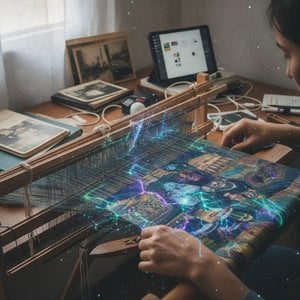
Elevate your home with WahooArt's bespoke AI-textured art. Transform cherished photos into hand-painted textile masterpieces through a seamless fusion of cutting-edge technology and classical craftsmanship. Discover timeless, luxury heirlooms designed to preserve your personal legacy.

Discover the breathtaking allure of Art Deco. Explore the era's iconic geometry, legendary designers like Erté, and timeless glamour. Perfect for discerning collectors seeking to infuse their spaces with sophisticated modernist elegance and historical prestige.

 Envoyer
 Partager
 Détails de l'œuvre

 Télécharger
 Articles similaires
 Diaporama


 Lire la suite




































 L'option verre n'est disponible que pour les dimensions inférieures à 110 cm.


