Passer au format impression Acheter la peinture faite à la main Partager
Détails Ajouter aux favoris Télécharger Articles similaires Voir le diaporama Statistiques

Clothing fabric

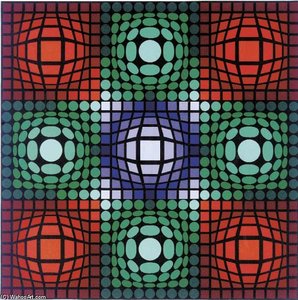
A vibrant repeating pattern of bold red squares and delicate white flowers defines this 1970 textile design by Anna Borkowska, offering a timeless piece of fabric art to enrich your collection.

Meta Description: Anna Borkowska, artiste textile polonaise marquée par l’exil soviétique et la guerre froide, est célèbre pour son rôle dans « La Ballon blanc ». Son œuvre explore les souvenirs et la résilience à travers des couleurs évoquant la mer Baltique et une esthétique abstraite pleine d'émotion.

Acquérez une image numérique haute résolution et optimisée, d'une qualité bien supérieure à l'aperçu en ligne.

Chaque fichier est méticuleusement préparé par nos spécialistes internes à l'aide d'outils avancés et d'une retouche manuelle experte. Nous garantissons que chaque image possède une clarté exceptionnelle, une précision des couleurs irréprochable et un niveau de détail fin.

Le fichier final est livré par e-mail sous 72 heures, optimisé pour une utilisation immédiate dans des contextes professionnels, éditoriaux et d'impression. Il offre la même qualité de confiance que celle utilisée par les plus grands studios de création, éditeurs et galeries.

Image numérique

Téléchargez un fichier haute résolution pour votre usage personnel, l'impression et vos projets créatifs. ( Passer au format impression Acheter la peinture faite à la main)

Prix total

$ 24,90

Inclus avec chaque commande d'image numérique

Livraison numérique experte, garantie.

En choisissant WahooArt.com, vous n'obtenez pas seulement une simple image : vous recevez une œuvre numérique sublimée avec professionnalisme, conçue avec précision et accompagnée d'une garantie de satisfaction. Voici tout ce qui accompagne automatiquement votre commande :

shipping_icon
Livraison rapide par e-mail

Votre fichier d'image numérique haute résolution vous sera envoyé par e-mail sous 72 heures après votre commande — prêt à un usage immédiat.

canvas_icon
Fichier numérique optimisé par l'IA

Votre œuvre d'art bénéficie d'une optimisation professionnelle grâce à des outils d'IA avancés et une retouche manuelle, garantissant un niveau maximal de détail, de clarté et de fidélité chromatique.

insurance_icon
Réexpédition gratuite à vie

Vous avez accidentellement supprimé ou perdu votre fichier ? Pas d'inquiétude — nous vous le renverrons gratuitement, quand vous le souhaitez.

tax_icon
Aucuns frais de douane — À jamais

Profitez de votre œuvre d'art instantanément sans frais de douane ni de livraison — les téléchargements numériques sont toujours exonérés de taxes.

color_icon
Garantie de fidélité des couleurs

Nous garantissons que votre image numérique reproduit les couleurs de l'original aussi fidèlement que possible grâce à des outils professionnels et une gestion rigoureuse des couleurs.

return_icon
Garantie de satisfaction de 100 jours

Si vous n'êtes pas satisfait de votre image numérique, nous la retoucherons ou vous rembourserons 100% sous 100 jours — sans poser de questions.

guarantee_icon
Garantie de remboursement à 100%

Pas satisfait ? Obtenez un remboursement intégral dans les 100 jours suivant la réception de votre fichier numérique — sans aucune question posée.

discount_icon
Remises sur les commandes groupées

Achetez 3 images, économisez 10% - Achetez 5, économisez 15% - Achetez 10+, économisez 20%. Idéal pour les projets créatifs, les galeries et les agences.

L'essentiel de l'œuvre

  • Title: Clothing fabric
  • Artist: Anna Borkowska
  • Year: 1970
  • Subject or theme: Floral textile design
  • Notable elements or techniques: Repeating pattern of red squares and flowers

The Rhythm of Pattern and Memory

In the delicate interplay of color and form found within Anna Borkowska’s Clothing fabric, we encounter more than just a textile design; we enter a rhythmic meditation on order and vitality. Created in 1970, this piece serves as a captivating study of repetition, where bold red squares act as anchors amidst a sea of pristine white. Each square is meticulously outlined in black, creating a sharp, graphic boundary that contains the soft, stylized blossoms within. These flowers, with their vibrant red centers, appear to dance across the fabric, offering a sense of organic movement that softens the geometric rigidity of the grid. The seamless repetition of the pattern suggests an infinite loop, inviting the viewer to lose themselves in the hypnotic cadence of the design.

The technique employed here speaks to a profound mastery of decorative simplicity. While the visual language is straightforward and documentary in its clarity, there is an underlying complexity in how Borkowska balances contrast and texture. The visible weave of the material adds a tactile dimension to the work, grounding the abstract pattern in the physical reality of cloth. This interplay between the stark, bold pigments and the soft, woven substrate creates a sensory experience that is both visually striking and physically comforting. For the collector or interior designer, this piece offers a unique opportunity to introduce a sense of structured elegance into a space, acting as a sophisticated focal point that bridges the gap between fine art and functional ornament.

A Legacy Woven in Resilience

To truly appreciate the soul of this work, one must look through the lens of Borkowska’s extraordinary life. Born in Mykolaiv and shaped by the harrowing displacements of World War II and Soviet exile, her artistry was never merely decorative; it was an act of reclamation. For an artist who had experienced the fragmentation of home and identity, the creation of a seamless, unbroken pattern can be viewed as a powerful symbolic gesture toward stability and continuity. The red and white motifs, while appearing cheerful and bright, carry the weight of a life dedicated to finding beauty amidst upheaval. Each repetitive square becomes a stitch in the larger tapestry of her memory, a way to reconstruct a sense of order in a world that had once been profoundly chaotic.

Integrating a high-quality reproduction of this textile into a contemporary interior provides more than just aesthetic appeal; it brings a narrative of endurance and grace. Whether showcased as a framed textile art piece or used as inspiration for bespoke upholstery, Clothing fabric resonates with an emotional depth that transcends its graphic nature. It is a piece that speaks to the heart of anyone who finds beauty in the small, recurring wonders of life—the way a single flower can bloom within a structured world, and how even the most fragmented histories can be woven back into a beautiful, cohesive whole.


Biographie de l'artiste

Anna Borkowska: Threads of Memory and Resilience

Anna Borkowska (1916 – 2008) emerged from the crucible of Soviet exile, forging a distinctive artistic path rooted in textile art—a medium that served as both a reflection of her personal journey and a powerful expression of broader themes concerning displacement, memory, and the enduring spirit of human experience. Born in Mykolaiv, Russia, Borkowska’s early life was irrevocably altered by the tumultuous events of World War II and the subsequent Soviet occupation of Poland. Forced to flee her homeland with her family, she endured the hardships of Siberian resettlement—a formative period that instilled within her a profound understanding of vulnerability and resilience. Her artistic vocation blossomed amidst this backdrop of upheaval. Borkowska’s fascination with textiles stemmed from an instinctive desire to capture intangible emotions and experiences – memories woven into fabric itself. Unlike many artists of her time who focused on representational painting, Borkowska embraced abstraction, utilizing color palettes reminiscent of the Baltic Sea—a landscape deeply ingrained in her subconscious and symbolizing both tranquility and turbulent currents. Her distinctive style combined meticulous craftsmanship with a conceptual depth that resonated powerfully with audiences worldwide. A pivotal moment arrived when she gained international recognition for her portrayal of the benevolent elderly woman in Jafar Panahi’s acclaimed film “The White Balloon” (1995). This role cemented Borkowska's reputation as an actress capable of conveying profound empathy and capturing the essence of human connection—a skill that translated seamlessly into her artistic endeavors. Her work consistently explored themes of loss, nostalgia, and the transformative power of confronting one’s past. The film showcased her ability to portray nuanced characters with sensitivity and grace, highlighting her commitment to portraying humanity's complexities. Borkowska’s oeuvre comprises numerous textile artworks, notably “Clothing Fabric” (1972), a mesmerizing watercolor design characterized by cool blues and purples arranged in a mosaic-like pattern. This piece exemplifies her commitment to conveying emotion through color and texture—a technique that speaks volumes about the artist's ability to distill complex feelings into visual form. The artwork’s serene aesthetic invites contemplation on themes of remembrance and transformation, mirroring Borkowska’s own life experience as a refugee who found solace in artistic creation. Her meticulous attention to detail—evident in the precise layering of pigments and the careful rendering of textures—underscores her dedication to mastering her craft and communicating profound ideas through visual language. Despite her relatively modest output compared to some contemporaries, Anna Borkowska left an indelible mark on Iranian cinema and the broader art landscape. Her unwavering dedication to her craft—coupled with her ability to imbue her work with emotional resonance—ensured that her legacy would endure beyond her lifetime. She remains a testament to the transformative potential of artistic expression in confronting adversity and celebrating the beauty inherent in human memory, embodying resilience and creativity amidst challenging circumstances. ### Useful Links: ### Useful Content:

Early Life and Influences

Anna Borkowska was born in Mykolaiv, Russia, in 1916. Her formative years were marked by the devastation of World War II and subsequent Soviet occupation of Poland, experiences that profoundly shaped her worldview and instilled within her a deep appreciation for resilience.

Textile Art: A Reflection of Emotion

Borkowska’s artistic passion originated from an instinctive desire to capture intangible emotions—memories woven into fabric itself. Rejecting representational painting, she embraced abstraction, drawing inspiration from the tranquil yet turbulent Baltic Sea landscape.

Recognition in Film

Her breakthrough came with her portrayal of a compassionate elderly woman in Jafar Panahi’s “The White Balloon” (1995), securing her reputation as an actress adept at conveying empathy and capturing the essence of human connection. This role demonstrated her ability to portray complex characters with sensitivity.

Notable Artwork: Clothing Fabric

"Clothing Fabric" (1972) exemplifies Borkowska’s distinctive style—a watercolor design characterized by cool blues and purples arranged in a mosaic-like pattern. Her meticulous technique conveyed emotion through color and texture, reflecting her belief that art could communicate profound ideas.

Legacy

Despite her relatively modest output, Anna Borkowska’s unwavering dedication to her craft ensured that her legacy would endure beyond her lifetime. She remains a symbol of artistic resilience and creativity in the face of adversity—a testament to the transformative power of art.

Anna Borkowska

Anna Borkowska

1916 - 2008 , Russie

En bref

  • Artistic Movement Or Style: Art textile
  • Date Of Birth: 1916
  • Date Of Death: 2008
  • Full Name: Anna Borkowska
  • Nationality: Polonaise
  • Notable Artworks: ['Clothing Fabric']
  • Place Of Birth: Mykolaiv, Russie