Palazzo Ducale: A Venetian Tapestry of Power and Art
The Palazzo Ducale, or Doge’s Palace in Venice, isn't merely a building; it’s an immersive chronicle etched into stone and painted with the brilliance of centuries—a testament to the enduring legacy of Venetian republicanism. Rising majestically from St. Mark’s Square, this architectural marvel invites visitors on a profound journey through Venetian history – a tale woven with political intrigue, artistic genius, and the rise and fall of a once-dominant maritime republic. More than just a museum, it's a tangible echo of Venice’s extraordinary past; a place where whispers of justice mingle with the vibrant hues of Renaissance masterpieces, and hidden chambers reveal secrets that shaped an empire.
A Fortress Rooted in Faith:
Its origins trace back to the 9th century as a fortified stronghold designed to defend against invading forces—primarily Slavic raids—reflecting Venice’s initial vulnerability. Yet, this defensive structure blossomed into the magnificent edifice we see today, largely shaped by the 14th and 15th centuries under Doges like Francesco Petracco and Giovanni Mocenigo, who oversaw ambitious rebuilding projects that solidified Venetian dominance. The palace's walls stand tall against time, bearing witness to centuries of turbulent history—a reminder of Venice’s unwavering determination to safeguard its independence amidst constant threats from rival powers.
Gothic Grandeur Meets Renaissance Innovation:
The palace’s architecture embodies a remarkable fusion of styles. Built primarily in Gothic style, influenced by Byzantine precedents—particularly the Basilica di San Marco—it showcases a unique blend of architectural elements that reflect Venice’s position at the crossroads of cultures. The exterior façade is dominated by soaring arches and pointed windows crafted from Istrian stone, creating a sense of dynamism and grandeur. This deliberate departure from traditional fortress architecture signaled a new era of artistic experimentation and sophistication – foreshadowing the developments of the Renaissance. Architects skillfully blended Byzantine influences with Venetian Gothic traditions, resulting in an unparalleled visual experience for visitors.
The Heart of Venetian Governance:
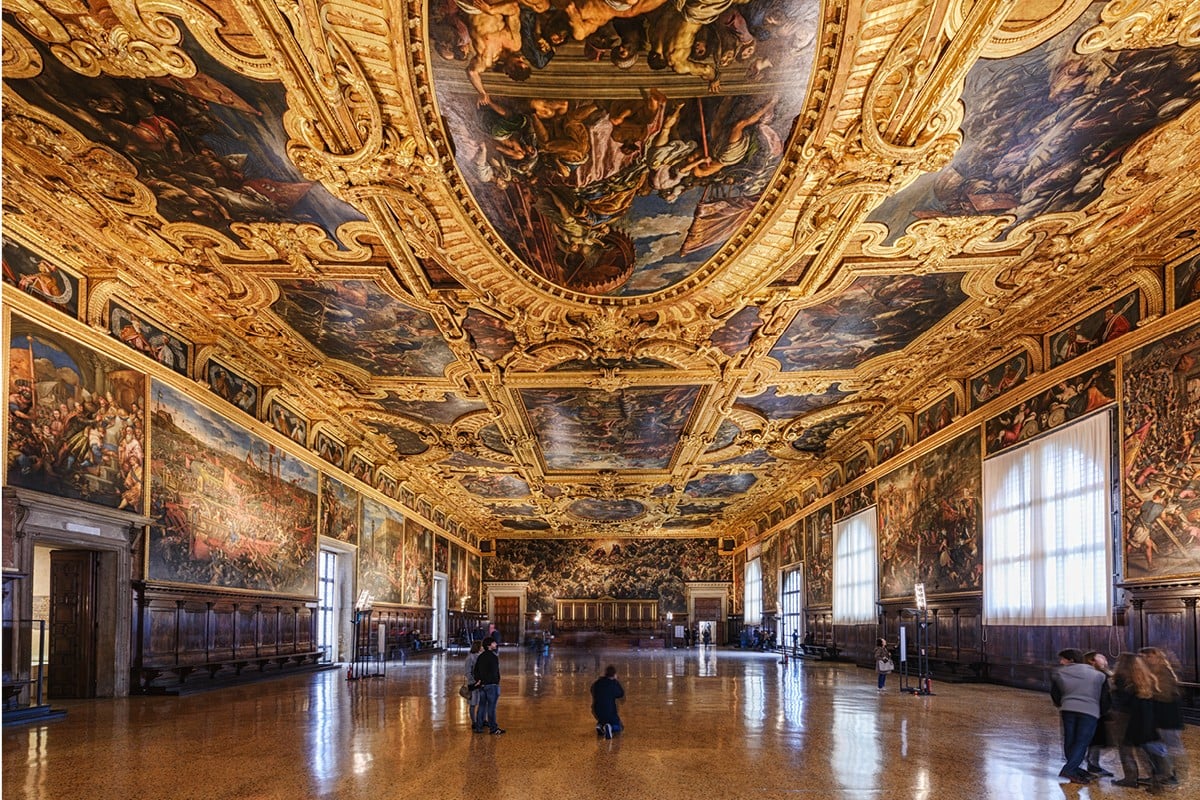
Inside, the Sala del Maggior Consiglio (Hall of the Great Council) stands as an emblem of Venetian political life—a monumental space adorned with Tintoretto’s breathtaking “Paradise,” measuring over 120 feet long and 34 feet high. This masterpiece serves as a powerful reminder of Venice's commitment to justice and civic virtue, mirroring the values upheld by its rulers. Nearby, Veronese’s “Triumph of Venice” celebrates the city’s maritime prowess and artistic achievements with dazzling displays of color and opulent detail—a visual feast for discerning eyes. The hall’s sheer scale underscores the importance of deliberation and decision-making within the Venetian Republic – a space where history unfolded amidst intense debate and artistic brilliance.
Treasures Revealed:
Beyond these iconic artworks lie countless treasures: intricate tapestries depicting biblical scenes commissioned by Doges to bolster their legitimacy; delicate glasswork showcasing Venetian craftsmanship—a skill that defined the city’s economy for centuries—and portraits capturing the likenesses of influential figures who shaped Venetian history. Don't miss the Sala del Trionfo, where Veronese painted his monumental “Triumph of Doge Paul V”—a vibrant celebration of Venetian power and prosperity. These objects offer a glimpse into the daily life of Venetian aristocrats and artisans—illuminating aspects of Venetian culture that extend far beyond its artistic achievements.
A Legacy Enduring:
Today, the Palazzo Ducale continues to evolve as a cultural hub—hosting regular exhibitions that explore themes ranging from Venetian glassmaking to the influence of Byzantine mosaics. Recent displays have captivated audiences with their insightful perspectives on Venetian art and history, fostering a deeper appreciation for Venice’s rich heritage. Its presence on St. Mark’s Square remains an irresistible draw for visitors worldwide, eager to experience the magic of this unparalleled architectural masterpiece. Palazzo Ducale welcomes visitors from all over the globe who wish to immerse themselves in the splendor of Venetian artistic heritage.