The Master of German Genre Painting
Ludwig Knaus stands as a preeminent figure in the history of nineteenth-century German art, a painter whose brush captured the very heartbeat of rural and domestic life. Born in Wiesbaden, Germany, Knaus emerged from the prestigious younger Düsseldorf school of painting, an environment that initially shaped his early aesthetic. His formative years were spent under the tutelage of masters such as Sohn and Schadow, where he developed a foundation characterized by a certain gravity and heavy use of color. However, the true evolution of his artistic soul occurred when he ventured to Paris in 1852. Enrolling as a pupil of Thomas Couture, Knaus underwent a profound transformation, refining his technique and moving away from the darker, more somber tones of his youth toward a more luminous and nuanced approach to light and character.
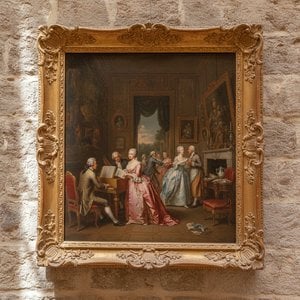
This period of Parisian study was instrumental in his ascent to international acclaim. By 1853, his work Morning after the Kermess had earned him the second gold Medal of the Salon, signaling his arrival as a celebrated talent on the European stage. His ability to blend the precision of academic training with an emotive, narrative depth allowed him to become a master of genre painting—a style dedicated to portraying everyday scenes with unwavering accuracy and emotional resonance. Whether depicting the quiet companionship of a huntsman in Ein Försterheim or the communal enchantment found in The Magician in the Barn, Knaus possessed a rare ability to turn the mundane into the monumental.
A Tapestry of Human Connection and Tradition
The essence of Knaus’s oeuvre lies in his profound empathy for his subjects. He did not merely observe the peasantry or the working classes; he immortalized their dignity, their toil, and their shared joys. His works often function as windows into a bygone era, capturing the rhythmic, communal life of the nineteenth-century German landscape. In masterpieces such as Potato Harvest, one sees a symphony of labor where the boundaries between individual effort and family unity dissolve into a singular, shared purpose. He had a remarkable gift for weaving diverse figures into a single, breathless moment, creating compositions that feel less like static images and more like living tapestries of human connection.
Beyond the grand communal scenes, Knaus excelled in capturing the intimate and the somber. His ability to depict poverty with dignity is evident in works like The Hurdy-gurdy Man, where captivating detail and thoughtful tones evoke a sense of respect for the struggles of the street musician. This mastery of atmosphere—using a palette rich in browns, ochres, and reds—allowed him to create interiors that feel warm, inviting, and deeply lived-in. His later works also explored more classical themes, including a series of "Idyls" featuring nudes in a classical style, demonstrating the breadth of his technical range and his ability to navigate between the gritty realism of contemporary life and the idealized beauty of classical tradition.
Legacy and Academic Eminence
As his career progressed, Knaus’s influence extended far beyond the canvas and into the very institutions that shaped future generations of artists. His professional journey took him through Berlin, where he practiced for several years, and eventually led to his appointment as a professor at the Royal Prussian Academy in Berlin. This position solidified his status not just as a creator of beautiful images, but as a pillar of the academic art world. His later period produced some of his most enduring works, including The Holy Family and The Road to Ruin, both of which are now held in prestigious collections such as the Metropolitan Museum of Art in New York.
The historical significance of Ludwig Knaus resides in his role as a bridge between eras. While he emerged from the traditions of the Düsseldorf school, his work resonated with the rising tide of Realism and Naturalism—movements that sought to reject the dreamlike haze of Romanticism in favor of unvarnished truth. Through his meticulous attention to detail and his profound respect for the subject matter, Knaus provided a visual record of the cultural values of his time: the dignity of labor, the warmth of domesticity, and an enduring connection to the natural world. His legacy remains etched in the vibrant, lifelike quality of his paintings, which continue to offer viewers a poignant glimpse into the soul of nineteenth-century Europe.