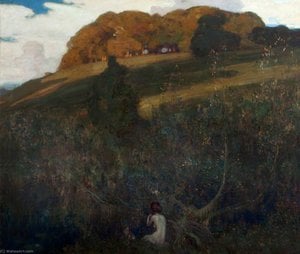
Ilmavuuden ja tunnelman visionääri
Sir Alfred Edward East nousi esiin viktoriaanisen Britannian eläväisestä taiteellisesta miljööstä, aikakaudesta, jota määritteli syvä kiehtumus sekä huolelliseen realismiin että kasvavaihin romanttisiin ihanteisiin. Ketteringissä, Northamptonshiressä syntynyt taiteilija aloitti luova matkansa peruskoulutuksella Glasgow School of Artissa. Vaikka hänen varhaiset taipumuksensa juontivat juurensa brittiläisen maisemamaalauksen arvokkaisiin perinteisiin – genreen, jota olivat jo koristaneet mestarit kuten Constable ja Turner – Eastin taiteellinen suunta muuttui ratkaisevasti ja muuntaen. Hän siirtyi pelkästä dokumentoinnista eteenpäin ja pyrki sen sijaan vangitsemaan luonnon todellisen olemuksen syvän emotionaalisen resonanssin kautta.
Tätä kehitystä muovasi voimakkaasti kohtaaminen ranskalaisen Barbizon-koulun kanssa. Sen sijaan, että East olisi vain omaksunut uuden tekniikan, hän syleili filosofista muutosta, joka priorisoi suoraa havainnointia ja maaseudun elämän paljaata kuvausta. Hän hylkäsi suuret historialliset narratiivit ja suosi sen sijaan arkisten näkyjen runoutta, keskittyen siihen, miltä tuntuu olla todella uppoutuneena luontoon. Tämä en plein air -maalaamisen tavoittelu antoi hänelle mahdollisuuden hallita valon, varjon ja ilmakehän hienovaraista vuorovaikutusta, luoden teoksia, joilla on lähes käsin kosketeltava laatu.
Kaukaiset horisontit vaikutteena
Eastin uran käännekohta koitti vuonna 1888, kun Fine Art Societyn toimitusjohtaja Marcus Huish kutsui hänet matkustamaan Japanin halki kuudeksi kuukaudeksi. Tämä tutkimusmatka osoittautui muuntavaksi, sillä Japanin maiseman ainutlaatuinen valo, eloisat värit ja erottuva kulttuurinen estetiikka vangitsivat hänen mielikuvituksensa. Hän ei ainoastaan dokumentoinut eksoottisia kohteita; hän omaksui uuden tavan nähdä – herkistyneen aistimuksen sommittelusta ja luonnon sekä ihmisen läsnäolon välisestä herkästä tasapainosta. Vuonna 1890 järjestetty 104 maalauksen näyttely tästä matkasta oli valtava menestys, mikä vakiinnutti hänen asemansa aikakautensa johtavana maisemamaalattuna.
Hänen työnsä on edelleen monipuolisten vaikutteiden kaunis synteesi, jossa yhdistyvät seuraavat elementit:
- Barbizon-vaikutus: Sitoutuminen maanläheisiin sävyihin, hillittyihin väripaletteihin ja ilmakehän perspektiivin herättävään voimaan.
- Brittiläinen perinne: Syvä kunnioitus Englannin maaseudun karun kauneuden ja tyynen hengen kohtaan.
- Japanilainen estetiikka: Uudet näkökulmat valoon ja hienostunut herkkyys luonnon maailman hienovaraisille yksityiskohdille.
Perintö ja taiteellinen merkitys
Koko elämänsä ajan Eastin omistautuminen maiseman sielun vangitsemiselle jätti pysyvän jäljen aikansa taiteeseen. Hänen kykynsä välittää hiljainen suuruus näkyvissä, kuten Midland Meadows -teoksessa tai vuodenaikojen vaihteluissa October Glow, near Yardley Woods -maalauksessa, osoittaa mestarillisen hallinnan tunnelmasta ja valosta. Hänen henkilökohtaisten kankaidensa takana hänen yhteys juuriinsa säilyy Alfred East Art Galleriassa Ketteringissä, joka toimii suojapaikkana juuri sille maisemamaalauksen hengelle, jota hän oli ollut mukana edistämässä. Hänen perintönsä jatkaa resonointiaan teoksissa, jotka kutsuvat katsojia palaamaan luonnon maailman kestävän kauneuden äärelle.
Kysymykset ja vastaukset
Missä ja minä vuonna Alfred East on syntynyt?
Alfred East syntyi Lavalssä vuonna 1844.
Voinko lajitella Alfred East teokset värin mukaan?
Värispektri-sivulla Alfred East:n teokset on järjestetty värin mukaan.
Onko olemassa yleiskatsaus kaikista niistä aiheista, joita Alfred East on maalannut?
Alfred East:n teoksia voi tutkia aiheen mukaan artistin Aiheatlas -sivulla.