EsikatseluEsikatselu Esikatsele AR-tilassaEsikatsele AR-tilassa Osta käsintehty maalaus Osta käsintehty maalausSiirry digitaaliseen kuvaan Siirry digitaaliseen kuvaan JaaJaa
Tarkemmat tiedotTarkemmat tiedot Lisää suosikkeihin Lisää suosikkeihin LataaLataa SamanlaisiaSamanlaisia RöntgenkuvaRöntgenkuva DiaesitysDiaesitys TilastotTilastot

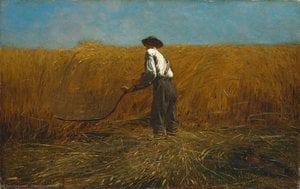
Farmer with a Pitchfork

Farmer with a Pitchfork - Winslow Homer's serene depiction captures a rural moment: a man tending to his pitchfork amidst birds and haystacks, reflecting the American spirit of observation and craftsmanship honed through early illustration work.

Winslow Homerin upea "Auringonlasku tulessa" -maalaus vangitsee meren ja taivaan värikkään loistavuuden. Tutustu realistiseen tyyliin ja Homerin tunnetun teoksen kauneuteen!

Giclée-printit ja taideprintit

Museolaatuisia giclée- tai kankaitaulun tulosteita nopealla tuotannolla ja joustavilla viimeistelyvaihtoehdoilla. (Osta käsintehty maalaus Osta käsintehty maalausSiirry digitaaliseen kuvaan Siirry digitaaliseen kuvaan)

P118B $10
P118H $10
P118W $10
P438Z $10
P508JH $12
P508YH $12
P805H $10
P805Z $10
P919BZ $10
P919G $10
P919XJ $10
P959ZH $10
P968JZ $12
W106C $8
W218G $10
W218JH $8
W218Y $10
W307PJ $10
W316G $10
W316PJ $8
W316Y $10
W398PJ $8
W4111J $10
W500HY $15
W500JH $15
W692G $12
W849H $8
W940BG $15
W953PJ $8

Vakiokoko
räätälöity
CM
INCH

Valitse valmiista mitoistamme sellaiset, jotka vastaavat teoksen alkuperäisiä mittasuhteita.

leveys
korkeus

Voit syöttää omat mitat sopiaksesi tiettyyn kehykseen tai tilaan. Jos valittu koko ei vastaa alkuperäisen kuvan mittasuhteita, rajaamme teosta tai laajennamme kuvaa peilatulla tai yhtenäisellä reunalla. Digitaalinen mallikuva lähetetään hyväksyttäväksi ennen tuotannon aloittamista.
Huomaathan, että näytöllä näkyvä esikatselu ei vastaa lopullista rajausta tai laajennusta. Vain mallikuva näyttää lopullisen sommittelun tarkasti.
Vaikka räätälöityjä kokoja on saatavilla, suosittelemme valitsemaan mitat valmiista listasta alkuperäisten mittasuhteiden säilyttämiseksi.

Toimitus maailmanlaajuisesti () kahdessa viikossa tavallisen 4–5 viikon sijaan. (10 syyskuu)

why_choose_icon
Ilmainen pikatoimitus ympäri maailman
why_choose_icon
Korkealaatuinen pellavakangas
why_choose_icon
Kattava kuljetusvakuutus
why_choose_icon
Tulliveron palautustakuu
why_choose_icon
Täydellinen värien vastaavuustakuu
why_choose_icon
100 päivän palautusoikeus (vain valmistusvirheet)
why_choose_icon
100% rahat takaisin -takuu
why_choose_icon
Määräalennus tarjous

Kokonaishinta

$ 68

reproduction

Farmer with a Pitchfork

Giclée-printit ja taideprintit

Replikaatin koko

-

Kokonaishinta

$ 68

Pikaista tietoa

  • Medium: Oil on Canvas
  • Title: The Man With The Pitchfork
  • Artist: Winslow Homer
  • Dimensions: 28 3/4 x 37 1/2 inches (73.03 x 95.33 cm)
  • Artistic style: Impressionistic
  • Subject or theme: Rural Life
  • Notable elements or techniques:
    • Detailed depiction of rural landscape
    • Emphasis on observation and realism

Taidevisa

Jokaisessa kysymyksessä on vain yksi oikea vastaus.

Kysymys 1:
What is Winslow Homer known for capturing in his paintings?
Kysymys 2:
Where did Winslow Homer begin his artistic training?
Kysymys 3:
What is the predominant medium used by Winslow Homer in his early paintings?
Kysymys 4:
The painting depicts a man holding what tool?
Kysymys 5:
What is the overall atmosphere conveyed by Homer's depiction of the scene?

A Brush with Resilience: Exploring Winslow Homer’s “The Pitchfork”

Winslow Homer (1836 – 1910), an artist who defied convention and forged his own path to artistic greatness, remains one of America's most beloved painters. Unlike many of his peers who pursued formal training in Europe, Homer cultivated a singular vision—a deeply rooted connection to the American landscape and its inhabitants—resulting in works that resonate with enduring power.

"The Pitchfork," completed in 1865, exemplifies this distinctive approach. Painted shortly after the Civil War’s conclusion, it depicts a solitary man standing amidst tall grass, clutching a pitchfork – an instrument of labor and sustenance – against a backdrop of muted blues and greens.

Style and Technique: Watercolor's Quiet Strength

Homer favored watercolor as his primary medium. This technique allowed for remarkable subtlety and luminosity, capturing the ephemeral qualities of light and atmosphere with unparalleled grace. Unlike oil paints which build up layers of pigment, watercolor relies on transparent washes that blend seamlessly together, creating an image that feels both immediate and deeply contemplative.

The artist’s meticulous observation is evident in every detail—the texture of the grass, the posture of the man, even the slight curve of his hat. Homer employed a loose brushstroke style, prioritizing tonal harmony over precise delineation. This deliberate choice contributes to the painting's overall sense of tranquility and understated emotion.

Historical Context: Echoes of Wartime Disquiet

“The Pitchfork” emerged from a period marked by profound social upheaval. The Civil War had irrevocably altered the fabric of American life, leaving scars of loss and division. Homer’s depiction of rural America—a scene of quiet resilience amidst devastation—can be interpreted as a symbolic affirmation of enduring values: perseverance, connection to the land, and the promise of renewal.

The painting wasn't merely documenting a moment in time; it was responding to it. Homer sought to convey not just what he *saw*, but also what he *felt*—a quiet dignity born from confronting hardship with unwavering resolve.

Symbolism and Emotional Impact: Finding Hope Amidst Decay

The pitchfork itself is laden with symbolic significance. Representing agricultural labor, it symbolizes the fundamental human need for sustenance and productivity. Yet, in Homer’s hands, it transcends its literal function to become a symbol of hope—a tool poised to cultivate new beginnings from the ashes of old.

"The Pitchfork" invites viewers to contemplate themes of vulnerability, fortitude, and the beauty inherent in simplicity. Its muted palette reinforces this emotional resonance, fostering a feeling of contemplative stillness. It’s a painting that speaks not to the intellect alone, but directly to the soul—a testament to Homer's ability to transform observation into profound artistic expression.

Conclusion: An Enduring Legacy

Winslow Homer’s “The Pitchfork” stands as an enduring emblem of American art. Its masterful technique, evocative symbolism, and poignant historical context continue to captivate audiences today. More than just a depiction of a rural scene, it's a meditation on the human spirit—a reminder that even in times of darkness, beauty and resilience can flourish.


Taiteilijan elämäkerta

A Brush with the American Spirit: The Life and Art of Winslow Homer

Winslow Homer, born in Boston in 1836, wasn’t sculpted by the traditional European art academies that shaped so many of his contemporaries. Instead, he emerged from a distinctly American experience, one rooted in practicality and observation. His journey began not with grand historical canvases, but as a commercial illustrator at the tender age of twelve for Harper's Weekly. This early apprenticeship was formative, honing an exceptional ability to capture scenes with clarity and detail – skills that would become hallmarks of his mature work. He wasn’t learning perspective in Paris; he was learning to *see* America, its people, and its unfolding story. The bustling streets of Boston, the quiet dignity of rural New England life, these were his first subjects, rendered with a precision born of necessity for the demands of print media. This foundation allowed him to transition into painting, initially in watercolor, before fully embracing the expressive potential of oil paints.

From Pastoral Scenes to the Raw Power of Nature

Homer’s early paintings often depicted idyllic scenes – children playing, farmers tending their fields, quiet moments of domesticity. These works, while charming, hinted at a deeper artistic sensibility waiting to be unleashed. The catalyst for this transformation was undoubtedly the Civil War. As a war correspondent for Harper's Weekly, Homer witnessed firsthand the brutal realities of conflict. He didn’t focus on heroic battles or grand strategies; instead, he documented the everyday lives of soldiers and civilians, the quiet moments of grief and resilience amidst chaos. This experience profoundly altered his artistic vision. The pastoral scenes gave way to more challenging subjects: veterans grappling with trauma, freed slaves navigating a new world, and the stark beauty of landscapes touched by hardship. He began to explore themes of struggle, isolation, and humanity’s precar He wasn't interested in imitating European styles; he wanted to create an art that was uniquely American, reflecting its landscapes, its people, and its challenges. His style also evolved, becoming bolder and more direct, reflecting the raw emotional impact of what he had witnessed. Breezing Up (A Fair Wind), painted in 1876, exemplifies this skill – a quintessential depiction of American maritime life, brimming with energy and movement. The Gulf Stream, created decades later, is perhaps his most iconic work, a powerful and symbolic portrayal of a lone man battling the forces of nature, a metaphor for human struggle against overwhelming odds. He possessed an extraordinary ability to capture light, whether it was the dazzling glare of the sun on the ocean or the soft glow of twilight over a rural landscape. This mastery extended to his watercolors, where he achieved remarkable atmospheric effects through vibrant colors and delicate washes. Innocence, a poignant portrayal of childhood set against the backdrop of nature, and **Man of Science** are testaments to this commitment. His influence can be seen in the work of later American painters who sought to depict their own country with similar directness and emotional depth.

Mastering Light, Texture, and the American Landscape

Winslow Homer's artistic technique is immediately recognizable for its solidity and texture. He wasn’t interested in fleeting impressions; he wanted to build up a sense of tangible reality on the canvas. His oil paintings are characterized by a direct painting approach – layers of paint applied with confidence, creating depth and luminosity. He wasn’t simply painting what he saw; he was conveying a feeling, an emotional truth about the human condition. His unwavering dedication to capturing the essence of American life—from the serene beauty of coastal vistas to the harrowing realities of wartime—established him as one of the foremost painters of 19th-century America and cemented his legacy as a pioneer of American Realism.

A Lasting Impression: Homer’s Historical Significance

Winslow Homer's art offers a profound window into 19th-century America, providing invaluable insights into the social, political, and cultural landscape of his time. His paintings are not merely beautiful representations; they are powerful statements about human resilience, the beauty and power of nature, and the complexities of the American experience. He died in 1910, leaving behind a prolific body of work that continues to resonate with audiences today. His ability to capture the essence of a nation undergoing rapid change – from the aftermath of civil war to the dawn of a new century – ensures his place as one of America’s most important and enduring artists. He wasn't just painting pictures; he was documenting a moment in time, preserving it for generations to come.
  • His work continues to inspire contemporary artists.
  • Homer remains a pivotal figure in the development of American Realism.

Winslow Homer

Winslow Homer

1836 - 1910 , Yhdysvallat

Pikatiedot

  • Artistic Movement Or Style: Amerikkalainen Realismi
  • Artists Or Movements Influenced By This Artist: ['Amerikkalaiset maalarit']
  • Artists Who Influenced This Artist:
    • Barbizon koulun taideilijat
    • Courbet
    • Millet
  • Date Of Birth: 24. helmikuuta 1836
  • Date Of Death: 29. syyskuuta 1910
  • Full Name: Winslow Homer
  • Nationality: Amerikkalainen
  • Notable Artworks:
    • Breezing Up
    • The Gulf Stream
    • Innocence
  • Place Of Birth: Boston, USA
Tutustu teoksiin, jotka on järjestetty aiheiden, tyylien ja ominaisuuksien mukaan.