Käsinmaalattu öljyväri kankaalle haluamassasi koossa ja kehyksissä, taiteilijoidemme valmistamana tilauksesta. ( Osta printti Osta kuva)





























Valitse valmiista mitoistamme sellaiset, jotka vastaavat teoksen alkuperäisiä mittasuhteita.

Voit syöttää omat mitat sopimaan tiettyyn kehykseen tai tilaan. Jos valitsemasi koko ei vastaa alkuperäisen kuvan mittasuhteita, rajaamme taideteoksen tai jatkamme maalausta käsin maalatuilla elementeillä. Digitaalinen esikatselu lähetetään hyväksyttäväksi ennen tuotannon aloittamista.
Huomioithan, että näytöllä oleva esikatselu ei vastaa todellista rajausta tai jatkamista. Vain digitaalinen mallikuva näyttää lopullisen sommittelun tarkasti.
Vaikka mittatilaustyöt ovat mahdollisia, suosittelemme valitsemaan mitan ennalta määritetystä listasta alkuperäisten mittasuhteiden säilyttämiseksi.
Maailmanlaajuinen toimitus () 3–4 viikossa tavallisen 5 viikon sijaan. (7 syyskuu). Laadusta ei tingitä.


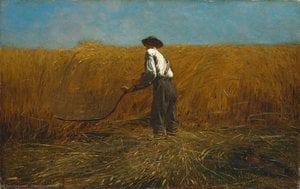
Autumn
Replikaatin koko
Winslow Homer’s “Autumn,” painted in 1877, is far more than a mere depiction of seasonal change; it is an evocative embodiment of the American spirit. In this masterful oil on canvas, Homer invites us into a quiet contemplation of rural life, where every brushstroke serves to capture a fleeting moment of tranquility. The scene unfolds with a deliberate, graceful rhythm: a woman, dressed in an elegant black gown and a thoughtful hat, wanders along a path lined with trees ablaze in crimson and gold. As she moves through the woods, her presence acts as a bridge between the viewer and the natural world, turning a simple landscape into a profound narrative of observation and connection.
The painting’s power lies in its ability to distill complex emotions into a carefully crafted composition. While the primary focus remains on the solitary figure, Homer subtly weaves in a broader social tapestry. In the distance, other figures can be glimpsed, suggesting a family or a community enjoying the season’s bounty. This layering of depth ensures that the painting is never static; it breathes with the life of a living, breathing landscape. For the collector or interior designer, this piece offers a sense of serene movement, making it an ideal centerpiece for spaces designed for reflection and peace.
At its core, “Autumn” is a triumph of the Realist movement. During a period when many artists were still enamored with Romantic idealism and grand, sweeping myths, Homer chose a different path. He sought the unvarnified truth of the everyday. His technique is rooted in an exceptional ability to document the tangible textures of existence—the rough bark of ancient trees, the delicate decay of fallen leaves, and the subtle play of light through a thinning canopy. This commitment to realism is reflected in his muted yet rich palette, dominated by earthy browns, deep reds, and warm yellows that mirror the natural cycle of life and dormancy.
Homer’s background as a commercial illustrator for Harper's Weekly provided him with a unique advantage: a trained eye for clarity and detail. He did not need the grand stages of European academies to learn how to see; he learned by observing the bustling streets of Boston and the quiet dignity of New England. In “Autumn,” this precision is evident in the way the light catches the woman's pale skin and the way the shadows pool beneath the vibrant foliage. This level of detail ensures that a high-quality reproduction retains the tactile gravity and "weight" that Homer intended, allowing the artwork to command attention in any sophisticated setting.
Beyond its visual splendor, “Autumn” carries a deep symbolic resonance. The season of autumn is inherently transitional—a period of both beauty and inevitable decline. The vibrant red leaves represent the peak of life's brilliance just before the onset of winter's slumber. By placing a solitary woman at the heart of this transition, Homer touches upon themes of introspection and the passage of time. There is a certain nostalgia embedded in the scene, a longing for the simplicity of a world that feels both grounded and ephemeral.
For those seeking to infuse their homes with art that inspires emotion, this piece offers a unique emotional spectrum. It can evoke feelings of warmth and coziness through its autumnal hues, or a sense of quiet solitude through its composition. Whether displayed in a sunlit library or a moody study, the painting serves as a window into a bygone era of American history, offering a timeless connection to the beauty found in the most humble of moments. It is an investment not just in a beautiful image, but in a piece of cultural heritage that continues to resonate with the soul.


1836 - 1910 , Yhdysvallat

Explore the profound beauty of American Realism. From Winslow Homer’s rural landscapes to the dignity of everyday life, discover how master artists captured the soul of a nation through evocative oil paintings and timeless fine art techniques.

Explore the profound beauty of American art history. From the Hudson River School to iconic landscapes, discover a curated journey through the masterpieces that defined a nation's spirit and the enduring legacy of American Romanticism.

 Esikatselu
 Jaa
Jaa Jaa
Jaa
 Tarkemmat tiedot

 Lataa
Lataa
 Samanlaisia
 Röntgenkuva
 Diaesitys

 Näytä lisää







 Lasivaihtoehto on saatavilla vain alle 110 cm kokoisina teoksina