


Museolaatuisia giclée- tai kankaitaulun tulosteita nopealla tuotannolla ja joustavilla viimeistelyvaihtoehdoilla. ( Osta käsintehty maalaus Osta kuva)





























Valitse valmiista mitoistamme sellaiset, jotka vastaavat teoksen alkuperäisiä mittasuhteita.

Voit syöttää omat mitat sopiaksesi tiettyyn kehykseen tai tilaan. Jos valittu koko ei vastaa alkuperäisen kuvan mittasuhteita, rajaamme teosta tai laajennamme kuvaa peilatulla tai yhtenäisellä reunalla. Digitaalinen mallikuva lähetetään hyväksyttäväksi ennen tuotannon aloittamista.
Huomaathan, että näytöllä näkyvä esikatselu ei vastaa lopullista rajausta tai laajennusta. Vain mallikuva näyttää lopullisen sommittelun tarkasti.
Vaikka räätälöityjä kokoja on saatavilla, suosittelemme valitsemaan mitat valmiista listasta alkuperäisten mittasuhteiden säilyttämiseksi.
Toimitus maailmanlaajuisesti () kahdessa viikossa tavallisen 4–5 viikon sijaan. (7 syyskuu)


Lame theater
Replikaatin koko
William Hogarth’s “Lame Theater,” completed around 1730, stands as a cornerstone of English Rococo satire and a remarkably astute observation of the social landscape of Georgian London. More than just a depiction of an evening performance—though it vividly captures one—the print operates on multiple levels, delivering a biting critique of morality, ambition, and the pervasive hypocrisy that characterized the era.
Hogarth’s etching technique is paramount to conveying the artwork's impact. The artist employs an extensive network of fine lines to delineate facial features, clothing folds, and architectural details with remarkable accuracy. Simultaneously, thicker lines define structural elements like doorways and walls, establishing depth and creating a sense of spatial realism. This meticulous linework isn’t merely decorative; it actively contributes to the textural qualities of the print—densely hatched areas represent shadows and darker tones, while sparser regions depict illuminated surfaces.
"Lame Theater" transcends its immediate subject matter to resonate with viewers on a deeper emotional level. Hogarth’s unflinching gaze captures the moral decay of his time—a theme that continues to fascinate audiences today. Considered by many critics as one of Hogarth's finest achievements, it exemplifies the artist's commitment to portraying human nature with honesty and wit—a legacy that cemented his place as a pioneer of English satire and profoundly influenced subsequent generations of artists.
The artwork’s creation involved several crucial steps. Initially, Hogarth created a copper plate using etching tools, meticulously transferring the image onto its surface. Subsequently, ink was applied to the plate, followed by printing onto paper—a process that ensured the reproduction of the original print's tonal qualities and textural nuances.


1697 - 1764 , Iso-Britannia

Explore the satirical world of William Hogarth, pioneering British painter & engraver. Discover his iconic works like *A Rake's Progress* and insightful social commentary on 18th-century London life.
Tutustu 10 legendaariseen mestariprinttiin, jotka muuttivat taiteen suuntaa! Albrecht Dürerin, Rembrandtin ja Goyan teoksia – tarinat, tekniikat & inspiraatio sisustukseen. Löydä kaikki mestariteokset WahooArt.com:sta.
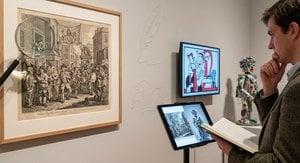
Explore the history of satire in art! From Hogarth's London to contemporary critique, discover how artists use wit & visual power to reflect and challenge society. Expert insights at WahooArt.

Explore the rich history of engraving with WahooArt. Discover techniques, iconic artists like Dürer & Callot, collecting tips, and expert guidance for preserving your art investment. Learn about intaglio printing & more!

Tutustu barokki sisustuksen loistoon! Opi luomaan ylellistä ja tunnelmallista kotia historiallisen tyylin inspiroimana. Vinkkejä, esimerkkejä ja in apua.

 Esikatselu
 Jaa
Jaa Jaa
Jaa
 Tarkemmat tiedot

 Lataa
Lataa
 Samanlaisia
 Röntgenkuva
 Diaesitys
 Näytä lisää







 Lasivaihtoehto on saatavilla vain alle 110 cm kokoisina teoksina


