Ilmainen taidekonsultointi

x
Tilaa maalaus Tilaa maalausOsta kuva Osta kuva JaaJaa
TiedotTiedot Lisää suosikkeihin Lisää suosikkeihin LataaLataa SamanlaisiaSamanlaisia X-lähikuvaX-lähikuva DiaesitysDiaesitys

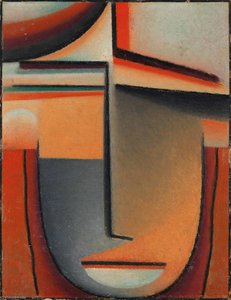
Head

Valentin Khrushch (1943-2005): Ukrainian artist & Odesa Nonconformism leader. Explore expressionist paintings, 'fence exhibitions,' defying Soviet art norms. Works at UNESCO!

Giclée-printit ja taideprintit

Museolaatuisia giclée- tai kankaitaulun tulosteita nopealla tuotannolla ja joustavilla viimeistelyvaihtoehdoilla.

Standard
custom
CM
INCH

Valitse valmiista mitoistamme sellaiset, jotka vastaavat teoksen alkuperäisiä mittasuhteita.

leveys
korkeus

Voit syöttää omat mitat sopiaksesi tiettyyn kehykseen tai tilaan. Jos valittu koko ei vastaa alkuperäisen kuvan mittasuhteita, rajaamme teosta tai laajennamme kuvaa peilatulla tai yhtenäisellä reunalla. Digitaalinen mallikuva lähetetään hyväksyttäväksi ennen tuotannon aloittamista.
Huomaathan, että näytöllä näkyvä esikatselu ei vastaa lopullista rajausta tai laajennusta. Vain mallikuva näyttää lopullisen sommittelun tarkasti.
Vaikka räätälöityjä kokoja on saatavilla, suosittelemme valitsemaan mitat valmiista listasta alkuperäisten mittasuhteiden säilyttämiseksi.

Toimitus maailmanlaajuisesti () kahdessa viikossa tavallisen 4–5 viikon sijaan. (5 heinäkuu)

why_choose_icon
Ilmainen pikatoimitus ympäri maailman
why_choose_icon
Korkealaatuinen pellavakangas
why_choose_icon
Kattava kuljetusvakuutus
why_choose_icon
Tulliveron palautustakuu
why_choose_icon
Täydellinen värien vastaavuustakuu
why_choose_icon
60 päivän palautusoikeus (vain valmistusvirheet)
why_choose_icon
100% rahat takaisin -takuu
why_choose_icon
Määräalennus tarjous

Kokonaishinta

-

reproduction

Head

Giclée-printit ja taideprintit

Replikaatin koko

-

Kokonaishinta

-


Taiteilijan elämäkerta

Valentin Khrushch: A Pioneer of Ukrainian Nonconformism

Early Life and Education

Valentin Khrushch was born on January 24, 1943, in occupied Odesa, Ukraine. His early life was shaped by the tumultuous environment of wartime and its aftermath. In the 1950s, he pursued formal artistic training at the Odesa Art School, where he studied under notable instructors including Zaitsev, Yegorov, Pavlyuk, and Fraerman. This foundational education provided him with technical skills but also exposed him to traditional artistic approaches that he would later challenge.

The Rise of Nonconformism

During the 1960s and 70s, Khrushch emerged as a key figure in the burgeoning non-conformist and underground art scene in both Odesa and Moscow. This movement represented a rejection of the officially sanctioned Socialist Realism prevalent in the Soviet Union. Artists sought alternative modes of expression, often exploring abstract forms, subjective experiences, and critical social commentary. Khrushch became instrumental in organizing unconventional exhibitions that bypassed state control.

The ‘Fence Exhibition’ and Apartment Shows

Perhaps Khrushch's most iconic contribution was the organization of “open-air” exhibitions – displaying artwork directly on fences along city streets. The 1967 exhibition, "Sychik + Hrushchik," co-organized with Stanislav Sychev on the Odesa Opera Theater fence, is widely considered the starting point for ‘Odesa Nonconformism.’ Though lasting only three hours, it was a bold act of artistic defiance. He also pioneered “apartment exhibitions,” intimate shows held in private homes, providing a safe haven for unofficial artists to showcase their work and connect with audiences.

Artistic Style and Themes

Khrushch’s own artwork is characterized by an expressionist style, often featuring bold colors, dynamic compositions, and emotionally charged subject matter. His paintings frequently explored themes of alienation, social critique, and the human condition. While his work evolved over time, it consistently reflected a commitment to artistic freedom and individual expression.

International Recognition and Later Years

From the late 1970s onward, Khrushch’s name – along with those of other Odesa Nonconformists like Alexander Anufriev, Vladimir Strelnikov, Lyudmila Yastreb, Victor Marinyuk, Stanislav Sychov, and Valeriy Basanets – began to appear in international art catalogs and exhibitions. He participated in the unofficial exhibition “Contemporary Art from Ukraine” (Munich-London-Paris-New York) in 1979 and exhibited his work at UNESCO in Paris. In 1982, he relocated from Odesa to Moscow. His final years were spent in Kimry, Tver region, where he tragically passed away from cancer on January 24, 2005, and was buried near the St. Nicholas Church fence.

Legacy and Historical Significance

Valentin Khrushch’s legacy extends beyond his own artistic output. He played a pivotal role in fostering a vibrant underground art community in Ukraine and challenging the constraints of Soviet censorship. His innovative exhibition practices – the ‘fence exhibitions’ and ‘apartment shows’ – provided crucial platforms for artists to connect with audiences and assert their creative independence. His work is now held in prestigious collections, including UNESCO in Paris, the National Museum of Vienna, and various Ukrainian museums, solidifying his place as a significant figure in 20th-century art history.

Collections

  • UNESCO, Paris
  • National Museum of Vienna, Austria
  • National Art Museum of Ukraine
  • Odesa Fine Arts Museum
  • Museum of Odesa Modern Art
  • Zimmerli Art Museum (New Jersey, USA)
Valentin Khrushch

Valentin Khrushch

1943 - 2005 , Ukraine

Pikatiedot

  • Birth Date: January 24, 1943
  • Birth Place: Odesa, Ukraine
  • Death Date: January 24, 2005
  • Influenced: Alexander Anufriev, Vladimir Strelnikov, Lyudmila Yastreb, Victor Marinyuk, Stanislav Sychov, Valeriy Basanets
  • Influenced By: Zaitsev, Yegorov, Pavlyuk, Fraerman
  • Movement: Odesa Nonconformism, Soviet Underground Art
  • Name: Valentin Khrushch
  • Nationality: Ukrainian
  • Notable Works: Fence Exhibitions, Apartment Exhibitions