Esikatselu Esikatsele AR-tilassa Osta käsinmaalattu taideteos Siirry digitaaliseen kuvaan Jaa teos
Tiedot Opas Lisää suosikkeihin Lataa kuva Samanlaisia kohteita Röntgenkuvaus Diaesitys Q&A Tilastot

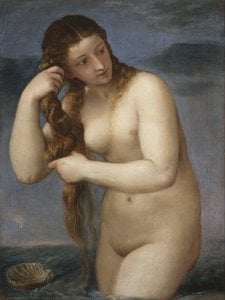
Venus Anadyomene

Experience Titian's 'Venus Anadyomene'! This iconic Renaissance masterpiece depicts the goddess rising from the sea, showcasing exquisite detail and beauty. Explore its rich history & symbolism.

Tiziano Vecellio (Titian): Italian renessanssin mestari, tunnettu upeista väreistään ja dramaattisista maalauksistaan. Tutustu Venetsian taiteen kruunaamiseen!

Giclée- ja taideprintit

Museolaatuisia giclée- tai kankaitaulun tulosteita nopealla tuotannolla ja joustavilla viimeistelyvaihtoehdoilla. ( Osta käsinmaalattu taideteos Siirry digitaaliseen kuvaan)

Corner sample of the P118B picture frame: valettu polystyreeni, 5 cm wide and 3 cm thick
P118B €10
Corner sample of the P118H picture frame: valettu polystyreeni, 5 cm wide and 3 cm thick
P118H €10
Corner sample of the P118W picture frame: valettu polystyreeni, 5 cm wide and 3 cm thick
P118W €10
Corner sample of the P438Z picture frame: valettu polystyreeni, 5.5 cm wide and 3.5 cm thick
P438Z €10
Corner sample of the P508JH picture frame: valettu polystyreeni, 7 cm wide and 3.5 cm thick
P508JH €12
Corner sample of the P508YH picture frame: valettu polystyreeni, 7 cm wide and 3.5 cm thick
P508YH €12
Corner sample of the P805H picture frame: valettu polystyreeni, 5 cm wide and 3.5 cm thick
P805H €10
Corner sample of the P805Z picture frame: valettu polystyreeni, 5 cm wide and 3.5 cm thick
P805Z €10
Corner sample of the P919BZ picture frame: valettu polystyreeni, 7 cm wide and 3.5 cm thick
P919BZ €10
Corner sample of the P919G picture frame: valettu polystyreeni, 7 cm wide and 3.5 cm thick
P919G €10
Corner sample of the P919XJ picture frame: valettu polystyreeni, 7 cm wide and 3.5 cm thick
P919XJ €10
Corner sample of the P959ZH picture frame: valettu polystyreeni, 5 cm wide and 3 cm thick
P959ZH €10
Corner sample of the P968JZ picture frame: valettu polystyreeni, 6 cm wide and 4 cm thick
P968JZ €12
Corner sample of the W106C picture frame: massiivipuu, 5 cm wide and 3 cm thick
W106C €8
Corner sample of the W218G picture frame: massiivipuu, 5 cm wide and 3 cm thick
W218G €10
Corner sample of the W218JH picture frame: massiivipuu, 5 cm wide and 3 cm thick
W218JH €8
Corner sample of the W218Y picture frame: massiivipuu, 5 cm wide and 3 cm thick
W218Y €10
Corner sample of the W307PJ picture frame: massiivipuu, 6 cm wide and 3 cm thick
W307PJ €10
Corner sample of the W316G picture frame: massiivipuu, 6 cm wide and 3 cm thick
W316G €10
Corner sample of the W316PJ picture frame: massiivipuu, 6 cm wide and 3 cm thick
W316PJ €8
Corner sample of the W316Y picture frame: massiivipuu, 6 cm wide and 3 cm thick
W316Y €10
Corner sample of the W398PJ picture frame: massiivipuu, 5 cm wide and 3 cm thick
W398PJ €8
Corner sample of the W4111J picture frame: massiivipuu, 6.5 cm wide and 3.5 cm thick
W4111J €10
Corner sample of the W500HY picture frame: massiivipuu, 7 cm wide and 5 cm thick
W500HY €15
Corner sample of the W500JH picture frame: massiivipuu, 7 cm wide and 5 cm thick
W500JH €15
Corner sample of the W692G picture frame: massiivipuu, 8 cm wide and 4 cm thick
W692G €12
Corner sample of the W849H picture frame: massiivipuu, 5 cm wide and 3 cm thick
W849H €8
Corner sample of the W940BG picture frame: massiivipuu, 7.5 cm wide and 4.5 cm thick
W940BG €15
Corner sample of the W953PJ picture frame: massiivipuu, 6 cm wide and 3.5 cm thick
W953PJ €8

Vakiokoko
räätälöity
CM
INCH

Valitse valmiista mitoistamme sellaiset, jotka vastaavat teoksen alkuperäisiä mittasuhteita.

leveys
korkeus

Syötä tarvitsemasi leveys ja korkeus, jotta tuloste sopii kehyksiisi tai seinällesi. Tulostetta voidaan vain leikata, sitä ei voida koskaan suurentaa alkuperäistä kuvaa suuremmaksi, joten eri muotoinen koko aiheuttaa osan kuvasta katoamisen. Lähetämme sinulle digitaalisen mallikuvan hyväksyttäväksi ennen kuin aloitamme tulostuksen. Tällä sivulla näkyvä kuva ei näytä lopullista rajausta — vain mallikuva näyttää sen.

Maailmanlaajuinen toimitus () 2 viikossa tavallisen 4–5 viikon sijaan. (30 lokakuu)

Ilmainen pikatoimitus ympäri maailman
Korkealaatuinen pellavakangas
Kattava kuljetusvakuutus
Tulliveron palautustakuu
Takuu täydellisestä värien vastaavuudesta
100 päivän palautusoikeus (vain valmistusvirheet)
100% rahat takaisin -takuu
Määräalennus tarjolla

Kokonaishinta

€ 60

Venus Anadyomene

Giclée- ja taideprintit

Replikaatin koko

-

Kokonaishinta

€ 60

Pikaista tietoa

  • Artistic style: Classical, Nude
  • Title: Venus Anadyomene
  • Movement: Venetian Renaissance
  • Artist: Titian Vecellio
  • Notable elements: Wringing hair, shell
  • Influences:
    • Apelles
    • Sculpture

Taidevisat

Jokaisessa kysymyksessä on vain yksi oikea vastaus.

Kysymys 1:
What is the primary mythological subject depicted in Titian’s ‘Venus Anadyomene’?
Kysymys 2:
According to the description, what inspired Titian's depiction of Venus’ pose?
Kysymys 3:
What is the approximate date of creation for ‘Venus Anadyomene’?
Kysymys 4:
The image description mentions a small shell visible at the bottom left of the painting. What is its significance?
Kysymys 5:
The text highlights that Titian’s painting aimed to emulate what artist's earlier work?

The Divine Emergence: Titian’s “Venus Anadyomene”

Titian’s “Venus Anadyomene,” painted around 1520, isn't merely a depiction of the goddess; it’s an embodiment of Renaissance ideals—a vibrant celebration of beauty, mythology, and the mastery of color. This oil on canvas masterpiece, now residing in the Scottish National Gallery, captures a pivotal moment: Venus rising from the sea, her hair cascading down as she sheds the remnants of her birth, a gesture simultaneously vulnerable and triumphant. The painting immediately draws the eye with its luminous palette—a symphony of blues, pinks, and golds that evoke both the depths of the ocean and the radiant glow of dawn. It’s a testament to Titian's unparalleled ability to render light and texture, creating an illusion of palpable wetness on Venus’ skin and the shimmering surface of the water.

A Myth Reimagined: The Story Behind the Scene

The title itself, “Anadyomene,” translates to "one who has risen from the sea," referencing a key episode in Greek mythology. According to Hesiod and other classical sources, Venus was born fully-grown from the sea foam—the result of Cronus’s discarded genitals thrown into the ocean. This birth wasn't gentle; it was an emergence, a forceful rising from the depths. Titian brilliantly captures this dynamic moment, portraying Venus not as a passive figure but as an active participant in her own creation. The inclusion of the small scallop shell—a symbol of femininity and fertility—reinforces this narrative, grounding the divine birth within the tangible world. Interestingly, the shell is smaller than in other depictions of Venus’s birth, suggesting that Titian isn't simply illustrating a mythological event but rather emphasizing the goddess’s inherent power and self-sufficiency.

Technique and Style: A Masterclass in Color and Form

Titian’s genius lies not just in his subject matter, but also in his revolutionary approach to painting. He employed a technique known as “alla prima,” meaning he worked directly on the canvas without underdrawing or preparatory sketches. This resulted in loose, vibrant brushstrokes that contribute significantly to the painting's dynamism and immediacy. Notice how Titian builds up layers of color—thin washes of pigment layered over each other to create depth and luminosity. The use of warm, saturated hues contrasts sharply with the cool blues of the sea, creating a captivating visual tension. Furthermore, his masterful handling of drapery – or rather, the *suggestion* of drapery – adds to the sense of movement and fluidity. Venus’s hair isn't rigidly defined; it flows organically around her form, mirroring the waves of the ocean.

Symbolism and Emotional Resonance: More Than Just a Pretty Picture

Beyond its aesthetic beauty, “Venus Anadyomene” is rich in symbolic meaning. Venus herself represents love, beauty, and fertility—powerful forces that have captivated artists and audiences for centuries. Her act of wringing her hair can be interpreted as a shedding of the past, a release from the primal chaos of her birth. It’s an assertion of her independence and her dominion over the natural world. The painting also subtly references classical sculpture, particularly the Crouching Venus and Cnidian Venus—statues that depicted Venus in a similar pose, emphasizing her graceful form and serene expression. Titian's deliberate inclusion of these echoes from antiquity demonstrates his ambition to not only capture a mythological scene but to engage with the artistic traditions of the past.

Ultimately, “Venus Anadyomene” is more than just a beautiful painting; it’s a profound meditation on birth, beauty, and the enduring power of myth. It invites us to contemplate the goddess's emergence from the depths—a potent symbol of renewal, transformation, and the eternal allure of the feminine ideal.

Kysymykset ja vastaukset

Miten taidesuuntaus ja aikakausi kohtaavat teoksessa Titaani:n "Venus Anadyomene"?

Teoksessa Titaani:n "Venus Anadyomene" Italian Renaissance-suuntaus ja Renessanssi-aikakausi kohtaavat.

Onko teos Titaani:n "Venus Anadyomene" säilytyksessä taiteilijan kotimaassa?

Ei - teos sijaitsee ulkomailla. Teos "Venus Anadyomene" kuuluu Iso-Britannia kokoelmiin, kun taas Titaani on syntynyt Italia.

Mihin vaiheeseen Titaani uralla teoksen "Venus Anadyomene" vuosiluku 1520 sijoittuu?

Teoksen 1520 valmistumisvuoden perusteella "Venus Anadyomene" sijoittuu Titaani:n tuotantokaudelle Mature Period.


Taiteilijan elämäkerta

The Venetian Titan: A Life in Color and Canvas

Tiziano Vecellio, tunnetummaltaan Titian, on italialaisen renessanssin monumentaalisin hahmo – ehkä sen loisteliaimman värimaailman luoja ja mestari, joka uudensi öljyvärimaalauksen mahdollisuuksia. Hänen elämänsä, syntynyt noin vuonna 1490 Pieve di Cadoreen, Dramatiska Alpeilla sijaitsevassa kaupungissa, on ihmeellinen tarina lahjakkuudesta ja taiteellisesta innovaatiosta. Titianin varhaisista elämän yksityiskohdista kertyy yhä vähän tietoa, mutta tiedämme, että hän oli yksi useista lapsista Gregorio Vecelliolle, sotilasmiehelle, ja Lucia Cestalle. Perhe järjesti nuoren Tiziano ja hänen veljensä Francesco opiskelemaan taiteilijan luokassa Venetsiassa – päätös, joka muutti heidän elämänsä peruuttamattomasti. Venetsia alkupuolen 1500-luvulla oli vilkas kauppa-, kulttuuri- ja taiteellinen keskus. Tiziano aloitti koulutuksensa Sebastiano Zuccaton, mosaiikkitaiteilijan, työpajassa, jatkoi opiskelua Gentile Bellinin oppilaana ja erityisesti veljensä Giovanni Vecellin työpajossa. Kuitenkin hänen yhteytensä Giorgioneen – toiseen venetsialaiseen maalariin, jonka teokset olivat eteerisiä ja runollisia – oli kaikkein muokkaavainen. Taiteilijat tekivät yhteistyötä useissa projekteissa, mukaan lukien ulkofreskot Fondaco dei Tedeschi -kauppahallille, vilkkaalle saksalaisten kauppiaiden keskuspaikalle. Jo näissä varhaisissa teoksissa Tizianoa tunnettiin poikkeuksellisena taidonnäytteenä, mikä sai hänen aikansa ihmiset arvostamaan häntä ja ennusti tulevaa loistetta.

A Master's Evolving Style

Tizianin taiteellinen kehitys on merkittävän monipuolista ja jatkuvaa kokeilua maalaustekniikoissa. Hänen varhaiset teoksensa, jotka ovat vahvasti Giorgioneen vaikutuksen alaisia, esittelevät herkkyyttä ja mestarillista käyttöä väreissä luomaan tunnelmallisia efektejä. *A Man with a Quilted Sleeve* (noin 1509) on loistava esimerkki hänen kehittyvästä taitojastaan kuvaajana, joka vangitsee sekä aiempien henkilöiden fyysisen ulkonäön että heidän sisäisen luonteensa. Ajan myötä Tiziano alkoi siirtyä Giorgioneen hienovaraisten sävyjen ja dramaattisemman lähestymistavan väreihin. *The Visitation of Mary and Elizabeth* (nykyisin Accademia, Venetsia) osoittaa hänen kasvavaa varmuuttaan monimutkaisten komposiittien käsittelyssä ja eloisissa sävyissä. Myöhemmin hän kokeili erilaisia siveltimien tekniikoita – tasaisia, sekoitettuja pintoja löysempiin, ilmaisuvoittoisempiin jälkiin – ja kehitti ainutlaatuisen tavan kerrostaa värejä luomaan hehkuvia efektejä. Hänen muotokuvansa olivat tunnettuja psykologisen syvyytensä ja materiaalien realistisesta esittämisestä. Tiziano oli myös jatkuvasti taiteellisten rajojen etsimässä. Hän kokeili erilaisia siveltimien tekniikoita – tasaisia, sekoitettuja pintoja löysempiin, ilmaisuvoittoisempiin jälkiin – ja kehitti ainutlaatuisen tavan kerrostaa värejä luomaan hehkuvia efektejä. Hänen muotokuvansa olivat tunnettuja psykologisen syvyytensä ja materiaalien realistisesta esittämisestä.

Patronage, Prestige, and Lasting Influence

Tiziano’n lahjakkuus kiinnitti huomion voimakkaita suojelijoita ympäri Eurooppaa. Hän toimi taiteilijana keisari Karl V:n, Espanjan kuningas Filip II:n ja paavin Paulin III:n hovissa muun muassa. Tämä suojelu ei ainoastaan tarjonnut hänelle taloudellista turvaa vaan myös mahdollisti hänen luomansa monumentaalisten teosten tekemisen, jotka osoittivat hänen taiteellista osaamistaan suurella mittakaavalla. Hänen kykynsä soveltaa tyyliään eri hovien mieltymysten mukaisesti säilyttäen samalla oman tunnistettavan äänensä on todiste hänen poikkeuksellisesta taitojensa ja diplomaattisen taitonsa yhdistelmästä. Tiziano’n vaikutus taiteeseen ulottui hänen elämänsä yli. Hänen värien, siveltimien tekniikoiden ja ihmisen olemassaolon syvällisen esittämisen innovatiivinen lähestymistapa vaikuttivat merkittävästi tulevien taiteilijasukupolvia. Hänestä tuli keskeinen hahmo renessanssin siirtymässä barokki-aikaan, luoden uusia taiteellisia tyylejä ja lähestymistapoja.

Exploring Further

  • Museums & Collections: Discover Titian’s works at the Scuola del Santo in Padua and San Salvador in Venice, both showcasing his breathtaking frescoes.
  • Related Artists: Explore the influence of Giorgione on Titian's early style and the later impact of Titian on artists like Rubens and Delacroix.
  • Historical Context: Immerse yourself in the world of the Italian Renaissance and Venetian painting to fully appreciate Titian’s artistic achievements.
Titaani

Titaani

1490 - 1576 , Italia

Pähkinänkuoressa

  • Artistic Movement Or Style: Venetian painting
  • Artists Or Movements Influenced By This Artist:
    • Western artists
    • Late Italian Renaissance
  • Artists Who Influenced This Artist:
    • Giovanni Bellini
    • Giorgione
  • Date Of Birth: c. 1490
  • Date Of Death: 1576
  • Full Name: Tiziano Vecellio
  • Nationality: Italian
  • Notable Artworks:
    • A Man with a Quilted Sleeve
    • The Visitation
    • Bearded Young Man
  • Place Of Birth: Pieve di Cadore, Italia
Tutustu teoksiin, jotka on järjestetty aiheiden, tyylien ja ominaisuuksien mukaan.