Ilmainen taidekonsultointi

x
Tilaa maalaus Tilaa maalausOsta kuva Osta kuva JaaJaa
TiedotTiedot Lisää suosikkeihin Lisää suosikkeihin LataaLataa SamanlaisiaSamanlaisia X-lähikuvaX-lähikuva DiaesitysDiaesitys

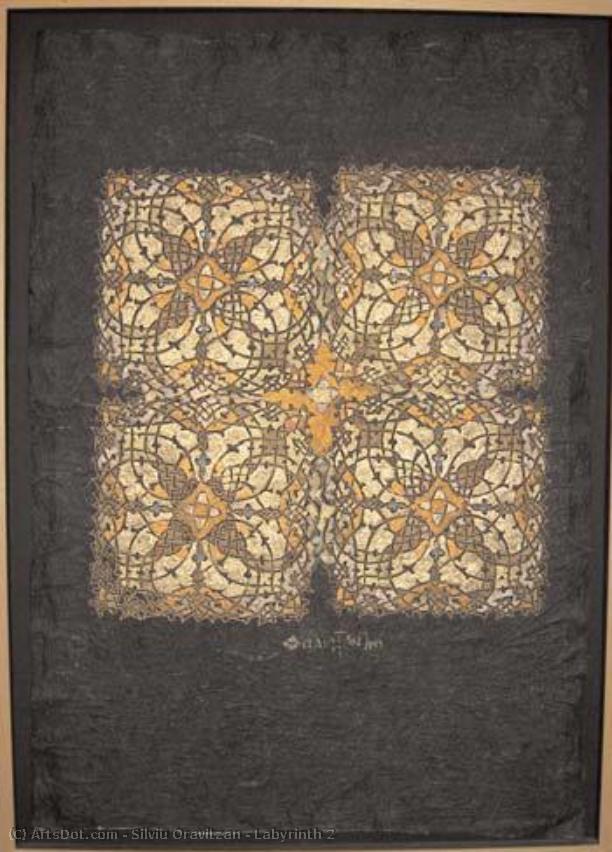
Labyrinth 2

Silviu Oravitzan: Romanian painter known for geometric abstract art rooted in Byzantine & Orthodox Christian themes. 'The primordial light' inspires his luminous works.

Giclée-printit ja taideprintit

Museolaatuisia giclée- tai kankaitaulun tulosteita nopealla tuotannolla ja joustavilla viimeistelyvaihtoehdoilla.

Standard
custom
CM
INCH

Valitse valmiista mitoistamme sellaiset, jotka vastaavat teoksen alkuperäisiä mittasuhteita.

leveys
korkeus

Voit syöttää omat mitat sopiaksesi tiettyyn kehykseen tai tilaan. Jos valittu koko ei vastaa alkuperäisen kuvan mittasuhteita, rajaamme teosta tai laajennamme kuvaa peilatulla tai yhtenäisellä reunalla. Digitaalinen mallikuva lähetetään hyväksyttäväksi ennen tuotannon aloittamista.
Huomaathan, että näytöllä näkyvä esikatselu ei vastaa lopullista rajausta tai laajennusta. Vain mallikuva näyttää lopullisen sommittelun tarkasti.
Vaikka räätälöityjä kokoja on saatavilla, suosittelemme valitsemaan mitat valmiista listasta alkuperäisten mittasuhteiden säilyttämiseksi.

Toimitus maailmanlaajuisesti () kahdessa viikossa tavallisen 4–5 viikon sijaan. (6 heinäkuu)

why_choose_icon
Ilmainen pikatoimitus ympäri maailman
why_choose_icon
Korkealaatuinen pellavakangas
why_choose_icon
Kattava kuljetusvakuutus
why_choose_icon
Tulliveron palautustakuu
why_choose_icon
Täydellinen värien vastaavuustakuu
why_choose_icon
60 päivän palautusoikeus (vain valmistusvirheet)
why_choose_icon
100% rahat takaisin -takuu
why_choose_icon
Määräalennus tarjous

Kokonaishinta

-

reproduction

Labyrinth 2

Giclée-printit ja taideprintit

Replikaatin koko

-

Kokonaishinta

-


Taiteilijan elämäkerta

Silviu Oravitzan: A Pioneer of Geometric Byzantine Abstraction

Silviu Oravitzan, born in Ciclova-Montană, Romania in 1941, stands as a singular figure within Romanian Neo-Orthodox art. His artistic journey began amidst the fervent debates surrounding Romanian art’s trajectory after 1989, establishing him as an uncompromising voice advocating for genuine artistic expression and resisting simplistic interpretations of cultural heritage. He is celebrated for his distinctive approach to geometric abstraction—a style profoundly rooted in the visual language of Byzantine iconography and Orthodox Christian spirituality. Oravitzan's artistic vision centers around capturing ‘the primordial light,’ a concept deeply intertwined with Orthodox theology, which he translates into luminous canvases characterized by intricate grids and bold color palettes. This preoccupation with illumination isn’t merely aesthetic; it represents a deliberate attempt to evoke the spiritual essence of faith—a palpable connection to divine transcendence that distinguishes his work from prevailing trends in contemporary art. He actively opposed prominent painters like Horia Bernea and Sorin Dumitrescu, asserting a commitment to artistic integrity and resisting easy categorization. His travels across Greece, Italy, France, Germany, Austria, and beyond fueled his creative inspiration, exposing him to diverse cultural influences that enriched his artistic vocabulary. Notably, in 1985, Oravitzan’s solo exhibition at the Dalles Hall in Bucharest sparked considerable controversy within Romanian art circles—a scandal exacerbated by its subsequent closure due to vehement opposition from those critical of Romanian artistic endeavors. Despite this setback, he persevered, continuing to refine his technique and expand his artistic horizons. From 2005 to 2015, he engaged in the activities of the Romanian Institute for Inter-Orthodox, Interconfessional and Interreligious Studies, demonstrating a dedication to fostering dialogue between faiths and promoting cultural understanding. Oravitzan’s oeuvre comprises approximately 22 artworks—primarily paintings—that exemplify his unwavering commitment to geometric abstraction infused with Byzantine symbolism. Pieces like ‘Woven Light,’ created in 1999, showcase the artist's masterful manipulation of color and texture to convey spiritual depth. The artwork explores the interplay between light and shadow, mirroring the theological concept of divine illumination. Similarly, 'Field of Crosses (Red & Black),' completed in 1996, utilizes a dense grid structure—a stylistic hallmark reminiscent of Op Art—to generate visual rhythm and stimulate contemplation. This piece exemplifies Oravitzan’s ability to distill complex spiritual ideas into minimalist forms. His work has garnered recognition internationally, appearing in museums and private collections across Romania, Great Britain, France, Germany, Sweden, and the United States. Silviu Oravitzan remains an artist who champions artistic integrity and seeks to communicate profound spiritual truths through a uniquely expressive visual language—a testament to his enduring legacy within Romanian Neo-Orthodox art history.
Silviu Oravitzan

Silviu Oravitzan

1941 - , Romania

Pikatiedot

  • Artistic Movement Or Style: Neo-Orthodoxism
  • Artists Who Influenced This Artist:
    • Horia Bernea
    • Sorin Dumitrescu
  • Date Of Birth: October 4, 1941
  • Full Name: Silviu Oravitzan
  • Nationality: Romanian
  • Notable Artworks:
    • Woven Light
    • Field of Crosses (Red & Black)
  • Place Of Birth: Ciclova-Montană, Romania