Ilmainen taidekonsultointi

x
Tilaa maalaus Tilaa maalausOsta kuva Osta kuva JaaJaa
TiedotTiedot Lisää suosikkeihin Lisää suosikkeihin LataaLataa SamanlaisiaSamanlaisia X-lähikuvaX-lähikuva DiaesitysDiaesitys

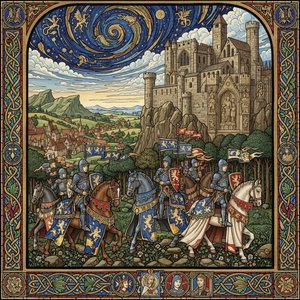
The protector

Robert Walker Macbeth (1848-1910) was a Scottish painter renowned for pastoral landscapes & rustic genre scenes. Influenced by the Idyllists, his work captures everyday life with detail and charm. Explore his paintings & legacy!

Giclée-printit ja taideprintit

Museolaatuisia giclée- tai kankaitaulun tulosteita nopealla tuotannolla ja joustavilla viimeistelyvaihtoehdoilla.

P118B $10
P118H $10
P118W $10
P438Z $10
P508JH $12
P508YH $12
P805H $10
P805Z $10
P919BZ $10
P919G $10
P919XJ $10
P959ZH $10
P968JZ $12
W106C $8
W218G $10
W218JH $8
W218Y $10
W307PJ $10
W316G $10
W316PJ $8
W316Y $10
W398PJ $8
W4111J $10
W500HY $15
W500JH $15
W692G $12
W849H $8
W940BG $15
W953PJ $8

Standard
custom
CM
INCH

Valitse valmiista mitoistamme sellaiset, jotka vastaavat teoksen alkuperäisiä mittasuhteita.

leveys
korkeus

Voit syöttää omat mitat sopiaksesi tiettyyn kehykseen tai tilaan. Jos valittu koko ei vastaa alkuperäisen kuvan mittasuhteita, rajaamme teosta tai laajennamme kuvaa peilatulla tai yhtenäisellä reunalla. Digitaalinen mallikuva lähetetään hyväksyttäväksi ennen tuotannon aloittamista.
Huomaathan, että näytöllä näkyvä esikatselu ei vastaa lopullista rajausta tai laajennusta. Vain mallikuva näyttää lopullisen sommittelun tarkasti.
Vaikka räätälöityjä kokoja on saatavilla, suosittelemme valitsemaan mitat valmiista listasta alkuperäisten mittasuhteiden säilyttämiseksi.

Toimitus maailmanlaajuisesti () kahdessa viikossa tavallisen 4–5 viikon sijaan. (2 heinäkuu)

why_choose_icon
Ilmainen pikatoimitus ympäri maailman
why_choose_icon
Korkealaatuinen pellavakangas
why_choose_icon
Kattava kuljetusvakuutus
why_choose_icon
Tulliveron palautustakuu
why_choose_icon
Täydellinen värien vastaavuustakuu
why_choose_icon
60 päivän palautusoikeus (vain valmistusvirheet)
why_choose_icon
100% rahat takaisin -takuu
why_choose_icon
Määräalennus tarjous

Kokonaishinta

-

reproduction

The protector

Giclée-printit ja taideprintit

Replikaatin koko

-

Kokonaishinta

-

Samankaltaisia teoksia


Taiteilijan elämäkerta

A Life Immersed in Pastoral Charm: Robert Walker Macbeth

Robert Walker Macbeth, born in Glasgow on September 30th, 1848, emerged from a family deeply rooted in the artistic traditions of Scotland. His father, Norman Macbeth, was a respected portrait painter, and this early exposure to the world of brushes, canvases, and discerning clientele undoubtedly shaped young Robert’s trajectory. However, while his father specialized in capturing likenesses, Robert would forge his own path, becoming celebrated for evocative landscapes and scenes of rustic life that resonated with the Victorian public's growing nostalgia for a simpler existence. The artistic lineage didn’t stop there; two of his brothers, James Macbeth and Henry Macbeth-Raeburn, also pursued careers as painters, creating a vibrant creative atmosphere within the family circle. This familial encouragement fostered an environment where experimentation and dedication to craft were paramount.

Early Training and the Influence of Realism

Macbeth’s formal artistic education began in London, where he honed his skills at the Royal Scottish Academy School and later at the prestigious Royal Academy Schools. It was during this period that he developed a keen eye for realism, meticulously rendering everyday scenes with an attention to detail that would become a hallmark of his style. He initially found work as an illustrator for *The Graphic*, a popular weekly newspaper, which provided valuable experience in narrative storytelling and capturing fleeting moments in time. This early work instilled in him the ability to translate observations into compelling visual representations. However, it was his travels through the countryside – particularly Lincolnshire and Somerset – that truly ignited his artistic passion. Influenced by painters like George Heming Mason and Frederick Walker, Macbeth began to focus on pastoral landscapes, depicting the lives of field laborers and the beauty of rural England with a sensitivity that set him apart. His painting *The Cast Shoe*, purchased by the Chantrey Bequest in 1890, marked a significant early achievement and secured his place within the artistic establishment.

Embracing the Idyllists and the Power of Etching

Macbeth became closely associated with the Idyllist school, a group of artists who sought to capture the beauty and tranquility of rural life, often focusing on scenes of everyday labor and domesticity. He played a crucial role in popularizing their work through his masterful etchings. Etching allowed him to reproduce his paintings more widely, bringing his vision of idyllic landscapes to a broader audience. This commitment to accessibility didn’t diminish the quality of his reproductions; rather, it demonstrated a desire to share his artistic perspective with as many people as possible. He was elected an associate of the Royal Watercolour Society in 1871 and became a full member in 1901, further solidifying his reputation within the art world. His involvement with societies like the Royal Society of Painter-Etchers and Engravers (becoming a member in 1880) underscored his dedication to both painting and printmaking.

A Flourishing Career and Recognition

Throughout his career, Macbeth exhibited extensively at prestigious venues including the Royal Academy, the Grosvenor Gallery, and the New Gallery. He also participated in regional exhibitions, showcasing his work across England and Scotland. His style evolved over time, though he remained committed to depicting scenes of everyday life. While some critics noted a shift towards conventional sentimentality in his later works, his ability to capture atmosphere and emotion never wavered. In 1883, Macbeth was elected an associate of the Royal Academy, culminating in full membership in 1903 – a testament to his artistic achievements and standing within the British art community. His personal life also flourished; he married Lydia Esther Bates in 1887, and they had two daughters. He continued to paint prolifically until his death at Holder’s Green, near Lindsell, Essex, on November 1st, 1910.

Legacy and Historical Significance

Robert Walker Macbeth's legacy lies in his ability to capture the essence of Victorian rural life with both realism and charm. He wasn’t merely documenting scenes; he was imbuing them with a sense of nostalgia and emotional resonance that appealed deeply to his contemporaries. His work provides valuable insight into the social and cultural values of the era, reflecting a growing appreciation for the simplicity and authenticity of country living. His paintings continue to be admired today for their technical skill, evocative atmosphere, and enduring appeal. Macbeth’s influence can be seen in the work of later landscape painters who sought to capture the beauty of the English countryside, and his etchings remain prized by collectors for their delicate detail and artistic merit. He stands as a significant figure within the Idyllist movement, bridging the gap between realism and sentimentality and leaving behind a body of work that continues to captivate and inspire.

Pikatiedot

  • Artistic Movement Or Style: Idyllic school
  • Artists Who Influenced This Artist:
    • George Heming Mason
    • Frederick Walker
  • Date Of Birth: 1848
  • Date Of Death: 1910
  • Full Name: Robert Walker Macbeth
  • Nationality: Scottish
  • Notable Artworks:
    • The Cast Shoe
    • Sir Alan Brodrick
    • Oliver Cromwell
    • Ralph Perkins
  • Place Of Birth: Glasgow, Scotland