x
EsikatseluEsikatselu Esikatsele AR-tilassaEsikatsele AR-tilassa Osta printti Osta printtiOsta kuva Osta kuva JaaJaa
Tarkemmat tiedotTarkemmat tiedot Lisää suosikkeihin Lisää suosikkeihin LataaLataa SamanlaisiaSamanlaisia RöntgenkuvaRöntgenkuva DiaesitysDiaesitys

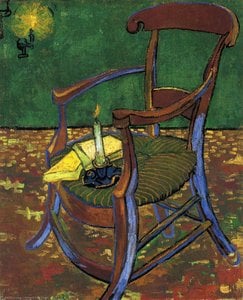
The Green Coat

A whimsical bird perched upon a chair draped in vibrant fabric defines this 1916 masterpiece by British Modernist Robert Polhill Bevan, offering a unique opportunity to bring this elegant oil painting into your collection.

Robert Polhill Bevan (1865–1925): Britanninen maalaaja ja Camden Town -ryhmän perustaja. Fauvismin pioneeri, tunnettu kirkkaista maisemista ja arkielämän tapahtumista.

Käsinmaalattu öljykopio

Käsinmaalattu öljyväri kankaalle haluamassasi koossa ja kehyksissä, taiteilijoidemme valmistamana tilauksesta. (Osta printti Osta printtiOsta kuva Osta kuva)

P118B $10
P118H $10
P118W $10
P438Z $10
P508JH $12
P508YH $12
P805H $10
P805Z $10
P919BZ $10
P919G $10
P919XJ $10
P959ZH $10
P968JZ $12
W106C $8
W218G $10
W218JH $8
W218Y $10
W307PJ $10
W316G $10
W316PJ $8
W316Y $10
W398PJ $8
W4111J $10
W500HY $15
W500JH $15
W692G $12
W849H $8
W940BG $15
W953PJ $8

Vakiokoko
räätälöity
CM
INCH

Valitse valmiista mitoistamme sellaiset, jotka vastaavat teoksen alkuperäisiä mittasuhteita.

leveys
korkeus

Voit syöttää omat mitat sopimaan tiettyyn kehykseen tai tilaan. Jos valitsemasi koko ei vastaa alkuperäisen kuvan mittasuhteita, rajaamme taideteoksen tai jatkamme maalausta käsin maalatuilla elementeillä. Digitaalinen esikatselu lähetetään hyväksyttäväksi ennen tuotannon aloittamista.
Huomioithan, että näytöllä oleva esikatselu ei vastaa todellista rajausta tai jatkamista. Vain digitaalinen mallikuva näyttää lopullisen sommittelun tarkasti.
Vaikka mittatilaustyöt ovat mahdollisia, suosittelemme valitsemaan mitan ennalta määritetystä listasta alkuperäisten mittasuhteiden säilyttämiseksi.

Esimerkkejä muutettavissa olevista asioista: Vaihda kasvot asiakkaan omaan valokuvaan; Lisää lemmikki (esim. korvaa kissa koiralla); Lisää piilotettu viesti taustaan; Muuta taustan maisemaa tai elementtejä.
Tilauksen jälkeen WahooArt.com -tiimi lähettää asiakkaalle ohjeet ja esikatselukuvan.

Maailmanlaajuinen toimitus () 3–4 viikossa tavallisen 5 viikon sijaan. (27 elokuu). Laadusta ei tingitä.

why_choose_icon
Ilmainen pikatoimitus ympäri maailman
why_choose_icon
Korkealaatuinen pellavakangas
why_choose_icon
Kattava kuljetusvakuutus
why_choose_icon
Tulliveron palautustakuu
why_choose_icon
Täydellinen värien vastaavuustakuu
why_choose_icon
60 päivän palautusoikeus (vain valmistusvirheet)
why_choose_icon
100% rahat takaisin -takuu
why_choose_icon
Määräalennus tarjous

Kokonaishinta

$ 272

reproduction

The Green Coat

Reproduktiotekniikka

Replikaatin koko

-

Kokonaishinta

$ 272

Pikaista tietoa

  • Title: The Green Coat
  • Subject or theme: Still life with everyday objects
  • Artist: Robert Polhill Bevan
  • Medium: Oil on canvas
  • Year: 1916
  • Dimensions: 56 x 46 cm
  • Notable elements: Bird perched on chair, green coat

Teoksen kuvaus

The painting The Green Coat by Robert Bevan is a fascinating piece of art that showcases the artist's unique style and technique. Created in 1916, this oil on canvas painting measures 56 x 46 cm and features a chair with a green coat draped over it, along with a bird perched on the back of the chair.

Artist Background

Robert Bevan was a British artist known for his contributions to the development of modern art in the UK. His work is characterized by its simplicity and elegance, often featuring everyday objects and scenes. Bevan's style is reminiscent of other notable artists, such as Kazimir Severinovich Malevich, who was a pioneer of the Cubism movement. You can find more information about Malevich's work on WahooArt.com.

The Painting's Significance

The Green Coat is a significant piece in Bevan's oeuvre, as it showcases his ability to create complex and thought-provoking works using simple compositions. The painting features a range of bold colors and intricate details, making it a standout piece in any collection. You can find similar paintings by Bevan on WahooArt.com, including his notable work Under the Hammer.
  • The painting is a great example of Bevan's use of color and composition to create a sense of depth and atmosphere.
  • The inclusion of the bird perched on the back of the chair adds a touch of whimsy and playfulness to the piece.
  • The Green Coat is a testament to Bevan's skill as an artist and his ability to create complex and thought-provoking works using simple compositions.
Handmade oil painting reproductions of The Green Coat are available on WahooArt.com, allowing art lovers to own a piece of history. The Museum School of Oriental And African Studies in London, United Kingdom, is also home to a range of notable artworks, including pieces by Sir George Clausen. You can find more information about the museum and its collection on WahooArt.com.
The Green Coat is a captivating painting that showcases Robert Bevan's unique style and technique. Its significance lies in its ability to create a sense of depth and atmosphere using simple compositions, making it a standout piece in any collection.

Taiteilijan elämäkerta

A Pioneer of British Modernism: The Life and Art of Robert Polhill Bevan

Robert Polhill Bevan, born in Hove in 1865, occupies a pivotal yet often understated position within the narrative of early 20th-century British art. Emerging from a Quaker background steeped in banking connections – his parents were Richard Alexander Bevan and Laura Maria Polhill – he defied conventional expectations to become a daring innovator, a key figure in the transition from Impressionism towards more radical explorations of color and form. His journey was one of constant experimentation, absorbing influences from across Europe while forging a distinctly personal artistic vision that would profoundly impact the development of modern art in Britain. Bevan’s early education at Westminster School of Art under Fred Brown provided a solid foundation, but it was his subsequent studies at the Académie Julian in Paris that truly ignited his creative spark. There, he encountered a constellation of rising stars – Paul Sérusier, Pierre Bonnard, Édouard Vuillard, and Maurice Denis – artists who were challenging academic conventions and embracing new approaches to painting. These encounters proved formative, exposing Bevan to the principles of synthetism and laying the groundwork for his future explorations.

Brittany, Fauvism, and the Search for Pure Color

The impact of Brittany on Bevan’s artistic development cannot be overstated. Two significant journeys in 1890 and 1891 immersed him in the atmosphere of Pont-Aven, a small coastal town that had become a magnet for artists seeking an alternative to Parisian salon culture. The bold colors and simplified forms championed by artists like Gauguin resonated deeply with Bevan, influencing his early drawings and prints. He was particularly captivated by the luminous landscapes of Breton coastlines, where the interplay of light and color offered unparalleled opportunities for artistic expression. This fascination fueled his experimentation with pure color – a decisive step away from Impressionistic realism – anticipating the emergence of Fauvism on the continent. His painting “Courtyard” stands as a remarkable example of this proto-Fauvist approach, demonstrating a willingness to abandon naturalistic representation in favor of expressive chromatic intensity – a boldness that set him apart from many of his British contemporaries. This exploration didn’t remain static; Bevan subsequently adopted a divisionist or pointillist technique, evident in works like “Ploughing on the Downs” and “The Turn-Rice Plough,” showcasing his commitment to exploring different methods of applying color and capturing light. The influence of masters such as Velázquez and Goya remained palpable, alongside more immediate guidance from Renoir regarding the depiction of horses – a testament to Bevan’s broad artistic curiosity and willingness to learn from diverse sources.

Collective Visions: The Camden Town Group and Beyond

Bevan was not an artist who worked in isolation. He actively sought connection with like-minded individuals, playing a crucial role in the formation of several influential art groups. As a founding member of the Camden Town Group, he joined forces with artists determined to depict modern urban life and challenge established artistic norms. This collective spirit extended to his involvement with the London Group and the Cumberland Market Group, further demonstrating his commitment to progressive artistic movements. The group’s ambition was to capture the dynamism of London's industrial landscape and its inhabitants—a task Bevan tackled with unwavering conviction. He collaborated closely with fellow Camden Town artists like Walter Sickert and Frank Auerbach, fostering a stimulating dialogue that propelled their artistic endeavors forward. These affiliations were not merely social; they fostered a dynamic exchange of ideas that shaped Bevan’s artistic trajectory and contributed to the broader evolution of British art.

Landscapes, Urban Scenes, and Lasting Legacy

Bevan's oeuvre is characterized by a profound engagement with both rural and urban environments. His landscapes—particularly those depicting Sussex and Brittany—are imbued with an extraordinary sensitivity to light and color, reflecting his unwavering dedication to capturing the essence of nature’s beauty. Paintings such as “In the Downs near Lewes,” “The Chestnut Tree,” and “Landscape in the Blackdown Hills, Devon” exemplify this mastery, showcasing his ability to convey both the physical grandeur and emotional resonance of the natural world. Simultaneously, Bevan documented the realities of modern life through urban scenes—most notably "The Cab Horse"—capturing the textures and moods of industrial Britain with meticulous detail. His artistic vision transcended stylistic trends; he remained steadfast in his pursuit of authentic expression, establishing himself as a cornerstone of British Modernism. Robert Polhill Bevan’s legacy extends far beyond his individual paintings. He is rightfully recognized as a pioneer of modern British art, particularly for his early adoption of Fauvist principles and his fearless experimentation with color. His influence on subsequent generations of painters is undeniable, and his contribution to the Camden Town Group was instrumental in shaping the development of modern art in Britain. A retrospective exhibition at Colnaghi’s in 1961 served as a crucial moment of recognition, solidifying his place in art history and ensuring that his innovative spirit continues to inspire artists today. He remains a vital figure for understanding the complex evolution of British painting in the early twentieth century.
Robert Polhill Bevan

Robert Polhill Bevan

1865 - 1925 , Yhdistynyt kuningaskunta

Pikatiedot

  • Artistic Movement Or Style: Fauvism/Divisionismi
  • Artists Or Movements Influenced By This Artist: ['Camden Town Group']
  • Artists Who Influenced This Artist:
    • Paul Gauguin
    • Velázquez
    • Goya
    • Renoir
  • Date Of Birth: 1865
  • Full Name: Robert Polhill Bevan
  • Nationality: Britanni
  • Notable Artworks:
    • The Farmhouse
    • Ploughing on the Downs
    • Queen’s Grove
    • The Cab Horse
  • Place Of Birth: Hove, United Kingdom
Tutustu teoksiin, jotka on järjestetty aiheiden, tyylien ja ominaisuuksien mukaan.