Myy
x
EsikatseluEsikatselu Esikatsele AR-tilassaEsikatsele AR-tilassa Osta printti Osta printtiOsta kuva Osta kuva JaaJaa
Tarkemmat tiedotTarkemmat tiedot Lisää suosikkeihin Lisää suosikkeihin LataaLataa SamanlaisiaSamanlaisia RöntgenkuvaRöntgenkuva DiaesitysDiaesitys

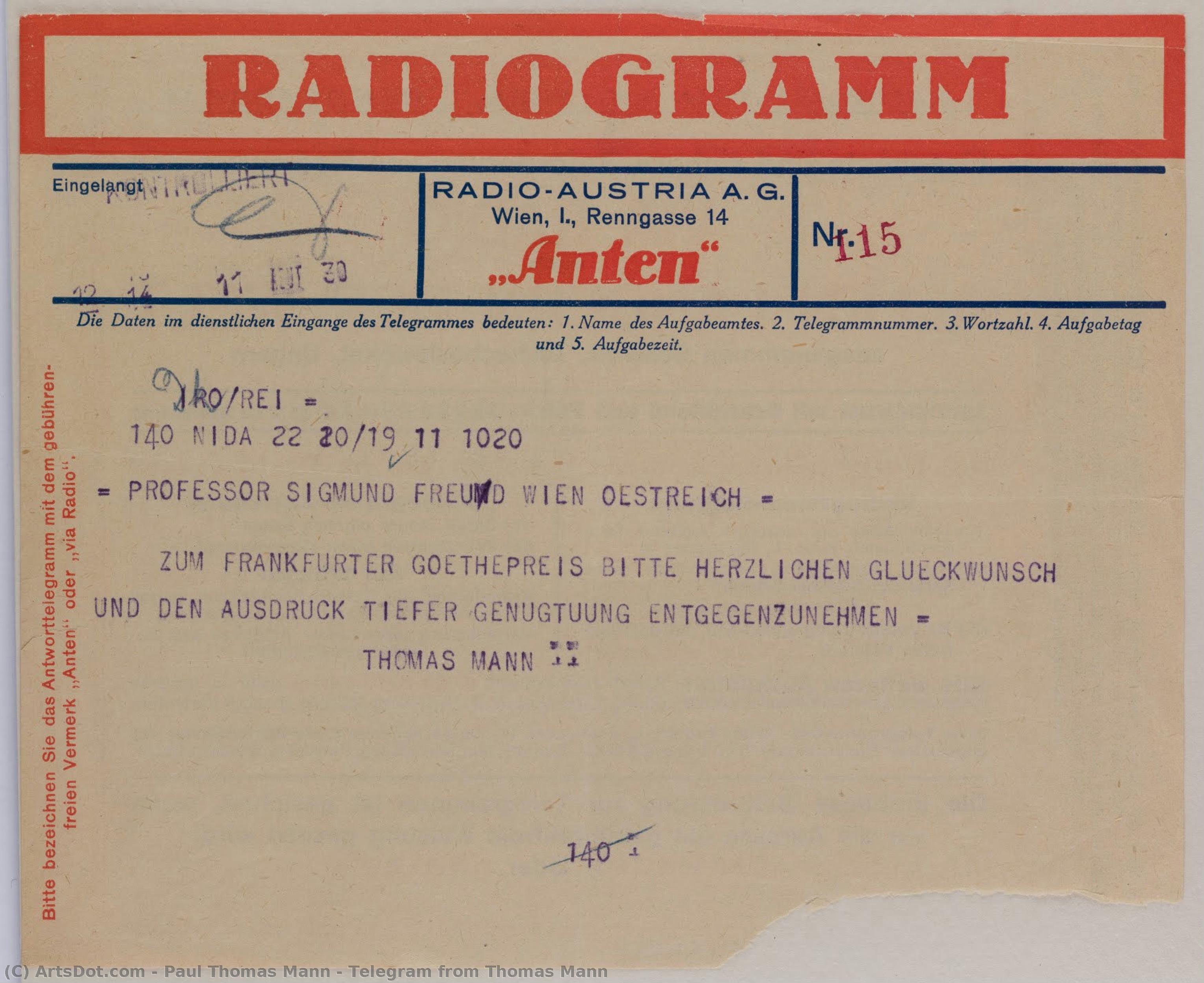
Telegram from Thomas Mann

Explore the life & works of Thomas Mann (1875-1955), Nobel laureate novelist known for socio-political novels, psychological insights & critiques of fascism. Discover Buddenbrooks & more!

Käsinmaalattu öljykopio

Käsinmaalattu öljyväri kankaalle haluamassasi koossa ja kehyksissä, taiteilijoidemme valmistamana tilauksesta. (Osta printti Osta printtiOsta kuva Osta kuva)

Standard
custom
CM
INCH

Valitse valmiista mitoistamme sellaiset, jotka vastaavat teoksen alkuperäisiä mittasuhteita.

leveys
korkeus

Voit syöttää omat mitat sopimaan tiettyyn kehykseen tai tilaan. Jos valitsemasi koko ei vastaa alkuperäisen kuvan mittasuhteita, rajaamme taideteoksen tai jatkamme maalausta käsin maalatuilla elementeillä. Digitaalinen esikatselu lähetetään hyväksyttäväksi ennen tuotannon aloittamista.
Huomioithan, että näytöllä oleva esikatselu ei vastaa todellista rajausta tai jatkamista. Vain digitaalinen mallikuva näyttää lopullisen sommittelun tarkasti.
Vaikka mittatilaustyöt ovat mahdollisia, suosittelemme valitsemaan mitan ennalta määritetystä listasta alkuperäisten mittasuhteiden säilyttämiseksi.

Esimerkkejä muutettavissa olevista asioista: Vaihda kasvot asiakkaan omaan valokuvaan; Lisää lemmikki (esim. korvaa kissa koiralla); Lisää piilotettu viesti taustaan; Muuta taustan maisemaa tai elementtejä.
Tilauksen jälkeen WahooArt.com -tiimi lähettää asiakkaalle ohjeet ja esikatselukuvan.

Maailmanlaajuinen toimitus () 3–4 viikossa tavallisen 5 viikon sijaan. (15 elokuu). Laadusta ei tingitä.

why_choose_icon
Ilmainen pikatoimitus ympäri maailman
why_choose_icon
Korkealaatuinen pellavakangas
why_choose_icon
Kattava kuljetusvakuutus
why_choose_icon
Tulliveron palautustakuu
why_choose_icon
Täydellinen värien vastaavuustakuu
why_choose_icon
60 päivän palautusoikeus (vain valmistusvirheet)
why_choose_icon
100% rahat takaisin -takuu
why_choose_icon
Määräalennus tarjous

Kokonaishinta

$ 272

reproduction

Telegram from Thomas Mann

Reproduktiotekniikka

Replikaatin koko

-

Kokonaishinta

$ 272


Taiteilijan elämäkerta

The Architect of the German Soul: The Life and Legacy of Thomas Mann

To traverse the literary landscape of the twentieth century is to inevitably encounter the towering, complex figure of Paul Thomas Mann. Born in the prosperous Hanseatic city of Lübeck in 1875, Mann was a product of an era defined by both aristocratic stability and the encroaching shadows of modern upheaval. Descended from a wealthy family of grain merchants, his early life was steeped in the traditions of the German bourgeoisie, a setting that would later serve as the psychological foundation for his most profound narratives. His creative spirit was further ignited by the presence of his elder brother, Heinrich Mann, whose political engagement and literary prowess provided both a familial rivalry and a shared intellectual heritage that would shape the trajectory of German letters.

Mann’s ascent to literary immortality began with the publication of Buddenbrooks in 1901. In this masterful debut, he did not merely tell a story of a family's decline; he orchestrated a poignant symphony of social decay, tracing the gradual erosion of Hanseatic values under the relentless pressure of rising capitalism. Through his meticulous prose, the dissolution of the Buddenbrook lineage became a metaphor for a broader cultural transformation. As his career progressed, Mann moved beyond the domestic sphere to explore the very essence of human existence, blending psychological realism with deep philosophical inquiry. His work became a mirror held up to the European soul, capturing the tension between the rational and the irrational, the civilized and the primal.

Philosophical Depth and the Shadows of History

The middle period of Mann’s career saw him grappling with the existential anxieties of a continent on the brink of catastrophe. In his monumental work, The Magic Mountain, he transported readers to the high-altitude sanatorium of Davos, creating a symbolic landscape where time dilates and intellectual discourse becomes a battleground for morality and faith. This novel stands as one of the most significant achievements of modernism, utilizing the setting of a tuberculosis clinic to explore the spiritual and political malaise of the Weimar Republic. His ability to weave intricate allegories allowed him to critique the creeping shadows of fascism while maintaining a profound focus on the individual's internal struggle.

As history descended into the darkness of the mid-twentieth century, Mann’s life was marked by the turbulence of exile. Forced to flee Germany due to his opposition to the Nazi regime, he navigated a path through Czechoslovakia and eventually to the United States. This period of displacement added a layer of profound melancholy and global perspective to his writing. In works such as Doctor Faustus, he explored the mythic dimensions of ambition and moral corruption, reflecting the tragic disintegration of German culture during the era of National Socialism. His later years in America, including a tenure as a lecturer at Princeton University, saw him acting as a vital bridge between European intellectual traditions and the New World.

A Nobel Legacy and Enduring Significance

The recognition of Mann’s immense contribution to world literature was solidified in 1929 when he was awarded the Nobel Prize in Literature. This honor celebrated his capacity for profound psychological insight and his mastery of the symbolic novel. Beyond his individual accolades, Mann’s historical significance lies in his role as a moral compass during times of unprecedented crisis. He remained a steadfast voice for humanism, using his pen to dissect the complexities of power, art, and the human condition.

The enduring power of Thomas Mann's work resides in its ability to remain relevant across generations. His explorations of the following themes continue to resonate with readers seeking to understand the intricacies of identity and society:

  • The tension between tradition and modernity: How established social structures succumb to the forces of change.
  • Psychological complexity: The deep, often contradictory layers of the human psyche and the artist's role in interpreting them.
  • Moral and political responsibility: The struggle of the individual to maintain integrity amidst systemic corruption and ideological extremism.
  • The intersection of myth and reality: Using legendary archetypes to illuminate contemporary historical truths.

Though he passed away in 1955 in Zurich, the literary monument built by Paul Thomas Mann remains unshaken. He left behind a body of work that serves as both a historical record of a vanished era and an eternal meditation on what it means to be human in an ever-changing world.

paul thomas mann

paul thomas mann

1875 - 1955 , Germany

Pikatiedot

  • Artistic Movement Or Style: Psychological realism
  • Artists Or Movements Influenced By This Artist: ['Existentialism']
  • Artists Who Influenced This Artist:
    • Franz Kafka
    • Robert Musil
  • Date Of Birth: December 2, 1875
  • Date Of Death: September 24, 1955
  • Full Name: Thomas Mann
  • Nationality: German
  • Notable Artworks:
    • Buddenbrooks
    • Death in Venice
  • Place Of Birth: Lübeck, Germany