Ilmainen taidekonsultointi

x
Tilaa maalaus Tilaa maalausOsta kuva Osta kuva JaaJaa
TiedotTiedot Lisää suosikkeihin Lisää suosikkeihin LataaLataa SamanlaisiaSamanlaisia X-lähikuvaX-lähikuva DiaesitysDiaesitys

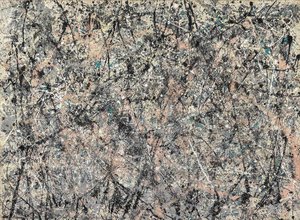
Number 14

Explore Jackson Pollock’s ‘Number 14,’ a dynamic abstract expressionist masterpiece featuring stark contrasts & gestural lines. A raw, energetic drip painting from 1951.

"meta_description": "Jackson Pollock (1912-1956) oli abstraktin ekspressionismin pioneeri ja tunnettu roiskemaalauksistaan. Hänen tyylinsä mullisti taiteen, ja hänen teoksensa ovat edelleen inspiraation lähde."

Giclée-printit ja taideprintit

Museolaatuisia giclée- tai kankaitaulun tulosteita nopealla tuotannolla ja joustavilla viimeistelyvaihtoehdoilla.

P118B $10
P118H $10
P118W $10
P438Z $10
P508JH $12
P508YH $12
P805H $10
P805Z $10
P919BZ $10
P919G $10
P919XJ $10
P959ZH $10
P968JZ $12
W106C $8
W218G $10
W218JH $8
W218Y $10
W307PJ $10
W316G $10
W316PJ $8
W316Y $10
W398PJ $8
W4111J $10
W500HY $15
W500JH $15
W692G $12
W849H $8
W940BG $15
W953PJ $8

Standard
custom
CM
INCH

Valitse valmiista mitoistamme sellaiset, jotka vastaavat teoksen alkuperäisiä mittasuhteita.

leveys
korkeus

Voit syöttää omat mitat sopiaksesi tiettyyn kehykseen tai tilaan. Jos valittu koko ei vastaa alkuperäisen kuvan mittasuhteita, rajaamme teosta tai laajennamme kuvaa peilatulla tai yhtenäisellä reunalla. Digitaalinen mallikuva lähetetään hyväksyttäväksi ennen tuotannon aloittamista.
Huomaathan, että näytöllä näkyvä esikatselu ei vastaa lopullista rajausta tai laajennusta. Vain mallikuva näyttää lopullisen sommittelun tarkasti.
Vaikka räätälöityjä kokoja on saatavilla, suosittelemme valitsemaan mitat valmiista listasta alkuperäisten mittasuhteiden säilyttämiseksi.

Toimitus maailmanlaajuisesti () kahdessa viikossa tavallisen 4–5 viikon sijaan. (5 heinäkuu)

why_choose_icon
Ilmainen pikatoimitus ympäri maailman
why_choose_icon
Korkealaatuinen pellavakangas
why_choose_icon
Kattava kuljetusvakuutus
why_choose_icon
Tulliveron palautustakuu
why_choose_icon
Täydellinen värien vastaavuustakuu
why_choose_icon
60 päivän palautusoikeus (vain valmistusvirheet)
why_choose_icon
100% rahat takaisin -takuu
why_choose_icon
Määräalennus tarjous

Kokonaishinta

-

reproduction

Number 14

Giclée-printit ja taideprintit

Replikaatin koko

-

Kokonaishinta

-

Pikaista tietoa

  • subject: Stylized landscape with implied figures or forms
  • dimensions: 146 x 269 cm
  • movement: Abstract Expressionism
  • notable elements: Drip technique, black and white contrast, gestural lines, textural variations, layering
  • style: Expressionism, Action Painting
  • artist: Jackson Pollock

Taidevisa

Jokaisessa kysymyksessä on vain yksi oikea vastaus.

Kysymys 1:
To which art movement does 'Number 14' by Jackson Pollock most closely belong?
Kysymys 2:
What is a defining characteristic of Pollock’s technique, prominently displayed in 'Number 14'?
Kysymys 3:
The description notes a strong contrast in 'Number 14'. What color palette dominates the artwork?
Kysymys 4:
Considering Pollock's broader artistic period, when was 'Number 14' created in relation to his most famous 'drip paintings'?
Kysymys 5:
The artwork’s composition is described as lacking traditional perspective. What does it rely on to create depth?

Teoksen kuvaus

A Tempestuous Vision: Decoding Jackson Pollock’s ‘Number 14’

Jackson Pollock's ‘Number 14’, created in 1951, is a monumental work embodying the raw energy and innovative spirit of Abstract Expressionism. Measuring an impressive 146 x 269 cm, this painting isn’t merely viewed – it’s *experienced*. It represents a pivotal moment in Pollock's career, falling within his celebrated “black pourings” period, a departure from the more colorful compositions that preceded it.

Style and Technique: The All-Over Composition

‘Number 14’ exemplifies Pollock’s revolutionary technique of *action painting*. Abandoning traditional easel work, he placed the canvas directly on the floor, then dripped, splashed, and poured paint from all sides using sticks, knives, and even hardened brushes. This method allowed for an unprecedented level of physical involvement and spontaneity. The result is a dense, interwoven network of black lines against a stark white ground – an “all-over” composition devoid of focal points or traditional perspective. The absence of recognizable forms invites viewers to engage with the painting on a purely visceral level, responding to its rhythm and energy rather than seeking representational meaning.

Historical Context: A Post-War Aesthetic

Created in the aftermath of World War II, ‘Number 14’ reflects the anxieties and existential questioning prevalent during that era. Abstract Expressionism emerged as a distinctly American artistic response to European philosophical currents and the trauma of global conflict. Pollock's work rejected traditional notions of beauty and representation, instead prioritizing subjective experience and emotional expression. It signaled a shift in the art world, moving away from figuration towards abstraction as a means of conveying profound psychological states.

Symbolism & Interpretation: Beyond Representation

While Pollock vehemently denied any intentional symbolism in his work, ‘Number 14’ resonates with powerful emotional undertones. The chaotic interplay of lines can be interpreted as representing the complexities and contradictions of the human psyche. The dark palette evokes feelings of melancholy, isolation, or even turmoil. However, within this darkness, there are moments of light and energy – suggesting a struggle between opposing forces. Some scholars suggest connections to Native American sand painting traditions, which Pollock encountered during his youth with his father, though he never explicitly confirmed such influences.

Emotional Impact & Interior Design

‘Number 14’ is not a passive artwork; it demands attention and evokes strong reactions. Its scale and intensity create an immersive experience, capable of transforming any space. In interior design, this piece serves as a powerful statement – ideal for modern or minimalist settings where its dramatic presence can be fully appreciated. Its monochrome palette offers versatility, complementing a range of color schemes while adding depth and sophistication. The painting’s energy is best showcased in large, open areas allowing viewers to step back and absorb the entirety of the composition. Consider pairing it with understated furniture and neutral tones to allow the artwork to take center stage.

Pollock's Legacy

Jackson Pollock’s brief but prolific career fundamentally altered the course of modern art. His innovative techniques, coupled with his uncompromising artistic vision, continue to inspire artists today. ‘Number 14’ stands as a testament to his enduring legacy – a powerful and evocative work that challenges our perceptions of painting and invites us to explore the depths of human emotion.

Samankaltaisia teoksia


Taiteilijan elämäkerta

Early Life and the Seeds of Innovation

Paul Jackson Pollock, born in Cody, Wyoming, in 1912, was a restless spirit from the outset. His early life was marked by frequent relocation as his father, LeRoy Pollock, pursued work as a land surveyor across the vast landscapes of the American West. This itinerant existence instilled in young Pollock a deep connection to the natural world and an exposure to diverse cultures, particularly through encounters with Native American art during those surveying trips – impressions that would subtly permeate his artistic vision later in life. Though he never explicitly imitated Indigenous styles, the raw energy and spiritual resonance of these early experiences undoubtedly left their mark. He grew up in Arizona and Chico, California, absorbing a sense of both rugged individualism and the spirit of the frontier. Pollock’s formal artistic training began at the Manual Arts High School in Los Angeles, followed by studies at the Art Students League of New York under the tutelage of Thomas Hart Benton. Benton, a prominent figure in the Regionalist movement, emphasized rhythmic composition and narrative themes rooted in American life. Pollock initially absorbed these lessons, learning to create works that reflected the landscapes and people of America. However, his inherent inclination leaned toward more abstract explorations, driven by a desire to move beyond representational art and delve into deeper emotional and psychological realms. He was also profoundly impacted by Mexican muralists like José Clemente Orozco, whose powerful depictions of social struggle resonated deeply with him, sparking an interest in conveying complex narratives through visual form. These early influences laid a foundation, but it was the burgeoning world of Surrealism that truly unlocked Pollock’s artistic potential.

The Birth of Action Painting and a Revolutionary Technique

The 1930s saw Pollock experimenting with various techniques, seeking alternatives to traditional brushwork. He began pouring paint, exploring its fluidity and unpredictable nature. However, it was around 1947 that his artistic trajectory underwent a radical transformation. Abandoning the easel altogether, Pollock laid canvases directly on the floor, initiating what would become known as his “drip technique.” He then proceeded to drip, splash, and fling paint onto the canvas from above, orchestrating a dynamic dance between artist, medium, and surface. This wasn’t merely about applying paint; it was about embodying the act of creation itself. Pollock's canvases became arenas for physical expression, capturing the immediacy of his gestures and emotions. The resulting paintings are characterized by their “all-over” composition – a lack of central focus that invites the viewer to explore the entire surface as a unified field of energy. Intricate networks of lines and colors intertwine, creating a visual complexity that is both captivating and challenging. He employed unconventional tools—sticks, knives, even syringes—to manipulate the paint in unpredictable ways, further emphasizing the spontaneous nature of his process. This innovative approach positioned Pollock as a central figure in the burgeoning Abstract Expressionist movement, which emerged in post-World War II New York City.

Influences and Artistic Development

Pollock’s artistic development was shaped by a diverse range of influences. Beyond Benton and Orozco, he drew inspiration from European modernism, particularly the work of Pablo Picasso, whose innovative use of form and color challenged traditional notions of representation. He also explored Surrealist techniques, embracing the subconscious and dreamlike imagery associated with the movement. The influence of Max Ernst, a pioneer of collage and automatism, is evident in Pollock’s early experiments with chance and improvisation. His marriage to Lee Krasner, a fellow artist and intellectual, was particularly significant; she provided unwavering emotional support and actively encouraged his artistic development, recognizing the groundbreaking nature of his work. She understood his need for freedom and experimentation, fostering an environment where he could push the boundaries of art.

Iconic Works and Lasting Legacy

Pollock’s most celebrated works—such as Number 1, 1950 (Lavender Mist), One: Number 31, 1950, Blue Poles: Number 11, 1952, and Convergence—are testaments to his revolutionary technique. These paintings are not simply images; they are records of a performance, imbued with the artist’s physical presence and emotional intensity. The dynamic energy that emanates from these canvases is palpable, drawing viewers into a world of pure abstraction. His work transcended mere aesthetics; it was an exploration of process over product – a deliberate rejection of traditional notions of composition and representation. Pollock delved into Jungian psychology, exploring archetypes and the subconscious in his art, seeking to tap into universal symbols and primal energies. Pollock’s impact on the history of art is immeasurable. He fundamentally altered the way artists approached painting, breaking free from easel-based methods and embracing a more performative approach. His work helped solidify New York City's position as a global center for modern art, shifting the focus away from European dominance. Despite initial skepticism from some critics, Pollock’s reputation grew steadily after his untimely death in 1956 at the age of 44. Today, he is universally recognized as one of the most important and influential artists of the 20th century, a visionary who dared to challenge conventions and redefine the boundaries of artistic expression. His innovative techniques and expressive style continue to inspire and provoke, ensuring his enduring legacy for generations to come.

Paul Jackson Pollock

Paul Jackson Pollock

1912 - 1956 , Yhdysvallat

Pikatiedot

  • Artistic Movement Or Style: Abstrakti ekspressionismi
  • Artists Or Movements Influenced By This Artist:
    • Color Field
    • Abstrakti ekspressionismi
  • Artists Who Influenced This Artist:
    • Thomas Hart Benton
    • José Clemente Orozco
  • Date Of Birth: 28 tammiku 1912
  • Date Of Death: 11 elokuuta 1956
  • Full Name: Paul Jackson Pollock
  • Nationality: Amerikkalainen
  • Notable Artworks:
    • Numero 1, 1949
    • Syksynrytmi
    • Yhdistyminen
  • Place Of Birth: Cody, Wyoming
Tutustu teoksiin, jotka on järjestetty aiheiden, tyylien ja ominaisuuksien mukaan.