Museolaatuisia giclée- tai kankaitaulun tulosteita nopealla tuotannolla ja joustavilla viimeistelyvaihtoehdoilla. ( Osta käsinmaalattu taideteos Siirry digitaaliseen kuvaan)





























Valitse valmiista mitoistamme sellaiset, jotka vastaavat teoksen alkuperäisiä mittasuhteita.

Syötä tarvitsemasi leveys ja korkeus, jotta tuloste sopii kehyksiisi tai seinällesi. Tulostetta voidaan vain leikata, sitä ei voida koskaan suurentaa alkuperäistä kuvaa suuremmaksi, joten eri muotoinen koko aiheuttaa osan kuvasta katoamisen. Lähetämme sinulle digitaalisen mallikuvan hyväksyttäväksi ennen kuin aloitamme tulostuksen. Tällä sivulla näkyvä kuva ei näytä lopullista rajausta — vain mallikuva näyttää sen.
Maailmanlaajuinen toimitus () 2 viikossa tavallisen 4–5 viikon sijaan. (7 marraskuu)
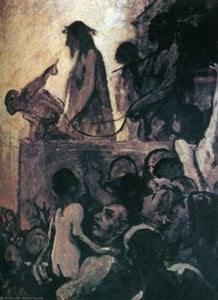
The Neophyte
Replikaatin koko
The image presents a monochrome scene set within a dimly lit interior, likely a corridor or communal room of a monastery. A young man, the central figure, sits amidst a group of older individuals. His face is directed toward the viewer, characterized by a fixed, downward gaze and a facial expression that conveys sorrow. He is positioned in front of several other figures, including monks and attendants, who are seated on chairs or benches and standing in the background. Some of these figures are engaged in quiet conversation, while others observe the surroundings.
The lighting in the scene is stark, creating deep shadows and bright highlights that define the textures of the subjects. The palette is restricted to shades of grey, black, and brown. This use of light and shadow emphasizes the physical presence of the figures and the folds in their drapery. The technical execution involves a complex layering of tonal values, achieved through drypoint etching and lithographic printing. These methods produce heavy, velvety textures on the wood block, particularly visible in the rendering of facial features and the weight of the clothing.
Created in 1875, this work belongs to the Romantic movement, a period that prioritized individual emotion and subjective experience over rationalism. The muted tones and heavy shadows reflect the internal state of the protagonist. The young man represents a struggle for spiritual conviction, with his gaze signifying doubt regarding his monastic vows. In contrast, the surrounding older monks represent established tradition and religious dogma.
The physical arrangement of the figures reinforces this theme of isolation. While the other individuals occupy the space as part of a collective community, the young man appears psychologically detached. The stark lighting isolates him from the group, highlighting his vulnerability. This visual narrative explores the tension between personal idealism and the reality of religious life, using the heavy, dark atmosphere to communicate a sense of existential anxiety.
"The Neophyte" jakaa Gustave Doré'n muiden teosten kanssa Romantic Realism-tyylin sekä toistuvat teemat: biblical narrative, emotional depth, romantic vision, spiritual contemplation, dramatic expression.
Gustave Doré:n "The Neophyte"-teoksen Earthy värit soveltuvat erinomaisesti sen suositeltuun tilaan: Living Room.
Tekijänoikeustiedot teokselle Gustave Doré:n "The Neophyte": teos on vapaasti käytettävissä – tekijänoikeussuoja on päättynyt. Tämä määrittää, voidaanko kuvasta tehdä vapaasti jäljennöksiä.


1832 - 1883 , Ruotsi

Luo globaali brändi muuttamalla digitaalinen taiteesi museotason Giclée-vedoksiksi. WahooArt tarjoaa arkkivalia pigmenttimustetta ja premium-materiaaleja, jotka takaavat taiteesi pysyvän arvon ja loiston. Koe todellinen käsityö ja laatu, joka on suunniteltu kestämään sukupolvelta toiselle.

Master the nuances of Giclée printing with our expert guide. Discover how pigment-based inks and museum-grade substrates create fade-resistant, high-fidelity art reproductions designed for discerning collectors seeking unparalleled quality and longevity.

Embark on a scholarly journey through the alchemy of lithography. This definitive guide offers collectors profound insights into the chemical mastery of stone and ink, the medium's historical legacy, and essential expertise for acquiring rare, museum-quality prints with absolute confidence.
 Esikatselu
 Jaa teos
 Jaa
Jaa
 Tiedot
 Opas
Opas

 Lataa kuva
 Samanlaisia kohteita
 Röntgenkuvaus
 Diaesitys
 Kysymykset ja vastaukset
 Tilastot


 Lue lisää









 Lasivaihtoehto on saatavilla vain alle 110 cm kokoisille teoksille