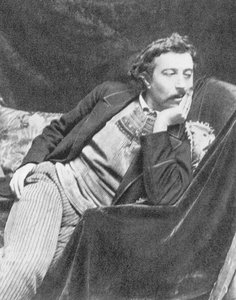
Paul Gauguin – A Pioneer of Symbolism
Paul Gauguin (1848–1903) stands as an undeniable titan amongst the artistic figures who ushered in the dawn of modern art, irrevocably altering the landscape of European painting. Born in Paris amidst the turbulent currents of 1848 – a year synonymous with revolutionary fervor across Europe – his formative years were marked by an unusual familial backdrop: His father, a journalist advocating liberal ideals, faced persecution when his publication was silenced by autocratic forces; Aline Chazal, his mother, descended from Peruvian aristocracy and carried within her the legacy of a pioneering feminist voice. This heritage profoundly shaped Gauguin’s artistic vision, instilling in him a deep fascination with cultures beyond the confines of Western Europe – an impulse that would propel him to explore uncharted territories and capture their essence on canvas. His childhood immersion in Peru, following his family's relocation in 1850, exposed him to a world radically distinct from Parisian society, fostering a sensitivity to diverse traditions and perspectives that would permeate his oeuvre.
- Early Influences: Gauguin’s artistic trajectory was initially nurtured by the intellectual currents of his time – notably the burgeoning Symbolist movement, which championed emotive expression over literal representation. His exposure to Impressionism, spearheaded by artists like Camille Pissarro, provided invaluable insights into capturing fleeting moments of light and color, though he swiftly rejected Impressionistic dogma in favor of a more profound artistic exploration.
- Tahitian Odyssey: Gauguin’s most celebrated period unfolded during his residency in Tahiti (1886–1893), where he sought refuge from the pressures of Parisian life and embarked on an ambitious project to depict Polynesian culture with uncompromising honesty. This journey ignited a transformative artistic impulse, propelling him to synthesize Impressionistic techniques with Symbolist ideals – resulting in canvases brimming with vibrant hues and imbued with spiritual resonance.
Style & Technique: Gauguin’s distinctive style—characterized by bold brushstrokes, flattened perspectives, and an audacious disregard for conventional compositional rules—represents a decisive break from Impressionistic conventions. He embraced Synthetism, prioritizing color and form to convey emotion rather than merely replicating visual perception. Thick impasto – applying paint thickly onto the canvas – dominates his surfaces, creating palpable texture and emphasizing the materiality of pigment itself. This technique echoes Vincent van Gogh’s expressive approach, particularly evident in “The Starry Night,” where dynamic brushwork seeks to evoke a sense of turbulent energy—a deliberate departure from Impressionistic serenity.
Hillside: A Symphony of Light and Texture
“Hillside,” painted in 1884, exemplifies Gauguin’s masterful manipulation of light and atmosphere – elements he considered paramount to artistic expression. As extensively documented on Wikipedia, illumination serves as an indispensable tool for painters—influencing the perceived image and shaping its overall aesthetic impact. Gauguin skillfully utilizes dappled sunlight filtering through foliage to illuminate the landscape, generating a luminous quality that transcends mere optical realism; creating an immersive experience for the viewer. The interplay of light and shadow sculpts the forms of trees and bushes, enhancing their textural richness and conveying a sense of dramatic tension—a deliberate contrast with Impressionistic pastel shades.
- Color Palette: Gauguin’s palette is dominated by greens – ranging from emerald vibrancy to muted olive tones – reflecting the lush vegetation of Tahiti. Accents of brown and yellow introduce warmth and depth, grounding the composition while hinting at underlying geological forces.
- Emotional Resonance: The painting evokes a feeling of tranquil contemplation mingled with melancholic reflection—a meditation on nature’s grandeur alongside an awareness of its transient beauty. Gauguin's expressive brushstrokes convey not just visual information but also psychological states – capturing the artist’s own emotional response to his surroundings.
Symbolism and Remembrance
“Hillside” embodies Gauguin’s preoccupation with themes of mortality and remembrance—expressed through the prominent inclusion of cypress trees—a motif recurrently revisited by the artist throughout his oeuvre. These towering conifers, positioned in the upper right corner, symbolize death and eternal life – a poignant element reflecting Gauguin's broader artistic quest to transcend rational observation and tap into deeper truths about human existence. The painting’s composition—featuring trees and bushes in the foreground juxtaposed against taller trees in the background—creates an illusion of depth and draws the viewer into the scene—a technique characteristic of Impressionism but elevated to a level of emotive intensity unparalleled by its predecessors.
Legacy & Influence
Gauguin’s groundbreaking approach profoundly impacted subsequent artists – notably Vincent van Gogh and Henri Matisse – who embraced Synthetist style and bold color palettes as expressions of personal vision. “Hillside” remains a testament to Gauguin's pioneering role in shaping the trajectory of modern art—a timeless masterpiece that continues to inspire awe and contemplation, securing its place among the most iconic works of Impressionism and Symbolism.



 Esikatselu
 Osta käsintehty maalaus
 Jaa
Jaa Jaa
Jaa
 Tarkemmat tiedot

 Lataa
Lataa
 Samanlaisia
 Röntgenkuva
 Diaesitys


 Näytä lisää






































 Lasivaihtoehto on saatavilla vain alle 110 cm kokoisina teoksina