


Museolaatuisia giclée- tai kankaitaulun tulosteita nopealla tuotannolla ja joustavilla viimeistelyvaihtoehdoilla. ( Osta käsinmaalattu taideteos Siirry digitaaliseen kuvaan)





























Valitse valmiista mitoistamme sellaiset, jotka vastaavat teoksen alkuperäisiä mittasuhteita.

Syötä tarvitsemasi leveys ja korkeus, jotta tuloste sopii kehyksiisi tai seinällesi. Tulostetta voidaan vain leikata, sitä ei voida koskaan suurentaa alkuperäistä kuvaa suuremmaksi, joten eri muotoinen koko aiheuttaa osan kuvasta katoamisen. Lähetämme sinulle digitaalisen mallikuvan hyväksyttäväksi ennen kuin aloitamme tulostuksen. Tällä sivulla näkyvä kuva ei näytä lopullista rajausta — vain mallikuva näyttää sen.
Maailmanlaajuinen toimitus () 2 viikossa tavallisen 4–5 viikon sijaan. (5 marraskuu)
Satyres and Nymphs
Replikaatin koko
Paul Cézanne, a name synonymous with artistic revolution, stands as an undeniable cornerstone of Post-Impressionism. Yet, before he sculpted the very foundations of Cubism, Cézanne embarked on a journey of profound experimentation—a quest to reconcile classical ideals with burgeoning modern sensibilities. “Satyres and Nymphs,” painted in 1867, embodies this formative period perfectly, offering a glimpse into Cézanne’s nascent fascination with Romanticism.
The canvas depicts three nude women nestled within a verdant forest landscape—a scene steeped in mythological allusion. Cézanne meticulously crafted the composition, prioritizing underlying structure over conventional perspective. The first woman on the left leans back gracefully, her gaze averted from the viewer, while delicately supporting another woman positioned between her legs – a gesture that speaks volumes about vulnerability and connection. Simultaneously, the second woman embraces her waist, conveying intimacy and repose. On the right side of the canvas, the third woman exudes a sense of relaxed serenity.
“Satyres and Nymphs” unmistakably reflects Cézanne's early engagement with Romanticism—a movement characterized by fervent emotion, imaginative storytelling, and an unwavering belief in individualism. Unlike the Impressionists who sought to capture fleeting moments of light and color, Cézanne prioritized solidity and permanence. He achieved this through a technique rooted in observation but driven by conceptual understanding; he painstakingly built up forms using small, overlapping brushstrokes—a method that would become his signature style.
Painted during a time when artistic academies rigidly enforced stylistic rules, Cézanne’s work represented a daring defiance of convention. Critics initially dismissed his approach as crude and lacking in polish, labeling it “primitive.” However, Cézanne persevered, honing his craft and gradually gaining recognition from fellow artists—most notably Henri Matisse and Pablo Picasso—who recognized the transformative potential of his vision.
"Satyres and Nymphs" transcends mere visual depiction; it delves into deeper symbolic territory. The forest setting itself symbolizes fecundity, renewal, and the untamed beauty of nature—themes prevalent throughout Romantic art. Cézanne’s deliberate simplification of forms invites contemplation on timeless concepts of femininity, vulnerability, and the interplay between human emotion and the natural world. This painting serves as a poignant reminder that true artistic achievement lies not merely in capturing appearances but in conveying profound emotional truths.
Teoksen Paul Cézanne:n "Satyres and Nymphs" suosiotaso on Recognized.
Teoksen "Satyres and Nymphs" painosteelle suositeltu käyttötapa on Statement.
Teoksen Paul Cézanne:n "Satyres and Nymphs" taidehistoriallinen luokitus on Post-Impressionism, 19th Century-kaudelta.


1839 - 1906 , Ranska

Explore the profound tension between Neoclassicism's rational order and Romanticism's emotional depth. An expert journey through the masters of art history, from David to Delacroix, perfect for collectors and enthusiasts seeking a deeper understanding of artistic evolution.
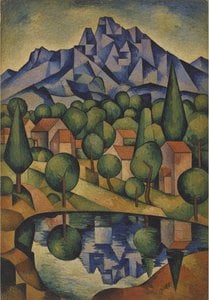
Explore the profound legacy of Paul Cézanne. Discover how his mastery of geometric forms and vibrant color bridged Impressionism and Cubism, offering timeless inspiration for fine art collectors and enthusiasts seeking to understand the foundations of modern art.

Explore the breathtaking world of the Pre-Raphaelite Brotherhood. Discover how this movement redefined Victorian art through vivid detail, mythological depth, and romanticism. An expert guide for classic art enthusiasts seeking to rediscover these timeless masterpieces.

Explore the profound beauty of American Romanticism. Discover how the Hudson River School captured the wild frontier through masterful landscapes, exploring the legacy of legends like Thomas Cole and Asher Durand in this deep dive into art history.

Explore the structural genius of Paul Cézanne. Discover how his mastery of geometric form and color bridged Impressionism and Cubism in this definitive guide for art enthusiasts and collectors.
 Esikatselu
 Jaa teos
 Jaa
Jaa
 Tiedot
 Opas
Opas

 Lataa kuva
 Samanlaisia kohteita
 Röntgenkuvaus
 Diaesitys
 Kysymykset ja vastaukset
 Tilastot

 Lue lisää









 Lasivaihtoehto on saatavilla vain alle 110 cm kokoisille teoksille


