Ilmainen taidekonsultointi

x
Tilaa painos Tilaa painosTilaa maalaus Tilaa maalaus JaaJaa
TiedotTiedot Lisää suosikkeihin Lisää suosikkeihin LataaLataa SamanlaisiaSamanlaisia X-lähikuvaX-lähikuva DiaesitysDiaesitys

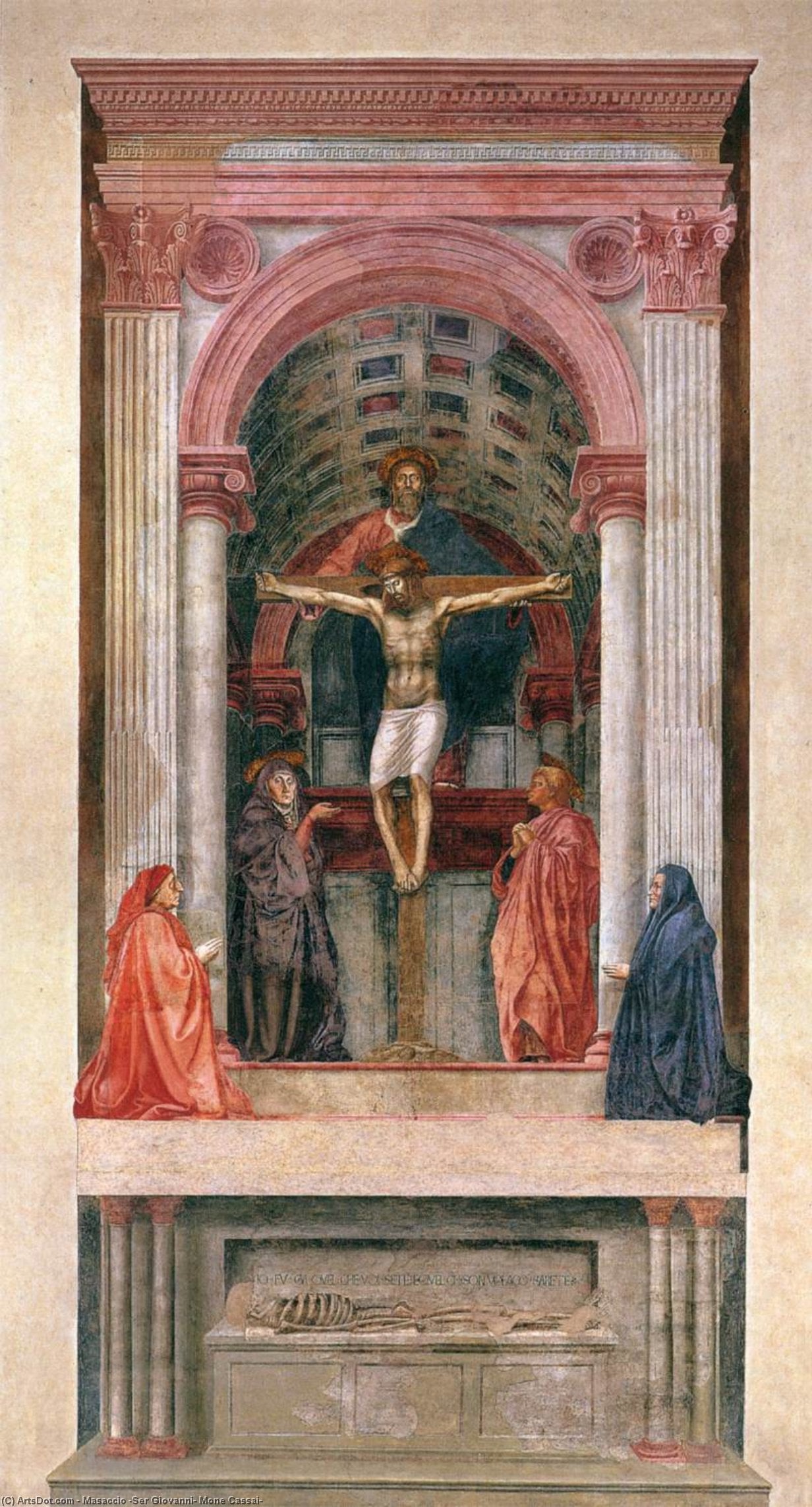
Trinity

Explore Masaccio's groundbreaking "Holy Trinity," a pivotal fresco showcasing linear perspective and humanist ideals—a cornerstone of Renaissance art housed in Santa Maria Novella, Florence.

Masaccio (1401–1428) mullisti renessanssiajan taidetta realismilla, perspektiivillä ja varjoisalla valolla. Tutustu hänen mestariteoksiinsa kuten Pyhä Kolmio ja Brancacci kappelin freskoihin – nämä ovat renessanssin aikojen huiput!

Osta korkearesoluutioinen, parannettu digitaalikuva, joka on laadultaan huomattavasti parempi kuin verkkosivuston esikatselu.

Jokainen tiedosto valmistellaan huolellisesti omien asiantuntijoidemme toimesta käyttäen edistyneitä työkaluja ja ammattitaitoista manuaalista retusointia. Varmistamme, että jokaisessa kuvassa on poikkeuksellinen selkeys, tarkka värintoisto ja hienovaraiset yksityiskohdat.

Lopputiedosto toimitetaan sähköpostitse 72 tunnin kuluessa, ja se on optimoitu välittömään käyttöön ammattimaisissa, toimituksellisissa ja painoympäristöissä. Laatu on sama, johon huipputason suunnittelustudiot, kustantajat ja galleriat luottavat.

Digitaalinen kuva

Lataa korkearesoluutioinen tiedosto henkilökohtaiseen näyttelyyn, tulostamiseen ja luoviin projekteihin.

Kokonaishinta

$9.99

Sisältyy jokaiseen digitaalisen kuvan tilaukseen

Asiantunteva digitaalinen toimitus, taattuun laatuun

Kun valitset WahooArt.com-palvelun, et saa vain kuvaa – saat ammattimaisesti parannetun digitaalisen taideteoksen, joka on luotu tarkkuudella ja jonka takaa tulee tyytyväisyystakuu. Tässä on kaikki, mitä tilauksesi sisältää, automaattisesti:

shipping_icon
Nopea digitaalinen toimitus

Korkearesoluutioinen digitaalinen kuvatiedostosi lähetetään sähköpostiisi 72 tunnin kuluessa tilauksesta – valmiina käytettäväksi välittömästi.

canvas_icon
Tekoälyllä parannettu digitaalinen tiedosto

Taiteilijasi teos on optimoitu ammattimaisesti edistyneiden tekoälytyökalujen ja manuaalisen muokkauksen avulla, mikä takaa maksimaalisen yksityiskohtaisuuden, selkeyden ja väritarkkuuden.

insurance_icon
Ilmainen elinikäinen uudelleenlähetyspalvelu

Oletko vahingossa poistanut tai kadottanut tiedostosi? Ei hätää – lähetämme sen sinulle uudelleen milloin tahansa täysin maksutta.

tax_icon
Ei tuontimaksuja – koskaan

Nauti taiteestasi välittömästi ilman tulleja, veroja tai toimitusmaksuja – digitaaliset lataukset ovat aina verovapaita.

color_icon
Värintoiston tarkkuustakuu

Varmistamme, että digitaalinen kuvasi vastaa alkuperäisiä värejä mahdollisimman tarkasti käyttämällä ammattilaistason työkaluja ja värinhallintaa.

return_icon
60 päivän tyytyväisyystakuu

Jos et ole tyytyväinen digitaaliseen kuvaasi, muokkaamme sitä tai palautamme 100% takaisin 60 päivän kuluessa – ilman kysymyksiä.

guarantee_icon
100% Rahat takaisin -takuu

Etkö ole tyytyväinen? Saat täyden hyvityksen 60 päivän kuluessa digitaalisen tiedostosi vastaanottamisesta – ilman kyselyitä.

discount_icon
Suurtilaaja-alennukset

Osta 3 kuvaa, säästä 10% - Osta 5, säästä 15% - Osta 10+, säästä 20%. Erinomainen valinta luoviin projekteihin, gallerioille ja toimistoille.

Pikaista tietoa

  • Location: Santa Maria Novella, Florence
  • Year: 1425
  • Notable elements or techniques: Linear perspective; Chiaroscuro; Realistic depiction of figures
  • Dimensions: 640 x 317 cm
  • Subject or theme: Religious scene; Crucifixion
  • Artist: Masaccio
  • Influences: Classical Greek and Roman culture

Taidevisa

Jokaisessa kysymyksessä on vain yksi oikea vastaus.

Kysymys 1:
What artistic movement is Masaccio’s ‘Trinity’ considered to be?
Kysymys 2:
Masaccio pioneered the use of what groundbreaking technique in painting?
Kysymys 3:
In which church is Masaccio’s ‘Trinity’ located?
Kysymys 4:
What was a significant innovation in the depiction of figures compared to earlier medieval art?
Kysymys 5:
The fresco utilizes classical elements like columns and arches. What does this reflect about the artistic influences of the Renaissance?

Keräilykohteen kuvaus

Masaccio’s Holy Trinity: A Dawn of Renaissance Realism

The fresco “Holy Trinity” by Masaccio stands as an undeniable cornerstone of the Early Italian Renaissance, marking not merely a stylistic shift but a profound reimagining of artistic representation itself. Located in Santa Maria Novella church in Florence—a space steeped in history and pilgrimage—the painting transcends mere religious iconography; it embodies a revolutionary commitment to observation and humanist ideals that fundamentally altered the trajectory of Western art. Completed around 1425-1427, shortly before Masaccio’s untimely death at age twenty-six, this monumental artwork captivated Giorgio Vasari, who famously declared Masaccio “the best painter of his generation” due to his unparalleled ability to capture the essence of human experience through meticulous realism.

A Breakthrough in Perspective and Spatial Illusion

Masaccio’s genius resided primarily in his masterful manipulation of linear perspective—a technique previously explored sporadically by Giotto but never achieved with such unwavering conviction. Unlike the flattened, stylized depictions prevalent in Gothic art, Masaccio employed a single vanishing point to create an illusion of depth and three-dimensionality that was astonishing for its time. This wasn’t simply about accurately portraying architectural space; it represented a paradigm shift toward representing human figures within a believable environment. As Vasari meticulously documented, Masaccio painstakingly calculated the dimensions of the chapel itself—a feat considered extraordinary by contemporary standards—to ensure that the fresco’s spatial arrangement mirrored reality. The carefully positioned rosettes on the ceiling and the subtle gradations of color contribute to this immersive experience, transporting viewers into a space that feels palpably present.

Humanism Embodied: Figures as Vessels of Emotion

Beyond its technical innovations, “Holy Trinity” distinguishes itself through its strikingly humanistic portrayal of figures—a departure from the idealized representations characteristic of medieval art. Masaccio’s depiction of Christ, Mary, and Saint John is imbued with palpable emotion; their facial expressions convey sorrow, humility, and contemplation—qualities rarely prioritized in earlier artistic traditions. The artist's meticulous attention to anatomical detail—evident in the musculature of Christ’s torso and the drapery folds—demonstrates a newfound fascination with the human body as an instrument of expression. This humanist approach aligns seamlessly with the broader intellectual currents of the Renaissance, reflecting a renewed interest in classical Greek and Roman ideals of beauty and virtue.

Symbolism Rooted in Medieval Tradition Revisited

Despite its groundbreaking realism, “Holy Trinity” retains echoes of medieval symbolism—particularly the depiction of Adam’s skeleton at the base of the tomb. This motif harkens back to the theological concept of *Memento Mori*, reminding viewers of mortality and emphasizing the spiritual significance of earthly existence. The juxtaposition of the decaying flesh of Adam with the radiant light emanating from Christ symbolizes redemption and transcendence, mirroring the central dogma of Christianity—the belief in eternal life after death. Masaccio’s masterful integration of these symbolic elements underscores the enduring power of religious imagery while simultaneously elevating it to a new level of artistic sophistication.

A Legacy That Continues to Inspire

“Holy Trinity” remains an unparalleled exemplar of Renaissance art, influencing generations of artists who followed—including Michelangelo—and cementing Masaccio's place as one of the foremost innovators of his era. Its enduring appeal lies not only in its breathtaking visual beauty but also in its profound intellectual depth—a testament to Masaccio’s unwavering commitment to capturing the complexities of human experience and transforming artistic representation into a vehicle for spiritual contemplation. It stands as an invitation to revisit the origins of Western art, appreciating the transformative power of observation and humanist ideals.

Taiteilijan elämäkerta

Masaccio (1401-1428): The Dawn of Renaissance Realism

Tommaso di Ser Giovanni di Simone Cassai, better known as Masaccio (meaning "clumsy Tom"), was a pivotal figure in the Early Italian Renaissance. Born on December 21, 1401, in San Giovanni Valdarno, Italy, and dying tragically young in 1428, his brief career revolutionized painting with groundbreaking realism, perspective, and chiaroscuro (the use of strong contrasts between light and dark). Despite his short life, Masaccio’s impact on subsequent generations of artists was profound, establishing a new standard for naturalism and influencing the course of Western art.

Early Life and Training

Masaccio's origins were humble; he descended from Ser Giovanni di Mone Cassai, a notary, and Jacopa di Martinozzo di Dino. His family name, Cassai, derived from his paternal grandfather’s trade as a cabinet maker – a craft that would subtly inform Masaccio’s meticulous attention to detail in his artwork. Orphaned at age five when his father succumbed to illness, Masaccio was cared for by his brother Giovanni (Lo Scheggia), who also pursued a vocation in art. The specifics of Masaccio's artistic training remain shrouded in mystery – an unusual circumstance considering the prevailing practices of Renaissance artists. Scholars believe he likely apprenticed around the age of 12, but definitive documentation regarding his master has proven elusive. This lack of verifiable mentorship contributes to the enduring fascination surrounding his rapid ascent to mastery and the astonishing innovation of his techniques. He joined the painters’ guild (Arte de’ Medici e Speziali) in Florence on January 7, 1422, marking his emergence as an independent artist and signaling a decisive step away from the patronage system that dominated artistic life at the time.

Artistic Development and Major Works

Masaccio's artistic journey began under the influence of Giotto di Bondone – a predecessor who championed naturalism and imbued his frescoes with palpable emotion. However, Masaccio swiftly surpassed Giotto’s achievements in mastering perspective and anatomical accuracy. He was particularly captivated by Filippo Brunelleschi’s rediscovery of linear perspective, recognizing its transformative potential for representing three-dimensional space on a flat surface. This intellectual breakthrough fueled his artistic experimentation and propelled him to develop techniques that would redefine the visual language of painting. Masaccio pioneered several groundbreaking innovations:
  • Linear Perspective: Employed vanishing points with mathematical precision to create an illusion of depth, fundamentally altering how artists depicted reality.
  • Chiaroscuro: Masterfully utilized light and shadow to sculpt forms, generating a sense of volume and realism previously unattainable in Medieval art.
  • Naturalism: Depicted figures with anatomical detail and expressive gestures, mirroring the humanist ideals that were gaining traction during his time – a departure from stylized representations prevalent earlier in the century.
His most celebrated achievements reside within the Brancacci Chapel frescoes in Santa Maria del Carmine, Florence. Commissioned by Giovanni Tornabuoni, these monumental paintings—including “The Tribute Money,” “Expulsion from Paradise,” and “St. Peter Baptizing the Neophytes”—represent a pinnacle of Early Renaissance artistry. Masaccio’s masterful use of perspective, combined with his profound understanding of human psychology, elevates these scenes beyond mere narrative illustration; they convey emotion and spiritual contemplation with unparalleled effectiveness. Furthermore, "The Trinity," completed in collaboration with Masolino, exemplifies Masaccio's innovative approach to spatial organization and color harmony—a testament to his enduring influence on subsequent generations of painters.

Historical Significance and Legacy

Masaccio’s legacy extends far beyond the confines of Florence and the Brancacci Chapel. Giorgio Vasari, a prominent Renaissance biographer, eloquently captured Masaccio’s genius, proclaiming him “the best painter of his generation” due to his unwavering commitment to imitating nature and conveying human emotion with breathtaking realism. His groundbreaking techniques irrevocably altered artistic conventions, establishing a new standard for naturalism that resonated throughout Europe. He served as an inspiration for artists like Leonardo da Vinci and Michelangelo—who diligently studied Masaccio’s frescoes—and cemented his place as one of the foundational figures of Western art history. Despite his untimely demise at the age of 26 – circumstances surrounding which remain obscure – Masaccio's brief but brilliant life ensured that his artistic innovations would endure for centuries to come, shaping the trajectory of Renaissance painting and profoundly impacting the visual culture of Europe.
Masaccio

Masaccio

1401 - 1429 , Italia

Lyhyesti esiteltynä

  • Artistic Movement Or Style: Early Renaissance
  • Artists Who Influenced This Artist:
    • Giotto
    • Filippo Brunelleschi
  • Date Of Birth: 21. joulukuuta 1401
  • Full Name: Tommaso di Ser Giovanni di Simone Guidi Cassai
  • Nationality: Italian
  • Notable Artworks:
    • Brancacci Chapel fresk.
    • Pyhä Johannes
    • Kristuksen Poika ja Pyhä Anna
  • Place Of Birth: San Giovanni Valdarno, Italia