


x

 Tilaa maalaus Osta kuva
 Jaa
Jaa
 Tarkemmat tiedot
 Lisää suosikkeihin
 Lataa
Lataa
 Samanlaisia
 Röntgenkuva
 Diaesitys
 1962
1962 87.0 x 52.0 cm
 Buenos Airesin modernin taiteen museo
Museolaatuisia giclée- tai kankaitaulun tulosteita nopealla tuotannolla ja joustavilla viimeistelyvaihtoehdoilla.
Valitse valmiista mitoistamme sellaiset, jotka vastaavat teoksen alkuperäisiä mittasuhteita.

Voit syöttää omat mitat sopiaksesi tiettyyn kehykseen tai tilaan. Jos valittu koko ei vastaa alkuperäisen kuvan mittasuhteita, rajaamme teosta tai laajennamme kuvaa peilatulla tai yhtenäisellä reunalla. Digitaalinen mallikuva lähetetään hyväksyttäväksi ennen tuotannon aloittamista.
Huomaathan, että näytöllä näkyvä esikatselu ei vastaa lopullista rajausta tai laajennusta. Vain mallikuva näyttää lopullisen sommittelun tarkasti.
Vaikka räätälöityjä kokoja on saatavilla, suosittelemme valitsemaan mitat valmiista listasta alkuperäisten mittasuhteiden säilyttämiseksi.
Toimitus maailmanlaajuisesti () kahdessa viikossa tavallisen 4–5 viikon sijaan. (22 heinäkuu)


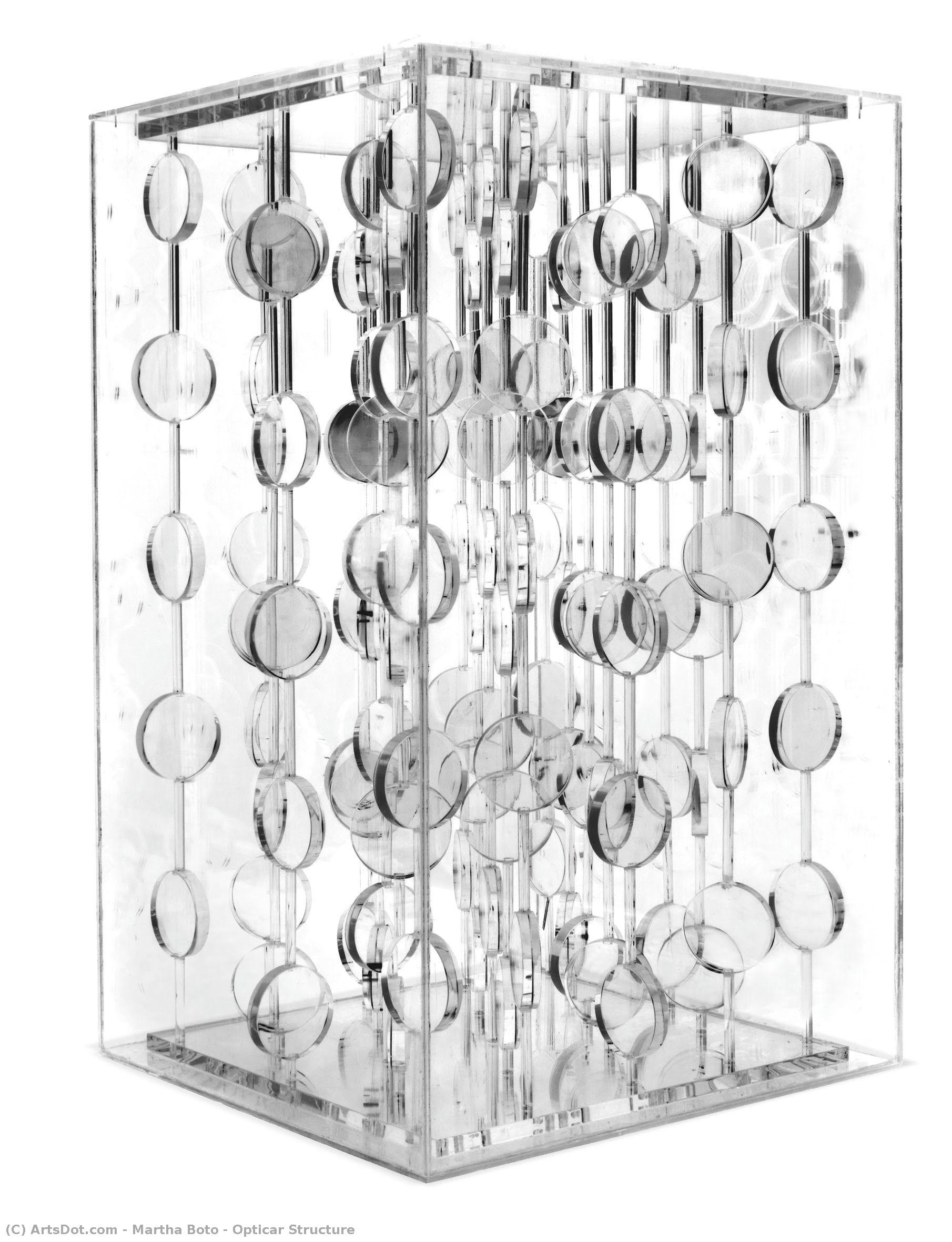
Opticar Structure
Replikaatin koko

Martha Boto (1925-2004) was a highly influential Argentinian artist renowned for her pioneering work in kinetic and programmed art. Born in Buenos Aires, Argentina, she demonstrated an early aptitude for visual arts. In 1944, Boto formally began her artistic training at the Escuela Superior de Bellas Artes, where she honed her skills in drawing and painting.
Boto’s initial artistic explorations centered around geometric abstraction. During the 1950s, she held several solo exhibitions showcasing these early works. However, a pivotal shift occurred in 1956 when she joined the “Arte Nuevo” group – a collective dedicated to concrete art. This association spurred her experimentation with innovative materials like plexiglass, light, and mirrors.
Boto was among the first artists in Buenos Aires to integrate movement as a fundamental element within her sculptural creations. In 1957, alongside her husband and artistic collaborator, Gregorio Vardanega, she co-founded “Artistas no figurativos de la argentina,” further solidifying her commitment to non-figurative art.
In 1959, Boto relocated to Paris with Vardanega, a move that proved crucial for her international recognition. The influential gallerist Denise René championed Boto’s work, providing her with opportunities to exhibit alongside leading figures in the kinetic art movement. She also participated in the inaugural Biennale de Paris.
During her time in Paris, Boto increasingly incorporated industrial materials – notably electric motors – into her sculptures. This integration of technology allowed for dynamic, moving artworks that challenged traditional notions of sculpture. Her work explored the interplay between light, space, and motion, creating immersive visual experiences.
Martha Boto’s contributions to kinetic and programmed art are widely celebrated. She is recognized as a key figure in Latin American modernism and a pioneer who expanded the boundaries of sculptural practice. Her innovative use of materials, incorporation of movement, and exploration of perceptual phenomena continue to inspire artists today. Her work remains a testament to the power of experimentation and the enduring appeal of abstract art.

1925 - 2004 , Argentina


Pysy ajan tasalla uusimmista taideuutisista, eksklusiivisista tarjouksista ja sisustusideoista.
Kerro meille projektistasi, niin taideasiantuntijamme tarjoavat sinulle kolme henkilökohtaista taidesuositusta.
Anna meidän kuratoida 3 vaihtoehtoa juuri sinulle – Ilmaiseksi!
 Jaa
Jaa

 Näytä lisää




































 Lasivaihtoehto on saatavilla vain alle 110 cm kokoisina teoksina


