Vaihda tulosteeseen Vaihda tulosteeseenOsta käsintehty maalaus Osta käsintehty maalaus JaaJaa
Tarkemmat tiedotTarkemmat tiedot Lisää suosikkeihin Lisää suosikkeihin LataaLataa SamanlaisiaSamanlaisia DiaesitysDiaesitys TilastotTilastot

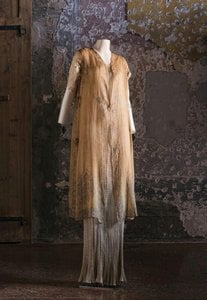
Cape

Mariano Fortuny’s ‘Cape,’ created in 1930, exemplifies his groundbreaking approach to fashion and stage lighting. This photograph captures a mannequin draped in a luxurious velvet coat adorned with delicate lace—a testament to Fortuny's revival of historical motifs and pioneering techniques.

"fi_meta_description": "Mariano Fortuny (1871-1949) oli espanjalais-italiailainen taiteilija ja muotisuunnittelija, tunnettu innovatiivisista tekstiileistään, historiallisista inspiraatioistaan sekä uraauurtavasta teatterin valaistuksestaan. Tutustu hänen tyyliinsä ja perintöönsä!"

Osta korkearesoluutioinen, parannettu digitaalikuva, joka on laadultaan huomattavasti parempi kuin verkkosivuston esikatselu.

Jokainen tiedosto valmistellaan huolellisesti omien asiantuntijoidemme toimesta käyttäen edistyneitä työkaluja ja ammattitaitoista manuaalista retusointia. Varmistamme, että jokaisessa kuvassa on poikkeuksellinen selkeys, tarkka värintoisto ja hienovaraiset yksityiskohdat.

Lopputiedosto toimitetaan sähköpostitse 72 tunnin kuluessa, ja se on optimoitu välittömään käyttöön ammattimaisissa, toimituksellisissa ja painoympäristöissä. Laatu on sama, johon huipputason suunnittelustudiot, kustantajat ja galleriat luottavat.

Digitaalinen kuva

Lataa korkearesoluutioinen tiedosto henkilökohtaiseen näyttelyyn, tulostamiseen ja luoviin projekteihin. (Vaihda tulosteeseen Vaihda tulosteeseenOsta käsintehty maalaus Osta käsintehty maalaus)

Kokonaishinta

$ 24,90

Sisältyy jokaiseen digitaalisen kuvan tilaukseen

Asiantunteva digitaalinen toimitus, taattuun laatuun

Kun valitset WahooArt.com-palvelun, et saa vain kuvaa – saat ammattimaisesti parannetun digitaalisen taideteoksen, joka on luotu tarkkuudella ja jonka takaa tulee tyytyväisyystakuu. Tässä on kaikki, mitä tilauksesi sisältää, automaattisesti:

shipping_icon
Nopea digitaalinen toimitus

Korkearesoluutioinen digitaalinen kuvatiedostosi lähetetään sähköpostiisi 72 tunnin kuluessa tilauksesta – valmiina käytettäväksi välittömästi.

canvas_icon
Tekoälyllä parannettu digitaalinen tiedosto

Taiteilijasi teos on optimoitu ammattimaisesti edistyneiden tekoälytyökalujen ja manuaalisen muokkauksen avulla, mikä takaa maksimaalisen yksityiskohtaisuuden, selkeyden ja väritarkkuuden.

insurance_icon
Ilmainen elinikäinen uudelleenlähetyspalvelu

Oletko vahingossa poistanut tai kadottanut tiedostosi? Ei hätää – lähetämme sen sinulle uudelleen milloin tahansa täysin maksutta.

tax_icon
Ei tuontimaksuja – koskaan

Nauti taiteestasi välittömästi ilman tulleja, veroja tai toimitusmaksuja – digitaaliset lataukset ovat aina verovapaita.

color_icon
Värintoiston tarkkuustakuu

Varmistamme, että digitaalinen kuvasi vastaa alkuperäisiä värejä mahdollisimman tarkasti käyttämällä ammattilaistason työkaluja ja värinhallintaa.

return_icon
100 päivän tyytyväisyystakuu

Jos et ole tyytyväinen digitaaliseen kuvaasi, muokkaamme sitä tai palautamme 100% hinnan 100 päivän kuluessa – kysymystä ei esitetä.

guarantee_icon
100% Rahat takaisin -takuu

Et ole tyytyväinen? Saat täyden hyvityksen 100 päivän kuluessa digitaalisen tiedostosi vastaanottamisesta – kysymystä ei esitetä.

discount_icon
Suurtilaaja-alennukset

Osta 3 kuvaa, säästä 10% - Osta 5, säästä 15% - Osta 10+, säästä 20%. Erinomainen valinta luoviin projekteihin, gallerioille ja toimistoille.

Pikaista tietoa

  • Year: 1930
  • Medium: Textile
  • Influences: Historical Sources"; "Non-Western Traditions
  • Subject or theme: Fashion Design; Artistic Presentation
  • Location: Palazzo Fortuny, Venice
  • Title: Cape
  • Notable elements or techniques: Fortuny cyclorama dome; Reflective lighting

Taidevisa

Jokaisessa kysymyksessä on vain yksi oikea vastaus.

Kysymys 1:
What is the primary subject matter of Mariano Fortuny’s ‘Cape’?
Kysymys 2:
The photograph showcases Fortuny’s ‘Cape’ within what type of setting?
Kysymys 3:
What technique is Fortuny credited with pioneering in theater design?
Kysymys 4:
The photograph highlights the textures of both the garment and its background. What is a prominent textural element in the image?
Kysymys 5:
Fortuny’s artistic inspiration drew heavily from historical and non-Western sources. What is a key characteristic of his creative approach?

A Vision of Elegance: The Timeless Allure of Mariano Fortuny’s ‘Cape’

In the realm of textile art, few pieces command the same reverence as Mariano Fortuny’s 1930 masterpiece, ‘Cape.’ This is not merely a garment; it is a profound reimagining of theatrical presentation and a masterful fusion of historical inspiration with avant-garde technique. To behold this work is to witness a moment where fashion transcends utility to become pure sculpture. The piece embodies a sophisticated dialogue between the weight of history and the lightness of innovation, making it an essential inspiration for collectors and designers who seek to infuse their spaces with a sense of storied grandeur.

The soul of the ‘Cape’ lies in its ability to reinterpret antiquity through a modern lens. Fortuny, a true polymath, drew deep inspiration from Greco-Roman mythology, specifically evoking the dramatic drapery associated with Zeus during the siege of Mount Olympus. By translating these epic narratives into fabric, he transformed a mannequin into a conduit for mythological grandeur. The garment serves as a visual spectacle where the heavy, luxurious velvet of the collar and hood meets the ethereal, delicate patterns of a lace-like overlay. This deliberate juxtaposition creates a captivating interplay of surfaces, inviting the eye to wander through layers of texture and light.

Mastery of Texture and the Art of Light

Technique is the heartbeat of this work. Fortuny was as much an inventor as he was a designer, and his mastery over material is evident in every fold of the ‘Cape.’ The way the dark, sumptuous velvet absorbs light stands in stark contrast to the translucent, patterned overlay that allows glimpses of the form beneath to emerge like a half-remembered dream. This interplay mirrors Fortuny’s revolutionary work with the cyclorama dome, where he used reflected light to create seamless, immersive environments in theater. In this piece, the fabric itself acts as a stage, performing a silent drama of shadow and brilliance.

For the interior designer or art enthusiast, the ‘Cape’ offers a rich palette of textures that can elevate any setting. The verticality of the pleated skirt provides a rhythmic stability, while the organic, flowing lines of the draped coat introduce a sense of movement. It is a study in balance—the heavy against the light, the structured against the fluid. This complexity makes a high-quality reproduction of such a work an extraordinary focal point, capable of anchoring a room with its profound sense of craftsmanship and historical weight.

An Emotional Legacy for the Modern Collector

Beyond its physical attributes, the ‘Cape’ carries an emotional resonance that speaks to the enduring human desire for beauty and transcendence. It evokes a sense of timelessness, bridging the gap between the ancient world and the modern era. There is a certain mystery held within its folds, a whisper of the aristocratic intrigue and theatrical magic that defined Fortuny’s life in Venice. To possess or display an homage to this work is to celebrate the spirit of the alchemist of aesthetics—an artist who refused to see boundaries between fashion, stagecraft, and fine art.

Whether integrated into a curated gallery collection or used as a sophisticated element in high-end decor, the ‘Cape’ remains a symbol of refined beauty. It invites viewers to contemplate the intersection of memory and innovation, making it a timeless investment for those who appreciate art that does not merely decorate a space, but breathes life and narrative into it.


Taiteilijan elämäkerta

Early Life and Inspiration

Mariano Fortuny, a name synonymous with theatrical innovation and exquisite textiles, was born in Granada, Spain, on May 11, 1871. His early life was marked by profound loss – his father, Mariano Fortuny y Marsal, a respected genre painter, tragically died when the young boy was just three years old. This event spurred his family’s relocation to Paris, France, where his mother, Cecilia de Madrazo, exposed him to the world of textiles and fabrics, laying the foundation for his future artistic endeavors. From a remarkably young age, Fortuny demonstrated an extraordinary talent across various disciplines: painting, photography, sculpting, architecture, etching, and even theatrical stage lighting design. His innate curiosity and inventive spirit quickly became apparent, leading to a series of groundbreaking inventions that would revolutionize the world of theatre.

Artistic Talents and Revolutionary Inventions

Fortuny’s artistic journey began with a clear display of skill in multiple mediums. He honed his painting abilities early on, absorbing influences from the burgeoning artistic movements of the time. However, it was his inventive mind that truly set him apart. Between 1901 and 1934, he patented over twenty remarkable inventions – a testament to his relentless pursuit of innovation. Perhaps his most significant contribution was the “fortuny cyclorama dome,” a quarter-dome structure crafted from plaster or cloth designed to create seamless transitions between scenes in theatrical productions. This ingenious device utilized indirect lighting, dramatically altering colors and intensities, and fundamentally changing how stage sets were illuminated. Fortuny’s meticulous treatise, "Eclairage Scenique" (1904), meticulously documented his discoveries regarding reflecting light – a technique that allowed for unprecedented control over the visual experience of a performance. His work wasn't limited to lighting; he also developed innovative methods for creating durable and vibrant dyes, further solidifying his reputation as a true visionary.

Collaborations and Recognition

Fortuny’s unique approach quickly garnered widespread recognition in the 1920s. He forged significant collaborations with prominent figures, including the celebrated German composer Richard Wagner, whose operas deeply inspired Fortuny's artistic interpretations of stage design. His work at La Scala opera house in Milan was particularly noteworthy; he adapted his dome for the theater’s vast space and even invented a suction fan to maintain its taut structure – a remarkable feat of engineering for the time. Beyond music, Fortuny’s influence extended to fashion. He worked closely with the influential designer Elsie McNeill Lee, who became his sole distributor in America, introducing his luxurious fabrics and designs to a global audience. His creations, particularly the iconic “Delphos” gown – a flowing, pleated silk garment – became coveted symbols of elegance and sophistication, worn by celebrated figures like Eleonora Duse, Isadora Duncan, and Oona Chaplin.

Legacy and Enduring Influence

Mariano Fortuny passed away on May 3, 1949, in Venice, Italy, leaving behind a legacy that continues to resonate today. His work profoundly influenced the French novelist Marcel Proust, who famously described Fortuny’s fabrics as “the tempting phantom of that invisible Venice.” His inventive spirit and artistic vision remain deeply embedded within the world of theatrical design, inspiring generations of stage technicians and designers. The Museo Mariano Fortuny y Madrazo in Venice serves as a testament to his life's work, showcasing his paintings, textiles, and inventions – offering visitors a unique glimpse into the mind of this extraordinary polymath. Fortuny’s story is one of artistic brilliance, technological innovation, and an unwavering dedication to creating immersive and unforgettable experiences for audiences around the world.
Mariano Fortuny

Mariano Fortuny

1871 - 1949 , Espanja

Lyhyesti esiteltynä

  • Artistic Movement Or Style: Orientalismi taide
  • Artists Or Movements Influenced By This Artist: ['Marcel Proust']
  • Artists Who Influenced This Artist: ['Richard Wagner']
  • Date Of Birth: 11 toukokuuta 1871
  • Date Of Death: 3 toukokuuta 1949
  • Full Name: Mariano Fortuny y Marsal
  • Nationality: Espanjalainen
  • Notable Artworks:
    • Teagown
    • Virkailija
  • Place Of Birth: Granada, Espanja