Esikatselu Esikatsele AR-tilassa Osta käsinmaalattu taideteos Siirry digitaaliseen kuvaan Jaa teos
Tiedot Opas Lisää suosikkeihin Lataa kuva Samanlaisia kohteita Röntgenkuvaus Diaesitys Q&A Tilastot

Arno Landscape

Experience the breathtaking atmospheric depth of Leonardo da Vincis 1473 Arno Landscape, a pioneering Early Renaissance masterpiece capturing the Tuscan hills, and bring this timeless vision of nature into your collection.

Tutustu Leonardo da Vinciin (1452–1519): Renessanssin nero, Mona Lisan ja Viimeisen illallisen takana! Löydä hänen sfumato-tekniikkansa, anatomiset tutkimuksensa ja mullistavat keksintönsä.

Giclée- ja taideprintit

Museolaatuisia giclée- tai kankaitaulun tulosteita nopealla tuotannolla ja joustavilla viimeistelyvaihtoehdoilla. ( Osta käsinmaalattu taideteos Siirry digitaaliseen kuvaan)

Corner sample of the P118B picture frame: valettu polystyreeni, 5 cm wide and 3 cm thick
P118B €10
Corner sample of the P118H picture frame: valettu polystyreeni, 5 cm wide and 3 cm thick
P118H €10
Corner sample of the P118W picture frame: valettu polystyreeni, 5 cm wide and 3 cm thick
P118W €10
Corner sample of the P438Z picture frame: valettu polystyreeni, 5.5 cm wide and 3.5 cm thick
P438Z €10
Corner sample of the P508JH picture frame: valettu polystyreeni, 7 cm wide and 3.5 cm thick
P508JH €12
Corner sample of the P508YH picture frame: valettu polystyreeni, 7 cm wide and 3.5 cm thick
P508YH €12
Corner sample of the P805H picture frame: valettu polystyreeni, 5 cm wide and 3.5 cm thick
P805H €10
Corner sample of the P805Z picture frame: valettu polystyreeni, 5 cm wide and 3.5 cm thick
P805Z €10
Corner sample of the P919BZ picture frame: valettu polystyreeni, 7 cm wide and 3.5 cm thick
P919BZ €10
Corner sample of the P919G picture frame: valettu polystyreeni, 7 cm wide and 3.5 cm thick
P919G €10
Corner sample of the P919XJ picture frame: valettu polystyreeni, 7 cm wide and 3.5 cm thick
P919XJ €10
Corner sample of the P959ZH picture frame: valettu polystyreeni, 5 cm wide and 3 cm thick
P959ZH €10
Corner sample of the P968JZ picture frame: valettu polystyreeni, 6 cm wide and 4 cm thick
P968JZ €12
Corner sample of the W106C picture frame: massiivipuu, 5 cm wide and 3 cm thick
W106C €8
Corner sample of the W218G picture frame: massiivipuu, 5 cm wide and 3 cm thick
W218G €10
Corner sample of the W218JH picture frame: massiivipuu, 5 cm wide and 3 cm thick
W218JH €8
Corner sample of the W218Y picture frame: massiivipuu, 5 cm wide and 3 cm thick
W218Y €10
Corner sample of the W307PJ picture frame: massiivipuu, 6 cm wide and 3 cm thick
W307PJ €10
Corner sample of the W316G picture frame: massiivipuu, 6 cm wide and 3 cm thick
W316G €10
Corner sample of the W316PJ picture frame: massiivipuu, 6 cm wide and 3 cm thick
W316PJ €8
Corner sample of the W316Y picture frame: massiivipuu, 6 cm wide and 3 cm thick
W316Y €10
Corner sample of the W398PJ picture frame: massiivipuu, 5 cm wide and 3 cm thick
W398PJ €8
Corner sample of the W4111J picture frame: massiivipuu, 6.5 cm wide and 3.5 cm thick
W4111J €10
Corner sample of the W500HY picture frame: massiivipuu, 7 cm wide and 5 cm thick
W500HY €15
Corner sample of the W500JH picture frame: massiivipuu, 7 cm wide and 5 cm thick
W500JH €15
Corner sample of the W692G picture frame: massiivipuu, 8 cm wide and 4 cm thick
W692G €12
Corner sample of the W849H picture frame: massiivipuu, 5 cm wide and 3 cm thick
W849H €8
Corner sample of the W940BG picture frame: massiivipuu, 7.5 cm wide and 4.5 cm thick
W940BG €15
Corner sample of the W953PJ picture frame: massiivipuu, 6 cm wide and 3.5 cm thick
W953PJ €8

Vakiokoko
räätälöity
CM
INCH

Valitse valmiista mitoistamme sellaiset, jotka vastaavat teoksen alkuperäisiä mittasuhteita.

leveys
korkeus

Syötä tarvitsemasi leveys ja korkeus, jotta tuloste sopii kehyksiisi tai seinällesi. Tulostetta voidaan vain leikata, sitä ei voida koskaan suurentaa alkuperäistä kuvaa suuremmaksi, joten eri muotoinen koko aiheuttaa osan kuvasta katoamisen. Lähetämme sinulle digitaalisen mallikuvan hyväksyttäväksi ennen kuin aloitamme tulostuksen. Tällä sivulla näkyvä kuva ei näytä lopullista rajausta — vain mallikuva näyttää sen.

Maailmanlaajuinen toimitus () 2 viikossa tavallisen 4–5 viikon sijaan. (29 lokakuu)

Ilmainen pikatoimitus ympäri maailman
Korkealaatuinen pellavakangas
Kattava kuljetusvakuutus
Tulliveron palautustakuu
Takuu täydellisestä värien vastaavuudesta
100 päivän palautusoikeus (vain valmistusvirheet)
100% rahat takaisin -takuu
Määräalennus tarjolla

Kokonaishinta

€ 60

Arno Landscape

Giclée- ja taideprintit

Replikaatin koko

-

Kokonaishinta

€ 60

Pikaista tietoa

  • Movement: Early Renaissance
  • Influences: Verrocchio
  • Artistic style: Leonardo’s Early Style
  • Subject or theme: Landscape; Riverine Scene
  • Artist: Leonardo da Vinci

Taidevisat

Jokaisessa kysymyksessä on vain yksi oikea vastaus.

Kysymys 1:
What artistic movement is Leonardo da Vinci’s ‘Arno Landscape’ considered to be?
Kysymys 2:
The image description highlights Da Vinci's use of what artistic technique?
Kysymys 3:
What is the primary subject matter depicted in ‘Arno Landscape’?
Kysymys 4:
Where can you find Leonardo da Vinci's 'Arno Landscape'?
Kysymys 5:
What does the inclusion of figures and animals in ‘Arno Landscape’ reflect about Da Vinci's artistic interests?

A Dawn of Genius: The Birth of a Landscape

In the summer of 1473, a twenty-one-year-old apprentice named Leonardo da Vinci turned his gaze toward the rolling hills of the Arno Valley, capturing a moment that would forever alter the trajectory of Western art. Arno Landscape is not merely a depiction of the Tuscan countryside; it is a profound testament to the dawn of a scientific eye within an artistic soul. At this pivotal moment in the Early Renaissance, Leonardo moved beyond the traditional boundaries of portraiture and religious iconography to elevate the natural world itself to the status of a central protagonist. This work serves as a window into his nascent fascination with the living, breathing earth, marking one of the earliest instances where a landscape became the primary subject of an artist's devotion.

The scene unfolds with a breathtaking sense of tranquility, where the meandering Arno River anchors the composition, its gentle curves guiding the viewer’s eye through a lush, verdant expanse. As one wanders deeper into the canvas, the mountains rise in the distance, their rugged contours softened by a delicate, ethereal haze. This mastery of aerial perspective—the subtle manipulation of color and tonal values to simulate the way light interacts with moisture and air—reveals Leonardo’s burgeoning scientific curiosity. He was not simply painting what he saw, but rather interpreting the very physics of sight, creating an illusion of infinite depth that invites the observer to step directly into the Tuscan mist.

The Harmony of Human Presence and Nature

Within this sweeping vista, the presence of humanity is felt through a delicate, rhythmic placement of figures. Scattered throughout the foreground and middle ground, small groups of people and animals move through the landscape, their tiny forms providing a vital sense of scale against the grandeur of the mountains. This integration of human activity within the vastness of nature reflects the core tenets of Renaissance Humanism, suggesting a world where man is not an intruder upon the earth, but a harmonious participant in its eternal cycles. The composition achieves a rare equilibrium; there is a profound stillness to the water and the stone, yet the scene pulses with the quiet energy of life.

For the discerning collector or interior designer, Arno Landscape offers more than just aesthetic beauty; it provides an atmosphere of contemplative peace. The muted, earthy palette and the soft, blended transitions characteristic of Leonardo’s early style create a sophisticated visual texture that complements both classical and contemporary spaces. A high-quality reproduction of this masterpiece brings with it a sense of historical weight and intellectual depth, serving as a focal point that inspires wonder and invites long periods of quiet reflection. To hang this work is to invite the timeless spirit of the Renaissance into one's home, celebrating the eternal connection between the human spirit and the magnificent natural world.

Kysymykset ja vastaukset

Millaista tunnelmaa "Arno Landscape" toisi tilaan?

Leonardo Da Vinci:n "Arno Landscape" -teoksen Serene tunnelma sopii täydellisesti sen suositeltuun tilaan: Living Room.

Miten voin esikatsella teoksen Leonardo Da Vinci:n "Arno Landscape" reproduktiota?

Voit esikatsella teosta Leonardo Da Vinci:n "Arno Landscape" sivulla Esikatselu tilassa.

Miten teosta Leonardo Da Vinci:n "Arno Landscape" voidaan käyttää sisustuksessa?

"Arno Landscape" sopii erinomaisesti Accent-käyttöön, ja suositeltu tila teokselle on Living Room.


Taiteilijan elämäkerta

Leonardo da Vincin elämä ja perintö.

Leonardo di ser Piero da Vinci, joka syntyi vuonna 1452 lähelle Toscanan Vinci-kylää, on kenties maailman tunnetuin renessanssin hahmo – todellinen polymaatti, jonka nälkäinen uteliaisuus vei häntä läpi eri tieteenalojen ja jätti pysyvän jäljen taiteeseen, tiedeeseen ja insinööritaitoon. Hänen nimensä on tullut synonyymiksi neroudelle, mikä on todistus hänen poikkeuksellisesta lahjakkuudestaan ja visionäärisestä ajattelustaan. Syntynyt aviottomana notaari Piero da Vincin ja talonpoikaisnaisen Caterinan lapsena, Leonardon varhaiset vuodet olivat epätavalliset, mutta ne tarjosivat hänelle pääsyn käytännön maailmaan ja syvän arvostuksen luontoa kohtaan, mikä muovasi hänen taiteellista näkemystään pysyvästi. Vaikka hän sai peruskoulutusta lukemiseen, kirjoittamiseen ja laskemiseen, vasta oppipoika-aika Andrea del Verrocchion työpajassa Firenzessä sytytti hänen luovuutensa todellisen kipinän. Verrocchion työpajassa Leonardo ei ainoastaan oppinut maalaamaan tai kuvanveistoa; hän uppoutui teknisen taidon maailmaan, halliten metallintyöstön, puusepäntyöt, piirtämisen ja taiteellisen luomisen monimutkaisuudet – perustan, jonka päälle hän rakensi monipuolisen neroutensa. Jo tämän muovaavan ajanjakson aikana kiersivät huhut hänen poikkeuksellisesta lahjakkuudestaan, ja kertomusten mukaan Verrocchio itse lopetti maalaamisen todistettuaan Leonardon ylivertaisen kyvyn.

Milanolaiset innovaatiot ja taiteellinen kukoistus

Vuonna 1482 Leonardo aloitti uuden luvun astumalla Milanon herttua Ludovico Sforzan palvelukseen. Tämä ei ollut pelkkä taiteellinen nimitys; Leonardo toimi hovin sotilasinsinöörinä, arkkitehtina, kuvanveistäjänä ja suunnittelijana – todiste hänen monipuolisista taidoistaan. Hän kehitti innovatiivisia linnoituksia, suunnitteli näyttäavia lavasteita ja hahmotteli jopa suunnitelmia fantastisille koneille. Kuitenkin juuri tänä aikana hän aloitti työt yhden ikonisimmista mestariteoksistaan: Viimeinen illallinen. Santa Maria delle Grazie -luostarin refektoriin freskona maalattu teos ylittää pelkän esittämisen; se on syvä tutkimusmatka ihmisen tunteisiin ja psykologiseen draamaan, vangiten tarkan hetken, jolloin Kristus ilmoittaa petoksesta. Aikanaan innovatiivinen sommittelu ja mestarillinen perspektiivin käyttö vaikuttaisivat syvästi länsimaiseen taiteeseen vuosisatojen ajan. Vaikka monet veistoprojektit jäivät keskeneräisiksi hänen Milanon aikanaan, Leonardon keksijähenki jatkoi kukoistustaan luoden pohjaa tuleville tieteellisille tutkimuksille.

Paluu Firenzeen ja täydellisyyden tavoittelu

Ranskan hyökättyä Milanoon vuonna 1499, Leonardo palasi Firenzeen, kaupunkiin, joka koki taiteellisen kehityksensä huipun. Vaikka hän valmistui tältä ajalta vähemmän teoksia, niiden vaikutus oli valtava. Täällä hän aloitti työt sen parissa, mitä tulee ehkä maailman kuuluisimmaksi maalaukseeksi: Mona Lisa (La Gioconda). Aiheen arvoituksellinen hymy ja vangitseva katse ovat lumonneet katsojia sukupolvien ajan, kun taas Leonardon vallankumouksellinen *sfumato*-tekniikka – valon ja varjon hienovaraiset siirtymät, jotka luovat usvaisia ääriviivoja ja ilmaperspektiiviä – vaikutti merkittävästi maalauksen eteeriseen laatuun. Tämä ajanjakso näki myös hänen anatomisten tutkimustensa jatkuvan hioutumista, jota ajoi järkkymätön halu ymmärtää ihmismuoto tieteellisellä tarkkuudella. Hän dissetoi ruumiita ja dokumentoi huolellisesti lihakset, luut ja elimet sarjassa uskomattoman yksityiskohtaisia piirroksia, jotka olivat vuosisatoja edellä aikaansa.

Perintö taiteen ulkopuolella: tiede, keksinnöt ja kestävä vaikutus

Leonardon myöhemmät vuodet leimatuivat matkustelulla Firenzen, Milanon ja Rooman välillä; häntä haettiin aina hänen asiantuntemuksensa vuoksi, mutta projektit jäivät usein keskeneräisiksi – kenties heijastuksena hänen levottomasta älystään ja kiinnostuksen kohteidensa valtavasta laajuudesta. Vuonna 1516 hän hyväksyi kuningas Francis I:n kutsun asua ja työskennellä Château du Clos Lucéssa Amboisen lähellä Ranskassa, missä hän vietti viimeiset vuotensa. Hän kuoli siellä vuonna 1519 jättäen jälkeensä valtavan perinnön, joka ulottuu taiteen rajojen ulkopuolelle. Hänen muistiinpanonsa paljastavat uraauurtavaa työtä anatomiassa, optiikassa, hydrauliikassa, geologiassa ja kartografiassa – ja hän hahmotteli keksintöjä, jotka olivat vuosisatoja edellä aikaansa, mukaan lukien lentokoneet, panssarivaunut ja kehittyneet aseet. Leonardo da Vincin vaikutus taidehistoriaan on mittaamaton. Hän nosti taiteilijoiden aseman taitavista käsityöläisistä älyllisiksi hahmoiksi osoittaen, että taiteellinen luominen voisi perustua tieteelliseen tutkimukseen ja syvään ymmärrykseen luonnonmaailmasta. Hänen maalauksiaan juhlitaan niiden realismin, psykologisen syvyyden ja innovatiivisten tekniikoiden vuoksi. Hän pysyy ihmisen uteliaisuuden, luovuuden ja tiedon loputtoman tavoittelun symbolina – todellisena renessanssin hengen ruumiillistumana, jonka perintö jatkaa ihailun ja lumouksen herättämistä vuosisatoja hänen kuolemansa jälkeen.

Keskeiset saavutukset ja kestävä vaikutus

  • Maalaus: Mona Lisa, Viimeinen illallinen, Kalliit kalliot, Ilmestys
  • Piirtäminen ja luonnostelu: Laajat anatomiset tutkimukset, Insinööripiirrokset (lentokoneet, aseistus), Kasvitieteelliset kuvitukset
  • Tiede ja tekniikka: Uraauurtava työ anatomiassa, optiikassa, hydrauliikassa, geologiassa ja kartografiassa. Hahmoteltuja keksintöjä, jotka olivat vuosisatoja edellä aikaansa.

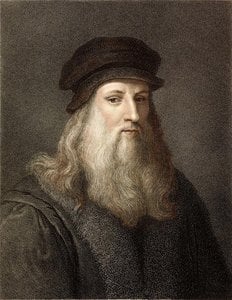
Leonardo Da Vinci

Leonardo Da Vinci

1452 - 1519 , Italia

Pähkinänkuoressa

  • Artistic Movement Or Style: High Renaissance
  • Artists Or Movements Influenced By This Artist: ['Renaissance art']
  • Artists Who Influenced This Artist: ['Andrea del Verrocchio']
  • Date Of Birth: 15. huhtikuuta 1452
  • Date Of Death: 2. toukokuuta 1519
  • Full Name: Leonardo da Vinci
  • Nationality: Italialainen
  • Notable Artworks:
    • Mona Lisa
    • The Last Supper
  • Place Of Birth: Vinci, Italia
Tutustu teoksiin, jotka on järjestetty aiheiden, tyylien ja ominaisuuksien mukaan.