x
Osta korkearesoluutioinen, parannettu digitaalikuva, joka on laadultaan huomattavasti parempi kuin verkkosivuston esikatselu.
Jokainen tiedosto valmistellaan huolellisesti omien asiantuntijoidemme toimesta käyttäen edistyneitä työkaluja ja ammattitaitoista manuaalista retusointia. Varmistamme, että jokaisessa kuvassa on poikkeuksellinen selkeys, tarkka värintoisto ja hienovaraiset yksityiskohdat.
Lopputiedosto toimitetaan sähköpostitse 72 tunnin kuluessa, ja se on optimoitu välittömään käyttöön ammattimaisissa, toimituksellisissa ja painoympäristöissä. Laatu on sama, johon huipputason suunnittelustudiot, kustantajat ja galleriat luottavat.
Lataa korkearesoluutioinen tiedosto henkilökohtaiseen näyttelyyn, tulostamiseen ja luoviin projekteihin.
Kun valitset WahooArt.com-palvelun, et saa vain kuvaa – saat ammattimaisesti parannetun digitaalisen taideteoksen, joka on luotu tarkkuudella ja jonka takaa tulee tyytyväisyystakuu. Tässä on kaikki, mitä tilauksesi sisältää, automaattisesti:
Korkearesoluutioinen digitaalinen kuvatiedostosi lähetetään sähköpostiisi 72 tunnin kuluessa tilauksesta – valmiina käytettäväksi välittömästi.
Taiteilijasi teos on optimoitu ammattimaisesti edistyneiden tekoälytyökalujen ja manuaalisen muokkauksen avulla, mikä takaa maksimaalisen yksityiskohtaisuuden, selkeyden ja väritarkkuuden.
Oletko vahingossa poistanut tai kadottanut tiedostosi? Ei hätää – lähetämme sen sinulle uudelleen milloin tahansa täysin maksutta.
Nauti taiteestasi välittömästi ilman tulleja, veroja tai toimitusmaksuja – digitaaliset lataukset ovat aina verovapaita.
Varmistamme, että digitaalinen kuvasi vastaa alkuperäisiä värejä mahdollisimman tarkasti käyttämällä ammattilaistason työkaluja ja värinhallintaa.
Jos et ole tyytyväinen digitaaliseen kuvaasi, muokkaamme sitä tai palautamme 100% takaisin 60 päivän kuluessa – ilman kysymyksiä.
Etkö ole tyytyväinen? Saat täyden hyvityksen 60 päivän kuluessa digitaalisen tiedostosi vastaanottamisesta – ilman kyselyitä.
Osta 3 kuvaa, säästä 10% - Osta 5, säästä 15% - Osta 10+, säästä 20%. Erinomainen valinta luoviin projekteihin, gallerioille ja toimistoille.
Leon de Smet (1881-1966) wasn’t merely a Belgian painter; he was a translator of eras, seamlessly blending the grandeur of the Renaissance with the burgeoning spirit of modernism. Born in Ghent, into a family steeped in artistic tradition – his father a set decorator and photographer, his brother Gustave also pursuing a career as an artist – de Smet's early life provided him with a unique foundation for his future explorations of light, form, and atmosphere. His training at the Royal Academy of Fine Arts in Ghent, while perhaps not marked by fervent enthusiasm (as his brother’s trajectory suggests), nonetheless instilled him with fundamental techniques and a deep appreciation for artistic history.
De Smet's early work reveals an immediate engagement with Impressionism, heavily influenced by the Luminist movement spearheaded by Emile Claus. This initial phase is characterized by a delicate handling of light and color, capturing fleeting moments and atmospheric effects with remarkable sensitivity. However, it was not long before he began to push beyond mere imitation, seeking to synthesize his influences into a distinctly personal style. The pivotal moment in this evolution arrived with his encounter with Henri Le Fauconnier, an Expressionist painter who introduced de Smet to the bolder, more emotionally charged techniques of the movement. This shift marked a significant departure from the Luminism that had initially defined his work, paving the way for a richer and more complex artistic vocabulary.
De Smet’s most celebrated period unfolded during his time in Italy, particularly in Mantua and Florence. These experiences proved transformative, igniting within him a profound fascination with the art of the High Renaissance. He meticulously studied the works of artists like Andrea del Verrocchio and Leonardo da Vinci, absorbing their mastery of perspective, anatomy, and composition. This deep immersion resulted in a series of paintings that deliberately evoke the spirit of the Renaissance – not through slavish imitation, but rather through a careful selection of motifs, color palettes, and compositional devices.
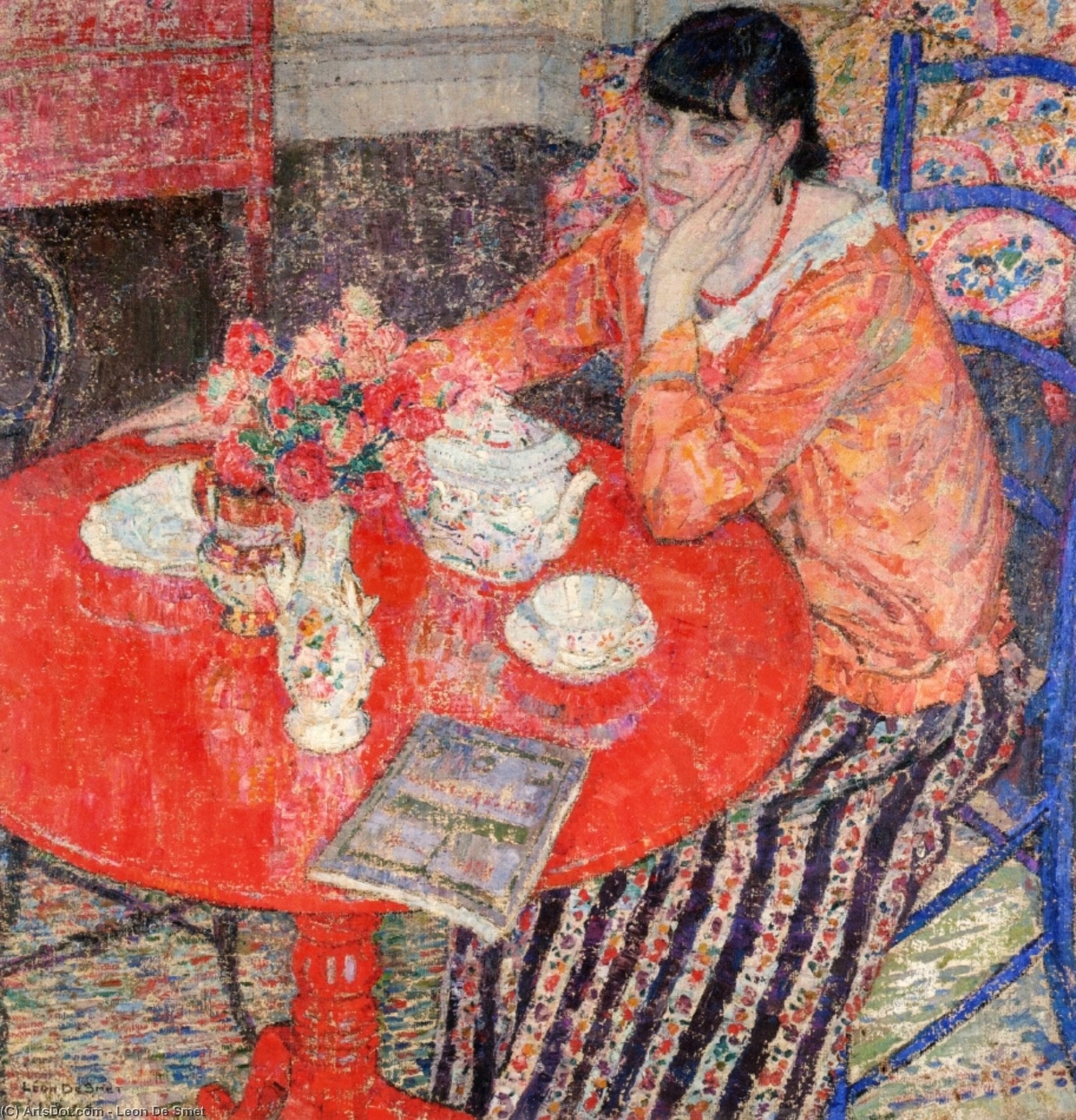
Works like “Interior” exemplify this revival. The painting’s warm, inviting atmosphere, reminiscent of a wealthy merchant's home, is achieved through a masterful use of impasto – thick layers of paint applied with visible brushstrokes – that create a tactile sense of texture and depth. The figures are rendered with a classical elegance, their poses imbued with a quiet dignity and grace. De Smet’s ability to capture the subtle nuances of light and shadow, combined with his meticulous attention to detail, creates an illusion of realism that is both captivating and profoundly moving.
Despite his embrace of Renaissance ideals, de Smet never abandoned the influences that had shaped his artistic development. His work remains a fascinating synthesis of various styles – Luminism, Impressionism, and even elements of Cubism. The Luminist’s emphasis on capturing fleeting moments and atmospheric effects is evident in his landscapes, while the Impressionists' use of color and brushwork contributes to the vibrancy and immediacy of his paintings. And yet, there are also hints of Cubism in his flattened perspectives and fragmented forms, particularly in works depicting urban scenes and interiors.
This eclectic approach is most strikingly evident in his later years, as he settled in Deurle and began experimenting with new techniques. His subjects shifted to include circus performers, fairground attractions, and village life – scenes that he rendered with a distinctive blend of realism and abstraction. These paintings are characterized by bold colors, dynamic compositions, and a sense of theatricality that reflects the artist’s lifelong fascination with spectacle and illusion.
Leon de Smet's artistic legacy is one of quiet brilliance and enduring appeal. While he may not be as widely recognized as some of his contemporaries, his paintings possess a unique charm and sophistication that continues to captivate viewers today. His ability to seamlessly blend Renaissance ideals with modern sensibilities, coupled with his masterful technique and evocative imagery, has secured his place as one of Belgium’s most important artists of the 20th century. His work is held in several public collections, including the Municipal Museum Gustave de Smet in Sint Martens-Latem, a testament to his lasting contribution to the world of art.
1881 - 1966 , Belgium
Kerro meille projektistasi, niin taideasiantuntijamme tarjoavat sinulle kolme henkilökohtaista taidesuositusta.
Anna meidän kuratoida 3 vaihtoehtoa juuri sinulle – Ilmaiseksi!