Ilmainen taidekonsultointi

x
Tilaa painos Tilaa painosTilaa maalaus Tilaa maalaus JaaJaa
TiedotTiedot Lisää suosikkeihin Lisää suosikkeihin LataaLataa SamanlaisiaSamanlaisia X-lähikuvaX-lähikuva DiaesitysDiaesitys

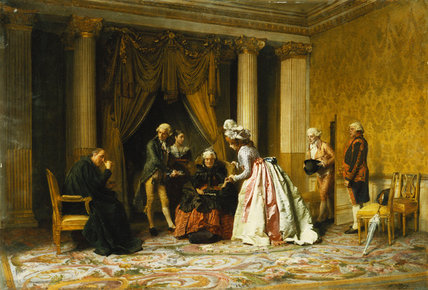
The Rich Widow

Jules Worms (1832-1924) was a French academic painter renowned for vibrant, detailed genre scenes of Spanish life & culture. Explore his Salon debut works, illustrations, and legacy in museums worldwide.

Osta korkearesoluutioinen, parannettu digitaalikuva, joka on laadultaan huomattavasti parempi kuin verkkosivuston esikatselu.

Jokainen tiedosto valmistellaan huolellisesti omien asiantuntijoidemme toimesta käyttäen edistyneitä työkaluja ja ammattitaitoista manuaalista retusointia. Varmistamme, että jokaisessa kuvassa on poikkeuksellinen selkeys, tarkka värintoisto ja hienovaraiset yksityiskohdat.

Lopputiedosto toimitetaan sähköpostitse 72 tunnin kuluessa, ja se on optimoitu välittömään käyttöön ammattimaisissa, toimituksellisissa ja painoympäristöissä. Laatu on sama, johon huipputason suunnittelustudiot, kustantajat ja galleriat luottavat.

Digitaalinen kuva

Lataa korkearesoluutioinen tiedosto henkilökohtaiseen näyttelyyn, tulostamiseen ja luoviin projekteihin.

Kokonaishinta

$9.99

Sisältyy jokaiseen digitaalisen kuvan tilaukseen

Asiantunteva digitaalinen toimitus, taattuun laatuun

Kun valitset WahooArt.com-palvelun, et saa vain kuvaa – saat ammattimaisesti parannetun digitaalisen taideteoksen, joka on luotu tarkkuudella ja jonka takaa tulee tyytyväisyystakuu. Tässä on kaikki, mitä tilauksesi sisältää, automaattisesti:

shipping_icon
Nopea digitaalinen toimitus

Korkearesoluutioinen digitaalinen kuvatiedostosi lähetetään sähköpostiisi 72 tunnin kuluessa tilauksesta – valmiina käytettäväksi välittömästi.

canvas_icon
Tekoälyllä parannettu digitaalinen tiedosto

Taiteilijasi teos on optimoitu ammattimaisesti edistyneiden tekoälytyökalujen ja manuaalisen muokkauksen avulla, mikä takaa maksimaalisen yksityiskohtaisuuden, selkeyden ja väritarkkuuden.

insurance_icon
Ilmainen elinikäinen uudelleenlähetyspalvelu

Oletko vahingossa poistanut tai kadottanut tiedostosi? Ei hätää – lähetämme sen sinulle uudelleen milloin tahansa täysin maksutta.

tax_icon
Ei tuontimaksuja – koskaan

Nauti taiteestasi välittömästi ilman tulleja, veroja tai toimitusmaksuja – digitaaliset lataukset ovat aina verovapaita.

color_icon
Värintoiston tarkkuustakuu

Varmistamme, että digitaalinen kuvasi vastaa alkuperäisiä värejä mahdollisimman tarkasti käyttämällä ammattilaistason työkaluja ja värinhallintaa.

return_icon
60 päivän tyytyväisyystakuu

Jos et ole tyytyväinen digitaaliseen kuvaasi, muokkaamme sitä tai palautamme 100% takaisin 60 päivän kuluessa – ilman kysymyksiä.

guarantee_icon
100% Rahat takaisin -takuu

Etkö ole tyytyväinen? Saat täyden hyvityksen 60 päivän kuluessa digitaalisen tiedostosi vastaanottamisesta – ilman kyselyitä.

discount_icon
Suurtilaaja-alennukset

Osta 3 kuvaa, säästä 10% - Osta 5, säästä 15% - Osta 10+, säästä 20%. Erinomainen valinta luoviin projekteihin, gallerioille ja toimistoille.


Taiteilijan elämäkerta

Jules Worms: A Capturer of Spanish Charm

Jules Worms (1832-1924) stands as a significant, yet often overlooked, figure in 19th-century French painting. Born into a family of Parisian shopkeepers, his artistic journey began unexpectedly, propelled by a fascination with the vibrant culture and spirited characters of Spain. Unlike many artists of his time who sought grand historical or mythological subjects, Worms dedicated himself to depicting everyday life – specifically, the charming and often humorous scenes of Spanish society. His work offers a unique window into a bygone era, brimming with meticulous detail, bright colors, and a distinctly romantic sensibility. He wasn’t merely painting *of* Spain; he seemed to be capturing its very essence, imbuing his canvases with a palpable sense of warmth and intrigue.

Early Life and Artistic Training

Worms's formal artistic training commenced in 1849 at the École des Beaux-Arts in Paris. He initially studied under Jean-Adolphe Lafosse, a respected academic painter known for his meticulous realism. However, it was Worms’s own burgeoning passion that truly shaped his development. His early career saw him establishing himself as an illustrator for satirical newspapers – a role that honed his observational skills and developed his ability to capture fleeting moments of human interaction with remarkable accuracy. This experience proved invaluable when he embarked on his transformative journey to Spain, beginning in 1860. The influence of this period is undeniably evident throughout his oeuvre; the lively costumes, bustling marketplaces, and spirited conversations found in his paintings are a direct reflection of his immersive experiences.

The Spanish Years: Inspiration and Technique

Worms’s six extended trips to Spain between 1860-61 and 1882 proved pivotal to his artistic development. He wasn't simply documenting the landscape; he was utterly captivated by the culture, customs, and people of the Iberian Peninsula. He meticulously sketched and studied local attire, social rituals, and regional variations in dialect and mannerisms. Returning to Paris with a wealth of visual material, Worms began to translate his observations onto canvas. His technique is characterized by an extraordinary level of detail – from the intricate embroidery on a woman’s dress to the worn leather of a craftsman's tools, every element is rendered with painstaking precision. He employed a vibrant color palette, often utilizing rich reds, blues, and yellows to evoke the warmth and intensity of the Spanish sun. Notably, his paintings frequently feature elements that hint at stories left untold – a discarded cap, a partially obscured face, or an empty doorway—inviting viewers to actively participate in interpreting the narrative.

Key Works and Notable Paintings

Several of Worms’s works stand out as particularly compelling examples of his artistic vision. “The Golden Necklace” (1868), a vibrant depiction of Spanish social dynamics, showcases his ability to capture the nuances of conversation and interaction within a luxurious setting. “A Proposal of Marriage” (1870) offers a charming glimpse into courtship rituals, with its carefully arranged figures and suggestive details. His 1871 painting, created during his time in Granada with Marià Fortuny, exemplifies his fascination with theatricality and the blending of reality and fantasy. The work’s title itself—"La romance à la mode"—suggests a staged performance, mirroring the elaborate costumes and gestures prevalent in Spanish society at the time. These paintings, along with numerous illustrations for books like *Don Quixote*, demonstrate Worms' versatility as both a painter and an artist of visual storytelling.

Legacy and Influence

Jules Worms’s work represents a significant contribution to the development of genre painting in France during the 19th century. While he drew inspiration from the academic tradition, his focus on everyday life and his distinctive style—characterized by meticulous detail, vibrant colors, and a touch of romanticism—set him apart. His depictions of Spanish culture were particularly influential, shaping perceptions of Spain within French society. His paintings continue to be exhibited in museums worldwide, offering viewers a captivating glimpse into a bygone era and the artist’s remarkable ability to capture the charm and spirit of a distant land. Worms's legacy lies not only in his individual works but also in his pioneering approach to genre painting—a testament to the power of observation, imagination, and artistic skill.
Jules Worms

Jules Worms

1832 - 1924 , France

Lyhyesti esiteltynä

  • Artistic Movement Or Style: Academic painting
  • Artists Or Movements Influenced By This Artist: ['gallant painting']
  • Artists Who Influenced This Artist: ['Fortuny']
  • Date Of Birth: 1832-12-16
  • Date Of Death: 1924-11-25
  • Full Name: Jules Worms
  • Nationality: French
  • Notable Artworks:
    • The Golden Necklace
    • A Proposal of Marriage
  • Place Of Birth: Paris, France