Taiteilijan elämäkerta
A Spanish Visionary of Cubism: The Life and Art of Juan Gris
José Victoriano González-Pérez, syntynyt Madridissa vuonna 1887, oli taiteilija, jonka nimi muuttui myöhemmin Juan Griseksi. Hänen elämänsä ja työnsä olivat keskeisiä varhaisen 2000-luvun taiteen kehityksessä. Alkuperäinen polkunsa ei johtanut heti maalaustelineelle, vaan hän opiskeli insinööriksi Madridin Taidekouluun ja Tieteellisiin tiedeihin, mikä osoitti analyyttistä mieltä, joka myöhemmin vaikutti syvästi hänen taiteelliseen lähestymistapaansa. Jo nuoruudessaan, osallistuen paikallisiin aikakauslehtiin piirtäen, paljastui luova kipinä – piirustukset vihjasivat kasvavaan visuaaliseen lahjakkuuteen. Vuonna 1905 hän kuitenkin omaksui taiteilijan nimen Juan Gris, nimi resonoi uudella identiteettituntemuksella ja tarkoituksella kun hän alkoi muodolliset maalauskoulutukset José Moreno Carboneron ohjauksessa. Tämä merkitsi ratkaisevaa muutosta, asettaen hänet polulle taiteelliseen innovaatioon.
Parisian Awakening and the Embrace of Cubism
Vuonna 1906 tapahtui mullistava muutto Pariisiin, kaupunkiin, joka pulssasi silloin voimakkaasti taiteellisella energialla. Gris uppoutui tähän eläväyn ympäristöön, solmi ystävyyssuhteita merkittävien henkilöiden kanssa, kuten Henri Matissen, Georges Braquen ja Fernand Légérin kanssa. Hän osallistui aluksi satiiriseen kuvitukseen *L'Assiette au Beurre* -lehden palveluksessa, hioen havainnointikykyään ja kehittäen terävää visuaalista älykkyyttä. Kuitenkin Pablo Picasson magneettinen vetovoima osoittautui erityisen vaikuttavaksi. Vuonna 1910 Gris alkoi vakavasti omistaa itsensä maalaamiseen, siirtyen karikatyyreistä kohti kehittyvän kubismin kieltä. Tämä ei ollut pelkkää jäljittelystä; hän pyrki tiivistäytymään muodon ja tilan olemuksesta, etsien uutta visuaalista järjestystä. Varhaiset yritykset olivat merkittävästi poikkeavia perinteisestä esittämisestä, omaksuen abstraktiota keinona vangita todellisuuden pohjalla oleva rakenne.
The Geometry of Perception: Style and Key Works
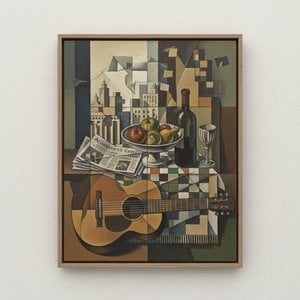
Juan Grisin taiteellinen tuotanto on tunnettu poikkeuksellisesta selkeydestä ja älyllisestä syvyydestä. Hän ei vain hajottanut esineitä, vaan rakensi niitä tarkoituksenmukaisesti, korostaen geometrisiä muotoja ja harkittua väripalettia. Tämä lähestymistapa johti siihen, että se tuli tunnetuksi "kristallisena aikana", joka kuvastuu mestariteoksissa kuten *Still Life Before an Open Window* ja *Place Ravignan* (1915). Nämä teokset esittävät huomattavaa vuorovaikutusta tasoja ja kulmia, luoden syvyyden ja kestävyyden tunteen samalla kun haastetaan perinteiset perspektiivin käsitykset. Vuonna 1913 Gris omaksui täysin synteettisen kubismin, pioneerina *papier collén* käytössä – kollaaseja, joihin sisällytettiin todellisia materiaaleja, kuten sanomalehtilehtiä ja teksturoidut paperit, komposiitioihinsa. Tämä tekniikka lisäsi uuden kerroksen monimutkaisuutta ja kosketusmukaisuutta hänen teoksiinsa, hämärtäen rajat maalauksen ja veistoksen välillä. Merkittäviä esimerkkejä ovat *Guitar in front of the sea* (1925), joka osoittaa yksinkertaistetut muodot ja kubismin periaatteiden noudattamisen, sekä *Homage à Pablo Picasso* (1912), joka merkitsi hänen kasvavaa tunnustusta avantgarde-taiteen piireissä.
Legacy and Lasting Influence
Juan Grisin panos kubismiin ulottuu pelkästään tyylilliseen innovaatioon; hän toi taiteeseensa ainutlaatuisen älyllisen syvyyden ja rakenteellisen selkeyden. Hän siirtyi analyyttisestä vaiheesta kohti järjestelmällistä ja synteettistä lähestymistapaa, korostaen järjestystä ja tarkkuutta. Hänen työnsä vaikutti syvästi Puristityyliin, jonka Amédée Ozenfant ja Charles Edouard Jeanneret (Le Corbusier) edustivat, kannustaen paluuta klassisiin muotoihin ja komposiitioon. Grisin korostus geometrisille muodoille, harmonisille väripaleteille ja arkisten esineiden sisällyttämiselle teoksiinsa vakiinnutti hänen asemansa keskeisenä hahmona 2000-luvun taiteessa. Hänen perintönsä inspiroi edelleen taiteilijoita tänään, osoittaen kubismin kestävyyden ja Juan Grisin visionäärin lahjakkuuden.



 Esikatselu
 Osta käsintehty maalaus
 Jaa
Jaa Jaa
Jaa
 Tarkemmat tiedot

 Lataa
Lataa
 Samanlaisia
 Röntgenkuva
 Diaesitys
 Tilastot


 Näytä lisää






































 Lasivaihtoehto on saatavilla vain alle 110 cm kokoisina teoksina