Esikatselu Esikatsele AR-tilassa Osta käsinmaalattu taideteos Siirry digitaaliseen kuvaan Jaa teos
Tiedot Opas Lisää suosikkeihin Lataa kuva Samanlaisia kohteita Röntgenkuvaus Diaesitys Kysymykset ja vastaukset Lataa esitys Tilastot

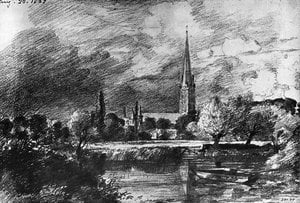
Salisbury Cathedral from the Bishop's Grounds

Mitat
88.0 x 112.0 cm

Constable’s serene Salisbury Cathedral captures the Bishop's Grounds landscape in exquisite detail, showcasing Constable’s Romantic style and masterful depiction of rural England during the early 19th century – an evocative scene inviting you to bring this timeless beauty into your home.

John Constable (1776–1837) oli brittiläinen maalaustaideilija, joka loi tunnettuja englantilaisia maisemia ja kuvasi luonnon tunteita. Tutustu ikonisiin teoksiin!

Giclée- ja taideprintit

Museolaatuisia giclée- tai kankaitaulun tulosteita nopealla tuotannolla ja joustavilla viimeistelyvaihtoehdoilla. ( Osta käsinmaalattu taideteos Siirry digitaaliseen kuvaan)

Corner sample of the P118B picture frame: valettu polystyreeni, 5 cm wide and 3 cm thick
P118B €10
Corner sample of the P118H picture frame: valettu polystyreeni, 5 cm wide and 3 cm thick
P118H €10
Corner sample of the P118W picture frame: valettu polystyreeni, 5 cm wide and 3 cm thick
P118W €10
Corner sample of the P438Z picture frame: valettu polystyreeni, 5.5 cm wide and 3.5 cm thick
P438Z €10
Corner sample of the P508JH picture frame: valettu polystyreeni, 7 cm wide and 3.5 cm thick
P508JH €12
Corner sample of the P508YH picture frame: valettu polystyreeni, 7 cm wide and 3.5 cm thick
P508YH €12
Corner sample of the P805H picture frame: valettu polystyreeni, 5 cm wide and 3.5 cm thick
P805H €10
Corner sample of the P805Z picture frame: valettu polystyreeni, 5 cm wide and 3.5 cm thick
P805Z €10
Corner sample of the P919BZ picture frame: valettu polystyreeni, 7 cm wide and 3.5 cm thick
P919BZ €10
Corner sample of the P919G picture frame: valettu polystyreeni, 7 cm wide and 3.5 cm thick
P919G €10
Corner sample of the P919XJ picture frame: valettu polystyreeni, 7 cm wide and 3.5 cm thick
P919XJ €10
Corner sample of the P959ZH picture frame: valettu polystyreeni, 5 cm wide and 3 cm thick
P959ZH €10
Corner sample of the P968JZ picture frame: valettu polystyreeni, 6 cm wide and 4 cm thick
P968JZ €12
Corner sample of the W106C picture frame: massiivipuu, 5 cm wide and 3 cm thick
W106C €8
Corner sample of the W218G picture frame: massiivipuu, 5 cm wide and 3 cm thick
W218G €10
Corner sample of the W218JH picture frame: massiivipuu, 5 cm wide and 3 cm thick
W218JH €8
Corner sample of the W218Y picture frame: massiivipuu, 5 cm wide and 3 cm thick
W218Y €10
Corner sample of the W307PJ picture frame: massiivipuu, 6 cm wide and 3 cm thick
W307PJ €10
Corner sample of the W316G picture frame: massiivipuu, 6 cm wide and 3 cm thick
W316G €10
Corner sample of the W316PJ picture frame: massiivipuu, 6 cm wide and 3 cm thick
W316PJ €8
Corner sample of the W316Y picture frame: massiivipuu, 6 cm wide and 3 cm thick
W316Y €10
Corner sample of the W398PJ picture frame: massiivipuu, 5 cm wide and 3 cm thick
W398PJ €8
Corner sample of the W4111J picture frame: massiivipuu, 6.5 cm wide and 3.5 cm thick
W4111J €10
Corner sample of the W500HY picture frame: massiivipuu, 7 cm wide and 5 cm thick
W500HY €15
Corner sample of the W500JH picture frame: massiivipuu, 7 cm wide and 5 cm thick
W500JH €15
Corner sample of the W692G picture frame: massiivipuu, 8 cm wide and 4 cm thick
W692G €12
Corner sample of the W849H picture frame: massiivipuu, 5 cm wide and 3 cm thick
W849H €8
Corner sample of the W940BG picture frame: massiivipuu, 7.5 cm wide and 4.5 cm thick
W940BG €15
Corner sample of the W953PJ picture frame: massiivipuu, 6 cm wide and 3.5 cm thick
W953PJ €8

Vakiokoko
räätälöity
CM
INCH

Valitse valmiista mitoistamme sellaiset, jotka vastaavat teoksen alkuperäisiä mittasuhteita.

leveys
korkeus

Syötä tarvitsemasi leveys ja korkeus, jotta tuloste sopii kehyksiisi tai seinällesi. Tulostetta voidaan vain leikata, sitä ei voida koskaan suurentaa alkuperäistä kuvaa suuremmaksi, joten eri muotoinen koko aiheuttaa osan kuvasta katoamisen. Lähetämme sinulle digitaalisen mallikuvan hyväksyttäväksi ennen kuin aloitamme tulostuksen. Tällä sivulla näkyvä kuva ei näytä lopullista rajausta — vain mallikuva näyttää sen.

Maailmanlaajuinen toimitus () 2 viikossa tavallisen 4–5 viikon sijaan. (8 marraskuu)

Ilmainen pikatoimitus ympäri maailman
Korkealaatuinen pellavakangas
Kattava kuljetusvakuutus
Tulliveron palautustakuu
Takuu täydellisestä värien vastaavuudesta
100 päivän palautusoikeus (vain valmistusvirheet)
100% rahat takaisin -takuu
Määräalennus tarjolla

Kokonaishinta

€ 62

Salisbury Cathedral from the Bishop's Grounds

Giclée- ja taideprintit

Replikaatin koko

-

Kokonaishinta

€ 62

Pikaista tietoa

  • Location: Private Collection
  • Subject or theme: Religious architecture; Pastoral scene
  • Title: Salisbury Cathedral from the Bishop's Grounds
  • Movement: Romanticism
  • Influences: Claude Lorrain
  • Artist: John Constable

A Window Into Pastoral England: Exploring Constable’s Salisbury Cathedral from the Bishop's Grounds

The painting “Salisbury Cathedral from the Bishop’s Grounds,” completed in 1825 by John Constable, transcends mere topographical representation; it embodies a profound connection to the English countryside and captures a moment of contemplative beauty. More than just depicting a cathedral building against a backdrop of rolling hills, Constable achieves something far more ambitious – he conveys an emotional resonance that speaks directly to the viewer’s soul. This remarkable achievement stems from his masterful observation of light and color, combined with a deeply felt understanding of the human experience within the natural world.
  • Subject Matter: Constable's focus isn't solely on architectural grandeur but rather on capturing the atmosphere surrounding Salisbury Cathedral. The cathedral itself stands prominently in the background, its clock tower dominating the skyline, yet it’s overshadowed by the expansive Bishop’s Grounds – a verdant expanse of meadows and trees that dominate the composition.
  • Style: Constable's style is firmly rooted in Romanticism, prioritizing expressive emotion over strict adherence to academic conventions. Unlike earlier artists who sought idealized representations of nature, Constable embraced its imperfections—the hazy air, the shifting shadows—to convey a sense of immediacy and authenticity.
Constable’s technique exemplifies the Romantic preoccupation with capturing fleeting moments of beauty. He employed loose brushstrokes and subtle gradations of color to depict the light filtering through the trees onto the cathedral façade. This approach wasn't simply about accurately reproducing what he saw; it was about conveying how he *felt* when he beheld the scene. The artist meticulously studied atmospheric perspective, skillfully blending distant objects into softer hues to create a convincing illusion of depth and distance. Furthermore, Constable’s use of color is particularly noteworthy – muted greens and blues dominate the palette, reflecting the tranquility of the Bishop's Grounds and subtly enhancing the cathedral’s solemn presence.

Historical Context: The Romantic Ideal

Painted during the height of the Romantic movement in England, “Salisbury Cathedral from the Bishop’s Grounds” reflects the broader artistic sensibilities of its time. The Romantics rejected Neoclassical formalism, favoring instead imaginative narratives and emotional intensity as expressions of truth. Artists like Constable sought inspiration in nature—particularly the sublime landscapes of Britain—believing that they held a spiritual significance beyond mere visual pleasure. Salisbury Cathedral itself was already a symbol of English piety and tradition, representing the enduring power of faith amidst the turbulent political landscape of the Napoleonic Wars.
  • Symbolism: The inclusion of animals—a horse near the center and cows on the right—adds layers of symbolic meaning. Horses traditionally represent nobility and strength, while cows symbolize fertility and pastoral abundance. These figures serve not only as decorative elements but also contribute to the painting’s overarching theme of harmony between humanity and nature.
  • Emotional Impact: Ultimately, Constable's masterpiece aims to evoke a feeling of serenity and contemplation. The viewer is invited to share in the artist’s appreciation for the beauty of the Bishop’s Grounds and the cathedral’s enduring presence—a reminder that even amidst grand architectural structures, the spirit of nature remains paramount.

Reproductions: Bringing Constable's Vision Home

A high-quality reproduction of “Salisbury Cathedral from the Bishop’s Grounds” allows admirers to experience Constable’s artistic brilliance without the expense or commitment of owning the original. WahooArt offers meticulously crafted reproductions that faithfully capture the painting’s luminous colors and textural nuances, ensuring that its evocative atmosphere persists in any interior space. Consider framing it with a neutral tone to complement the artwork's understated elegance—a beautiful addition to any home or gallery.

Kysymykset ja vastaukset

Mistä voin ostaa käsin maalatun jäljennöksen teoksesta John Constable:n "Salisbury Cathedral from the Bishop's Grounds"?

Voit tilata käsin maalatun jäljennöksen teoksesta John Constable:n "Salisbury Cathedral from the Bishop's Grounds" suoraan sen Käsinmaalattu jäljennös -sivulta: käsinmaalattu öljyvärireproduktio pellavakankaalle, valmistetaan tilauksesta.

Mistä "Salisbury Cathedral from the Bishop's Grounds" on tehty ja millä tyylillä?

Teoksessa "Salisbury Cathedral from the Bishop's Grounds" Acrylic-tekniikka kohtaa Romantic Landscape Painting-suuntauksen.

Mikä on teoksen John Constable:n "Salisbury Cathedral from the Bishop's Grounds" valmistumisvuosi ja tyylisuunta?

"Salisbury Cathedral from the Bishop's Grounds" on tehty vuonna 1825 Romantic Landscape Painting-suuntauksen piirissä.


Taiteilijan elämäkerta

A Life Rooted in the English Landscape

John Constable, syntynyt vuonna 1776 idyllisessä Suffolkin kylässä East Bergholtiin, ei ollut pelkästään maisemapeilaaja; hän oli maan runoilija, kääntäen sen hienovaraiset tunnelmat ja ikuisen kauneuden maalipinnoille ennennäkemättömällä tunteellisuudella. Hänen isänsä, menestyvä maataloustuottaja, joka omisti sekä Dedham Valea että joita Stour-joen varrella sijaitsevia myllyjä, ei ainoastaan tarjonnut taloudellista turvaa vaan myös itse aihetta, josta Constable määrittelisi taiteellisen elämänsä. Tämä varhainen sukellus maaseudun maailmaan – hitaan rytmin maatalouden elämälle, muuttuvan valon kentille ja veteen, luonnon intiimien yksityiskohtien – oli syvästi kaiverrettu hänen aivokuvansa sisään. Vaikka hänet oli alun perin määrätty seuraamaan isänsä liiketoimintaa, intohimo taiteeseen, joka oli ruuktuutunut paikallisten suojelijoiden, kuten George Beaumontin, kautta – joka esitteli hänelle Clauden Lorrainin teoksia – ohjasi lopulta hänet eri polulle. Constablen taiteellinen matka ei ollut välitön; se oli hidas ja asteittainen kehitys, muotoiltu huolellisella tarkkailulla ja jatkuvalla halulla vangita ei *mitä* hän näki, vaan *kuinka* siitä tuntui olevan läsnä maaseudussa.

Breaking with Convention: A New Vision of Nature

Constablen taiteellinen kehitys oli merkittävää harkitun hylkäyksen suhteen vallitseviin akateemisiin konventioihin. Hän oli pettynyt idealisoituihin ja usein teatraalisiin maisemiin, joita suositti Royal Academy, ja etsi sen sijaan totuudenmukaisen esityksen luonnosta, täynnä henkilökohtaista tunnetta. Häntä ei kiinnostanut suurikokoiset historialliset tarinat tai myyttiset kohtaukset; hänen keskittymisensä pysyi lujasti tuttujen maaseutojen ympärillä. Tämä sitoutuminen tavallisten aiheiden kuvaamiseen – heinänkärryt, maatilat, kyläelämä – kohosi aluksi kritiikin kohteeksi, koska ihmiset katsoivat hänen työnsä olevan liian arkista ja puuttuvaa kunnianhimoa. Silti Constable kesti, ohjautuen vakaumuksella, että kauneus löytyy jokapäiväisestä elämästä. Hän pioneeroi *plein air* -maalaustekniikan, lähtien ulos suoraan tarkkailemaan ja vangitsemaan valon ja sään hetkellisiä vaikutuksia. Tämä suora vuorovaikutus luonnon kanssa mahdollisti hänelle maalattujen pintojen täyttämisen välittömyydellä ja eloisuudella, joka oli aiemmin näkemätöntä brittiläisessä maisemamaalauksessa. Hänen siveltimenkäyttönsä muuttui yhä löysäksi ja ekspressiivisemmaksi, käyttäen *impasto*a – paksuja kerroksia maalia – luomaan tekstuurin ja välittämään tunteen liikkeestä ja tunnelmasta. Hän ei ainoastaan tallentanut sitä, mitä hän näki; hän muutti oman tunteensa maan sisään pääsystä visuaaliseksi muodoksi.

Iconic Works and Lasting Influence

Constablen ikonisin teokset ovat todiste hänen ainutlaatuisesta visiostaan. The Hay Wain (1821), ehkä hänen kuuluisimman maalauksensa, kuvaa quintessential rural -näkyä Stour-joen varrella, vangiten maatalouden elämän rauhan ja harmoniaa. Hadleigh Castle (1829) esittelee hänen dramaattista valon ja tunnelmien käyttöään, muuttaen rapistuneen linnan voimakkaaksi symboliksi ajan kulumisesta. Salisbury Cathedral -sarja (1831), jossa kuvataan katedraalia luonnollisen maiseman osana, demonstroi hänen taitoaan herättää erilaisia mielialoja ja aikoja vuorokaudessa. Netley Abbey (1824), jossa esitetään ihmisen luomuksen ja villin kauneuden yhdistelmää, on esimerkki hänen taidoistaan yhdistää arkkitehtoninen loisto luonnon ympärille. Vaikka Constable kohtasi aluksi vastustusta Englannissa, hän saavutti merkittävää arvostusta Ranskassa, jossa hänen innovatiiviset tekniikkansa ja henkilökohtainen tunteellisuus resonoi syvästi taiteilijoiden kanssa, jotka etsivät luonnollisempaa lähestymistapaa maisemamaalaukseen. Hän vaikutti merkittävästi Barbizon-kouluun, ryhmään ranskalaisia taiteilijoita, jotka jakavat hänen sitoutumisensa *plein air* -maalaustekniikkaan ja luonnon suoraan tarkkailuun.

Personal Life & Final Years

Constablen henkilökohtainen elämä oli merkittävää sekä iloa että surua. Hän avioliitti Maria Bicknellin kanssa vuonna 1816, ja heillä oli seitsemän lasta, vaikka useampi kuoli varhain. Hänen avioliitonsa tarjosi hänelle tunnetta, mutta myös taloudellista rasitusta. Hänet valittiin Royal Academyn jäseneksi vuonna 1829, ja hän kohtasi edelleen kritiikkiä joiltakin osapuolilta, erityisesti hänen epätavanomaisista tekniikoistaan. Hänen myöhemmät vuotensa varjoivat Mariaa, jonka terveys heikkeni ja kuoli vuonna 1828, tapahtuma, joka vaikutti häneen syvästi. Vaikka hän kohtasi näitä vaikeuksia, Constable pysyi omistautuneena taiteelleen, jatkaen maalaamista kuolemaansa marraskuussa 31, 1837. Hän jätti jälkeensä rikkaasti taiteellisen perinnön – todisteen hänen väsymättömästä sitoutumisestaan ​​englannin kauniin ja tunteellisesti resonanssin luonnon kuvaamiseen. Hänen maalauksensa ovat edelleen voimakkaita evästajoja menneestä ajasta, kutsuen katsojia kokemaan maiseman hänen ainutlaatuisen herkkyytensä kautta.
John Constable

John Constable

1776 - 1837 , Iso-Britannia

Pähkinänkuoressa

  • Artistic Movement Or Style: Romantiikka
  • Artists Or Movements Influenced By This Artist: ['Barbizon School']
  • Artists Who Influenced This Artist:
    • Claude Lorrain
    • Ruisdael
  • Date Of Birth: 11. kesäkuuta 1776
  • Date Of Death: 31. maaliskuuta 1837
  • Full Name: John Constable
  • Nationality: Brittiläinen
  • Notable Artworks:
    • Näköala Highgate Hillistä
    • Pilviasutus, Hampden
    • Salisbury Cathedral
  • Place Of Birth: East Bergholt, UK
Tutustu teoksiin, jotka on järjestetty aiheiden, tyylien ja ominaisuuksien mukaan.