Taiteilijan elämäkerta
Jean-Joseph Benjamin-Constant: A Master of Exotic Visions
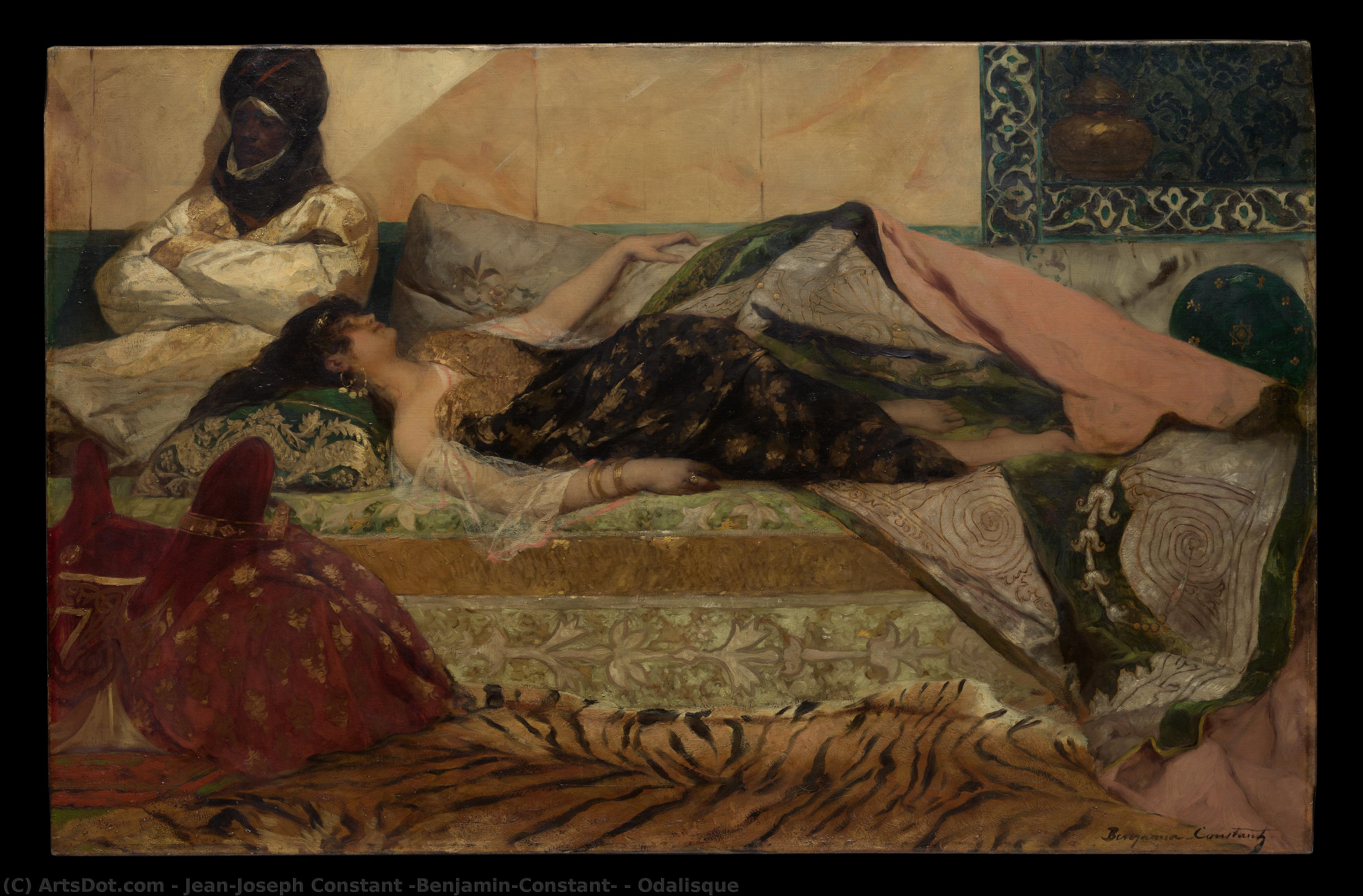
Jean-Joseph Benjamin-Constant, a name synonymous with the allure of the Orient and the precision of academic training, stands as a pivotal figure in 19th-century French art. Born in Paris in 1845, his artistic journey began within the hallowed halls of the École des Beaux-Arts in Toulouse, where he honed his skills under the tutelage of Alexandre Cabanel. This formative period instilled within him a profound respect for classical techniques – meticulous rendering, balanced composition, and a deep understanding of anatomy – all foundational elements that would later inform his distinctive style. Initially drawn to historical painting, Benjamin-Constant’s artistic trajectory took an unexpected turn in 1872 when he embarked on a transformative voyage to Morocco. This journey wasn't merely a change of scenery; it was an immersion into a world saturated with vibrant colors, unfamiliar customs, and a unique interplay of light – elements that would irrevocably alter his artistic vision and propel him toward becoming one of the most celebrated Orientalist painters of his time. The sensory richness of Morocco—the scent of spices, the warmth of the sun on ancient stone, the intricate patterns woven into textiles—became the very essence of his art, a constant source of inspiration that would define his unique style for decades to come.
The Allure of the Orient: Capturing Moroccan Life
Upon returning from Morocco, Benjamin-Constant immediately began translating his experiences onto canvas. His paintings weren’t simply depictions of exotic locales; they were evocative interpretations—attempts to capture not just what he *saw*, but how it *felt* to be enveloped by this new world. Works such as “Last Rebels,” “Justice in the Harem,” and “Moroccan Prisoners” quickly garnered attention, showcasing his remarkable ability to convey atmosphere, detail, and a palpable sense of drama. He possessed an uncanny talent for translating the sensory richness of Morocco onto canvas—the vibrant hues of the desert landscape, the intricate patterns of Berber textiles, the shimmering light filtering through ancient archways—all came alive under his brush. Beyond these intimate scenes of daily life, Benjamin-Constant also demonstrated a capacity for grand historical narratives, as evidenced by his monumental painting “The Entrance of Mahomet II into Constantinople,” a work that not only showcased his technical prowess but also reflected his fascination with power, justice, and the complexities of human interaction within a dramatic setting. His paintings weren’t merely about portraying a different culture; they were explorations of universal themes rendered through the lens of an exotic and captivating world.
Influences and Artistic Development
Benjamin-Constant's artistic development was shaped by a confluence of influences—classical training, Romanticism, and the vibrant colors and dramatic lighting championed by Eugène Delacroix. He deeply admired Rubens’ dynamic compositions and Watteau’s delicate brushwork, incorporating these elements into his own style while forging a distinct identity rooted in meticulous observation and academic precision. The influence of Cabanel is particularly evident in his early works—a testament to the rigorous training he received at the École des Beaux-Arts. However, it was his time in Morocco that truly liberated him from these constraints, allowing him to embrace bolder colors, looser brushstrokes, and a more expressive approach to depicting human emotion and interaction. This shift wasn’t a rejection of his earlier training but rather an evolution—a synthesis of classical technique with the vibrant spirit of the Orient.
Beyond Orientalism: Murals and Portraits
Around 1880, Benjamin-Constant's artistic focus underwent a significant transformation. While his Orientalist paintings had established him as a rising star within the Parisian art scene, he began to dedicate himself increasingly to mural decorations and portraiture, demonstrating an impressive versatility and adaptability. This transition wasn’t a departure from his core artistic principles but rather an expansion of them—a willingness to explore new mediums and subjects while maintaining his commitment to meticulous detail and dramatic composition. He brought the same level of technical skill and expressive power that characterized his earlier work to these new endeavors, creating monumental murals for prestigious locations such as the Hall of the Capitol in Toulouse and the City Hall of Paris. Simultaneously, he cultivated a reputation as a skilled portraitist, capturing not just physical likeness but also the essence of his subjects’ personalities—a testament to his keen observational skills and artistic sensitivity.
Legacy and Recognition
Throughout his career, Jean-Joseph Benjamin-Constant received widespread recognition for his artistic achievements. He was awarded a medal of honor at the Salon in 1896 for “Mons Fils André,” a prestigious acknowledgement of his enduring skill and innovation. His election to the Institute in 1893 and subsequent appointment as a Commander of the Legion of Honor further solidified his standing within the French art establishment—a testament to his significant contribution to the nation’s artistic heritage. Today, his work is celebrated in museums around the world, including the Metropolitan Museum of Art in New York, the Musée des Augustins in Toulouse, and the U.S. National Gallery of Art in Washington D.C., ensuring that his evocative depictions of Orientalist themes and his remarkable versatility as an artist continue to inspire and captivate audiences for generations to come. Benjamin-Constant’s legacy lies not only in his technical mastery but also in his ability to synthesize academic training with a romantic sensibility, creating compelling works that captured both the grandeur of historical narratives and the alluring mystique of distant lands. He remains celebrated for his evocative depictions of Orientalist themes and his remarkable versatility as an artist—a true master of exotic visions.



 Esikatselu
 Osta printti
 Jaa
Jaa Jaa
Jaa
 Tarkemmat tiedot

 Lataa
Lataa
 Samanlaisia
 Röntgenkuva
 Diaesitys
 Näytä lisää






































 Lasivaihtoehto on saatavilla vain alle 110 cm kokoisina teoksina





