


x


Museolaatuisia giclée- tai kankaitaulun tulosteita nopealla tuotannolla ja joustavilla viimeistelyvaihtoehdoilla.





























Valitse valmiista mitoistamme sellaiset, jotka vastaavat teoksen alkuperäisiä mittasuhteita.

Voit syöttää omat mitat sopiaksesi tiettyyn kehykseen tai tilaan. Jos valittu koko ei vastaa alkuperäisen kuvan mittasuhteita, rajaamme teosta tai laajennamme kuvaa peilatulla tai yhtenäisellä reunalla. Digitaalinen mallikuva lähetetään hyväksyttäväksi ennen tuotannon aloittamista.
Huomaathan, että näytöllä näkyvä esikatselu ei vastaa lopullista rajausta tai laajennusta. Vain mallikuva näyttää lopullisen sommittelun tarkasti.
Vaikka räätälöityjä kokoja on saatavilla, suosittelemme valitsemaan mitat valmiista listasta alkuperäisten mittasuhteiden säilyttämiseksi.
Toimitus maailmanlaajuisesti () kahdessa viikossa tavallisen 4–5 viikon sijaan. (6 heinäkuu)


La ballet faserique
Replikaatin koko
James Ensor (1860-1949), a Belgian painter whose legacy extends far beyond his lifetime, stands as a pivotal figure in the transition from Symbolism to Expressionism. “La ballet faserique,” painted around 1923, exemplifies Ensor’s distinctive approach—a deliberate rejection of academic conventions in favor of confronting uncomfortable truths about human psychology and societal anxieties.
The artwork depicts a disconcerting tableau: figures gathered on the shoreline of a murky body of water, engaged in an activity that defies easy categorization. There's no discernible narrative drive; instead, Ensor presents us with a scene steeped in atmosphere and imbued with unsettling ambiguity. The muted palette—dominated by blues, greens, whites, punctuated by splashes of pink and brown—creates a dreamlike haze that underscores the painting’s emotional resonance.
Ensor's stylistic choices are revolutionary for his time. He abandons realistic representation, opting instead for simplified forms and deliberate distortions. Shapes lack sharp edges, contributing to a sense of unease and disorientation. Lines are fluid and imprecise, mirroring the subconscious mind’s unpredictable movements. Notably, Ensor employs flattened perspective—a technique that diminishes depth, prioritizing surface texture and emphasizing the canvas's flatness.
The painting’s execution is characterized by meticulous layering of paint, a hallmark of Ensor’s method. Thick brushstrokes are visible throughout the composition, revealing the artist’s tactile engagement with the medium. These strokes blend seamlessly together, creating a velvety surface that enhances the artwork's textural quality and contributes to its overall mood. Oil paints were undoubtedly utilized, reflecting the prevailing artistic practices of the era.
“La ballet faserique” is rife with symbolic imagery. The figures themselves are rendered in shadowy hues, concealing their identities and hinting at hidden anxieties. They appear to participate in a ritualistic gathering—a gesture that speaks to Ensor’s preoccupation with themes of disguise and concealment. Recurring motifs like masks – a prominent feature in Ensor's oeuvre – serve as visual metaphors for the masks we wear in everyday life, obscuring our true selves and reflecting the darker aspects of human nature.
Ultimately, “La ballet faserique” compels viewers to confront uncomfortable truths about existence. Ensor’s masterful manipulation of color and form generates a palpable sense of dread—a feeling that transcends mere visual observation. The painting's unsettling beauty lies in its ability to capture the pervasive influence of darkness within moments of apparent serenity. It remains a testament to Ensor’s unwavering commitment to exploring the complexities of human psychology and his profound understanding of the power of art to provoke contemplation.


1860 - 1949 , Belgia
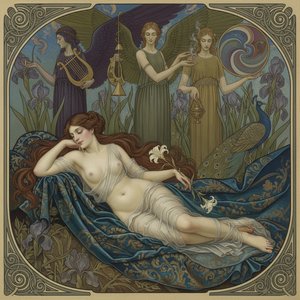
Explore the captivating world of Herbert James Draper, a master of Victorian Neoclassical painting. Discover his sensual mythological scenes, symbolic depth & influence on the Aesthetic Movement. Learn more at WahooArt.

Explore the captivating world of Symbolism! Discover key artists, psychological themes & its lasting impact on modern art. Expert insights for collectors and enthusiasts at WahooArt.

Explore the captivating world of Beatrice Parsons, a pioneering British abstract expressionist. Discover her journey from garden watercolors to evocative color field paintings and learn about her place within art history.

Explore the captivating art of Tivadar Csontváry Kosztka, a Hungarian visionary bridging Symbolism & Expressionism. Discover his unique 'sunway' style and profound themes – available as museum-quality reproductions at WahooArt.

Uppoudu Saksan ekspressionismin maailmaan! Tutustu 10 mestariteokseen – Kirchnerin voimakkaista väreistä Munchin tunteisiin. Löydä taidemaalauksien tarinat ja inspiroi sisustusta WahooArt.com:ssa. Explore the full collection online!


Pysy ajan tasalla uusimmista taideuutisista, eksklusiivisista tarjouksista ja sisustusideoista.
Kerro meille projektistasi, niin taideasiantuntijamme tarjoavat sinulle kolme henkilökohtaista taidesuositusta.
Anna meidän kuratoida 3 vaihtoehtoa juuri sinulle – Ilmaiseksi!
 Tilaa maalaus
 Jaa
Jaa Jaa
Jaa
 Tiedot

 Lataa
Lataa
 Samanlaisia
 X-lähikuva
 Diaesitys
 Näytä lisää







 Lasivaihtoehto on saatavilla vain alle 110 cm kokoisina teoksina


