


x


Käsinmaalattu öljyväri kankaalle haluamassasi koossa ja kehyksissä, taiteilijoidemme valmistamana tilauksesta.
Valitse valmiista mitoistamme sellaiset, jotka vastaavat teoksen alkuperäisiä mittasuhteita.

Voit syöttää omat mitat sopimaan tiettyyn kehykseen tai tilaan. Jos valitsemasi koko ei vastaa alkuperäisen kuvan mittasuhteita, rajaamme taideteoksen tai jatkamme maalausta käsin maalatuilla elementeillä. Digitaalinen esikatselu lähetetään hyväksyttäväksi ennen tuotannon aloittamista.
Huomioithan, että näytöllä oleva esikatselu ei vastaa todellista rajausta tai jatkamista. Vain digitaalinen mallikuva näyttää lopullisen sommittelun tarkasti.
Vaikka mittatilaustyöt ovat mahdollisia, suosittelemme valitsemaan mitan ennalta määritetystä listasta alkuperäisten mittasuhteiden säilyttämiseksi.
Maailmanlaajuinen toimitus () 3–4 viikossa tavallisen 5 viikon sijaan. (3 heinäkuu). Laadusta ei tingitä.


Caprice (sketch)
Replikaatin koko
James Ensor's "Caprice," a sketch rendered in stark black and white, is not merely a depiction of a scene; it’s an immersion into the unsettling heart of human experience. Created around 1890, this work exemplifies Ensor’s signature style – a potent blend of Symbolism, Expressionism, and a deeply rooted fascination with the grotesque and the macabre. The image presents a dramatic tableau: a colossal bird, seemingly an angel yet radiating an unnerving presence, dominates the composition, casting its shadow over a group of figures rendered as skeletal or ghostly forms. This isn’t a comforting vision of salvation; instead, it's a chilling meditation on suffering, mortality, and the anxieties simmering beneath the surface of contemporary society.
Ensor’s artistic journey was profoundly shaped by his upbringing in Ostend, Belgium – a vibrant seaside resort town brimming with carnival traditions. His family operated a souvenir shop overflowing with masks, costumes, and exotic objects, providing him with an unparalleled visual vocabulary. This early exposure to the theatricality of life, particularly the elaborate rituals surrounding Mardi Gras, became a recurring theme in his work, informing his use of disguise, symbolism, and a deliberate blurring of reality and illusion. “Caprice,” like much of Ensor’s oeuvre, draws heavily on this carnival imagery, injecting it with a distinctly unsettling atmosphere.
The monochrome palette of "Caprice" immediately establishes a mood of somber intensity. Ensor masterfully employs hatching and cross-hatching to build form and texture, creating a sense of depth and volume despite the absence of color. The bird itself is rendered with meticulous detail – its wings spread wide, almost aggressively so – drawing the viewer’s eye and anchoring the composition. Notice how he uses varying line weights to suggest movement and emotion; the skeletal figures seem to writhe in silent agony, while the bird exudes a quiet authority.
Crucially, Ensor abandons traditional perspective and realistic representation. Instead, he employs a flattened picture plane, compressing space and intensifying the claustrophobic feeling of the scene. This deliberate distortion contributes to the painting’s unsettling effect, forcing the viewer to confront the uncomfortable realities it depicts. The figures are densely packed together, almost suffocating one another, mirroring the anxieties of a rapidly changing society.
The central figure of the bird is particularly complex. While often interpreted as an angel, Ensor subverts this traditional symbolism. The bird’s imposing size and its shadowed presence suggest not benevolence but rather a force of judgment or perhaps even predation. Its wings, spread wide, could represent both ascension and entrapment – a suggestion that salvation may be elusive or even illusory.
The skeletal figures surrounding the bird are undoubtedly representations of human suffering and death. Their pallid skin tones and vacant stares evoke a sense of profound loss and despair. Ensor’s use of masks, prevalent throughout his work, further obscures their identities, transforming them into archetypal symbols of mortality. The sheer number of these figures – at least twelve visible in the sketch – underscores the pervasive nature of suffering within society.
"Caprice" is a pivotal work in Ensor’s artistic development, reflecting his growing disillusionment with societal norms and his willingness to confront uncomfortable truths. As documented by research from Wake Forest University's Print Collection (https://users.wfu.edu/martine/pcweb15/pc-ensor.html), Ensor’s work was often met with resistance due to its provocative subject matter and unconventional style. He deliberately challenged conventional artistic practices, paving the way for later Expressionist artists.
The Getty Exhibition “The Scandalous Art of James Ensor” (https://www.getty.edu/art/collection/exhibition/103PRP) highlights how Ensor’s work was initially perceived as shocking and unsettling, yet ultimately recognized for its profound psychological insight and artistic innovation. Reproductions of "Caprice," available through WahooArt.com, offer a powerful opportunity to experience the full impact of this haunting masterpiece – a testament to James Ensor's enduring legacy as one of the most original and challenging artists of the late 19th century.


1860 - 1949 , Belgia

Explore the unsettling yet captivating world of James Ensor, a pioneer of Expressionism. Discover his satirical masterpieces, symbolic imagery & lasting influence on modern art. High-quality reproductions available at WahooArt.
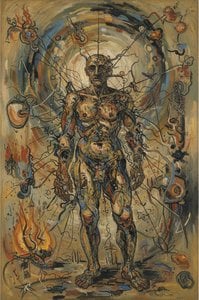
Explore the revolutionary art of André Masson – pioneer of automatism & Surrealist expression. Discover his powerful imagery, innovative techniques, and lasting influence on modern art. Learn more at WahooArt.

Explore the captivating interplay of Surrealism & Expressionism in 20th-century art. Discover key artists like Masson and Pollock, automatism techniques, and their lasting influence. Expert insights for art enthusiasts.

Oletko taidekeräilijä? auttaa valitsemaan oikean vaihtoehdon – giclée-printti vai käsin maalattu kopio? Vertailu, laatu ja asiantuntijanäkemykset.

Tutustu surrealismin ja ekspressionismin 10 ikonista mestariteosta! Salvador Dalín, René Magritten ja muiden taiteilijoiden tarinat. Löydä inspiraatiota kotiisi WahooArt.com:sta – korkealaatuiset taidevedokset ja kuratoidut sisustusehdotukset.


Pysy ajan tasalla uusimmista taideuutisista, eksklusiivisista tarjouksista ja sisustusideoista.
Kerro meille projektistasi, niin taideasiantuntijamme tarjoavat sinulle kolme henkilökohtaista taidesuositusta.
Anna meidän kuratoida 3 vaihtoehtoa juuri sinulle – Ilmaiseksi!
 Tilaa painos
 Jaa
Jaa Jaa
Jaa
 Tiedot

 Lataa
Lataa
 Samanlaisia
 X-lähikuva
 Diaesitys

 Näytä lisää




































 Lasivaihtoehto on saatavilla vain alle 110 cm kokoisina teoksina


