


Osta korkearesoluutioinen, parannettu digitaalikuva, joka on laadultaan huomattavasti parempi kuin verkkosivuston esikatselu.
Jokainen tiedosto valmistellaan huolellisesti omien asiantuntijoidemme toimesta käyttäen edistyneitä työkaluja ja ammattitaitoista manuaalista retusointia. Varmistamme, että jokaisessa kuvassa on poikkeuksellinen selkeys, tarkka värintoisto ja hienovaraiset yksityiskohdat.
Lopputiedosto toimitetaan sähköpostitse 72 tunnin kuluessa, ja se on optimoitu välittömään käyttöön ammattimaisissa, toimituksellisissa ja painoympäristöissä. Laatu on sama, johon huipputason suunnittelustudiot, kustantajat ja galleriat luottavat.
Lataa korkearesoluutioinen tiedosto henkilökohtaiseen näyttelyyn, tulostamiseen ja luoviin projekteihin. ( Osta printti Osta käsintehty maalaus)
Kun valitset WahooArt.com-palvelun, et saa vain kuvaa – saat ammattimaisesti parannetun digitaalisen taideteoksen, joka on luotu tarkkuudella ja jonka takaa tulee tyytyväisyystakuu. Tässä on kaikki, mitä tilauksesi sisältää, automaattisesti:

Korkearesoluutioinen digitaalinen kuvatiedostosi lähetetään sähköpostiisi 72 tunnin kuluessa tilauksesta – valmiina käytettäväksi välittömästi.

Taiteilijasi teos on optimoitu ammattimaisesti edistyneiden tekoälytyökalujen ja manuaalisen muokkauksen avulla, mikä takaa maksimaalisen yksityiskohtaisuuden, selkeyden ja väritarkkuuden.

Oletko vahingossa poistanut tai kadottanut tiedostosi? Ei hätää – lähetämme sen sinulle uudelleen milloin tahansa täysin maksutta.

Nauti taiteestasi välittömästi ilman tulleja, veroja tai toimitusmaksuja – digitaaliset lataukset ovat aina verovapaita.

Varmistamme, että digitaalinen kuvasi vastaa alkuperäisiä värejä mahdollisimman tarkasti käyttämällä ammattilaistason työkaluja ja värinhallintaa.

Jos et ole tyytyväinen digitaaliseen kuvaasi, muokkaamme sitä tai palautamme 100% takaisin 100 päivän kuluessa – ilman kysymyksiä.

Etkö ole tyytyväinen? Saat täyden hyvityksen 100 päivän kuluessa digitaalisen tiedostosi vastaanottamisesta – ilman kyselyitä.

Osta 3 kuvaa, säästä 10% - Osta 5, säästä 15% - Osta 10+, säästä 20%. Erinomainen valinta luoviin projekteihin, gallerioille ja toimistoille.

In the quiet, mist-shrouded landscapes of the early fifteenth century, a revolution was quietly unfolding within the workshops of Flanders. At the heart of this transformation stood Hubert van Eyck, a figure whose very name is etched into the foundation of Northern Renaissance art. Though much of his individual biography remains veiled by the passage of centuries, Hubert emerges from history not merely as a painter, but as a pioneer who helped bridge the gap between the stylized traditions of the Middle Ages and the breathtaking, luminous realism that would define the Early Netherlandish school. Born in Maasik around 1385 or 1390, he was part of a formidable artistic dynasty; his family connections, including his renowned brother Jan and siblings Lambert and Margaret, created a crucible of creativity that would forever alter the trajectory of European painting.
To understand Hubert is to understand the dawn of a new way of seeing. While the era of tempera was still transitioning toward more versatile mediums, Hubert’s early career—marked by commissions for religious panels in Tongeren—revealed an burgeoning mastery over light and texture. He was a man of his time and his guild, officially entering Ghent’s Artisten Gilded in 1413, a testament to his professional standing and his integration into the vibrant, wealthy urban culture of Flanders. His work began to move away from the flat, symbolic representations of the past, leaning instead toward an almost tactile observation of the world, where every fold of heavy fabric and every glint of divine light held profound theological significance.
The most enduring shadow cast by Hubert van Eyck is undoubtedly that of the Ghent Altarpiece. This monumental polyptych, a masterpiece of unparalleled complexity, serves as the primary vessel for his artistic spirit. While scholars have long debated the exact division of labor between Hubert and his brother Jan, it is widely accepted that Hubert laid the essential groundwork for this sacred narrative. He is credited with initiating the grand design, infusing the work with a structural majesty and a spiritual depth that provided the canvas upon which Jan would later apply his legendary, microscopic detail. The altarpiece is not merely a collection of panels; it is a cosmic vision, a window into the divine that utilizes the burgeoning potential of oil painting to create an immersive, devotional experience.
Beyond the grand scale of the Ghent Altarpiece, other works attributed to his hand, such as The Three Marys at the Tomb, offer glimpses into his ability to command dramatic lighting and emotional gravity. In these compositions, one can sense the precursor to the Northern Renaissance's obsession with naturalism. His influence is felt in the way he utilized the medium to capture the weight of human sorrow and the ethereal glow of the miraculous. Through his hands, the religious subject matter ceased to be a distant icon and became a tangible, breathing reality for the faithful.
The historical significance of Hubert van Eyck lies in his role as a foundational architect of style. He was part of a movement that redefined the boundaries of what paint could achieve. His contributions can be summarized through several key artistic shifts:
Though he passed away in 1426, leaving behind a legacy that is often inextricably linked with the more documented achievements of his brother, Hubert van Eyck remains an indispensable figure. He was the silent force behind the Flemish revolution, a master who helped transform the wooden panels of the fifteenth century into windows of infinite light and profound human truth. His life serves as a testament to the power of collaborative genius and the enduring impact of those who dare to innovate at the very threshold of a new era.
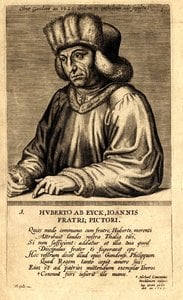
1370 - 1426

 Esikatselu
 Jaa
Jaa Jaa
Jaa
 Tarkemmat tiedot

 Lataa
Lataa
 Samanlaisia
 Röntgenkuva
 Diaesitys
 Näytä lisää


