Esikatselu Esikatsele AR-tilassa Osta käsinmaalattu taideteos Siirry digitaaliseen kuvaan Jaa teos
Tiedot Opas Lisää suosikkeihin Lataa kuva Samanlaisia kohteita Röntgenkuvaus Diaesitys Tilastot

untitled (8069)

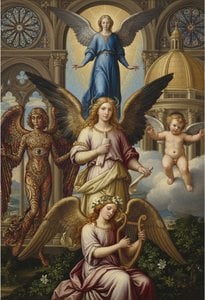
Witness the ethereal beauty of Gustave Moreau's 'Untitled (8069)'. A captivating Symbolist masterpiece featuring winged figures and celestial angels, now available as a stunning hand-painted reproduction.

Tutustu Gustave Moreaun lumoavaan symbolistiseen taiteeseen! Uppoudu myyttien, uskonnon ja ihmismielen syövereihin. Vaikutti Matisseen & Rouaultiin. Unohdettuja unelmia!

Giclée- ja taideprintit

Museolaatuisia giclée- tai kankaitaulun tulosteita nopealla tuotannolla ja joustavilla viimeistelyvaihtoehdoilla. ( Osta käsinmaalattu taideteos Siirry digitaaliseen kuvaan)

Corner sample of the P118B picture frame: valettu polystyreeni, 5 cm wide and 3 cm thick
P118B €10
Corner sample of the P118H picture frame: valettu polystyreeni, 5 cm wide and 3 cm thick
P118H €10
Corner sample of the P118W picture frame: valettu polystyreeni, 5 cm wide and 3 cm thick
P118W €10
Corner sample of the P438Z picture frame: valettu polystyreeni, 5.5 cm wide and 3.5 cm thick
P438Z €10
Corner sample of the P508JH picture frame: valettu polystyreeni, 7 cm wide and 3.5 cm thick
P508JH €12
Corner sample of the P508YH picture frame: valettu polystyreeni, 7 cm wide and 3.5 cm thick
P508YH €12
Corner sample of the P805H picture frame: valettu polystyreeni, 5 cm wide and 3.5 cm thick
P805H €10
Corner sample of the P805Z picture frame: valettu polystyreeni, 5 cm wide and 3.5 cm thick
P805Z €10
Corner sample of the P919BZ picture frame: valettu polystyreeni, 7 cm wide and 3.5 cm thick
P919BZ €10
Corner sample of the P919G picture frame: valettu polystyreeni, 7 cm wide and 3.5 cm thick
P919G €10
Corner sample of the P919XJ picture frame: valettu polystyreeni, 7 cm wide and 3.5 cm thick
P919XJ €10
Corner sample of the P959ZH picture frame: valettu polystyreeni, 5 cm wide and 3 cm thick
P959ZH €10
Corner sample of the P968JZ picture frame: valettu polystyreeni, 6 cm wide and 4 cm thick
P968JZ €12
Corner sample of the W106C picture frame: massiivipuu, 5 cm wide and 3 cm thick
W106C €8
Corner sample of the W218G picture frame: massiivipuu, 5 cm wide and 3 cm thick
W218G €10
Corner sample of the W218JH picture frame: massiivipuu, 5 cm wide and 3 cm thick
W218JH €8
Corner sample of the W218Y picture frame: massiivipuu, 5 cm wide and 3 cm thick
W218Y €10
Corner sample of the W307PJ picture frame: massiivipuu, 6 cm wide and 3 cm thick
W307PJ €10
Corner sample of the W316G picture frame: massiivipuu, 6 cm wide and 3 cm thick
W316G €10
Corner sample of the W316PJ picture frame: massiivipuu, 6 cm wide and 3 cm thick
W316PJ €8
Corner sample of the W316Y picture frame: massiivipuu, 6 cm wide and 3 cm thick
W316Y €10
Corner sample of the W398PJ picture frame: massiivipuu, 5 cm wide and 3 cm thick
W398PJ €8
Corner sample of the W4111J picture frame: massiivipuu, 6.5 cm wide and 3.5 cm thick
W4111J €10
Corner sample of the W500HY picture frame: massiivipuu, 7 cm wide and 5 cm thick
W500HY €15
Corner sample of the W500JH picture frame: massiivipuu, 7 cm wide and 5 cm thick
W500JH €15
Corner sample of the W692G picture frame: massiivipuu, 8 cm wide and 4 cm thick
W692G €12
Corner sample of the W849H picture frame: massiivipuu, 5 cm wide and 3 cm thick
W849H €8
Corner sample of the W940BG picture frame: massiivipuu, 7.5 cm wide and 4.5 cm thick
W940BG €15
Corner sample of the W953PJ picture frame: massiivipuu, 6 cm wide and 3.5 cm thick
W953PJ €8

Vakiokoko
räätälöity
CM
INCH

Valitse valmiista mitoistamme sellaiset, jotka vastaavat teoksen alkuperäisiä mittasuhteita.

leveys
korkeus

Syötä tarvitsemasi leveys ja korkeus, jotta tuloste sopii kehyksiisi tai seinällesi. Tulostetta voidaan vain leikata, sitä ei voida koskaan suurentaa alkuperäistä kuvaa suuremmaksi, joten eri muotoinen koko aiheuttaa osan kuvasta katoamisen. Lähetämme sinulle digitaalisen mallikuvan hyväksyttäväksi ennen kuin aloitamme tulostuksen. Tällä sivulla näkyvä kuva ei näytä lopullista rajausta — vain mallikuva näyttää sen.

Maailmanlaajuinen toimitus () 2 viikossa tavallisen 4–5 viikon sijaan. (28 lokakuu)

Ilmainen pikatoimitus ympäri maailman
Korkealaatuinen pellavakangas
Kattava kuljetusvakuutus
Tulliveron palautustakuu
Takuu täydellisestä värien vastaavuudesta
100 päivän palautusoikeus (vain valmistusvirheet)
100% rahat takaisin -takuu
Määräalennus tarjolla

Kokonaishinta

€ 60

untitled (8069)

Giclée- ja taideprintit

Replikaatin koko

-

Kokonaishinta

€ 60

Pikaista tietoa

  • Subject or theme: Mythological, religious
  • Location: Musée Gustave Moreau
  • Artistic style: Dreamlike, mystical
  • Influences:
    • Romanticism
    • Italian art
  • Movement: Symbolism

Taidevisat

Jokaisessa kysymyksessä on vain yksi oikea vastaus.

Kysymys 1:
What artistic movement is Gustave Moreau most closely associated with?
Kysymys 2:
The painting depicts a woman with wings. What is the primary symbolic function of these wings?
Kysymys 3:
In the painting, what is the significance of the two angels?
Kysymys 4:
Gustave Moreau was known for his detailed depictions of which historical periods?
Kysymys 5:
What is a key characteristic of Moreau's artistic style, as evidenced by the painting?

A Dream Woven in Color: Gustave Moreau’s “Untitled (8069)”

Gustave Moreau's "Untitled (8069)" is not merely a painting; it’s an immersion into the richly layered, intensely personal world of Symbolist art. Born in Paris in 1826, Moreau rejected the prevailing Realism and Impressionism of his time, instead dedicating himself to unlocking the hidden narratives residing within myth, religion, and the human psyche. This particular work, a captivating study of female beauty and ethereal grace, exemplifies this approach perfectly – it’s less about depicting reality and more about evoking a profound emotional response through carefully constructed symbolism.

The central figure, a woman draped in flowing fabric, possesses an almost otherworldly quality. Her nakedness is not presented as overtly provocative but rather serves to emphasize her vulnerability and connection to the natural world. The dress itself, billowing and luminous, acts as both a protective veil and a conduit for divine light. Moreau’s masterful use of color – predominantly deep blues, purples, and golds – creates an atmosphere of dreamlike serenity and spiritual intensity. Notice how he employs chiaroscuro, the dramatic contrast between light and shadow, to sculpt the figure's form and heighten the sense of mystery.

The Language of Myth and Angels

Moreau’s compositions are rarely straightforward; they are deliberately complex, layered with allusions to classical mythology, biblical stories, and esoteric symbolism. In “Untitled (8069),” we see this in full force. The two angels hovering above the woman are not simply decorative elements but potent symbols of divine protection and guidance. Their placement – one on the left, the other on the right – suggests a duality, perhaps representing opposing forces or aspects of the feminine spirit. The reference to Semele, a figure from Greek mythology who was consumed by Zeus in the form of fire, subtly hints at themes of sacrifice, transformation, and divine power.

The overall composition draws heavily on Moreau’s fascination with ancient art and decorative traditions. The flowing lines, reminiscent of Byzantine mosaics and illuminated manuscripts, create a sense of timelessness and spiritual resonance. He was deeply influenced by the artistic treasures he encountered during his extensive travels in Italy, particularly the frescoes of Raphael and Michelangelo – artists who, like himself, sought to infuse their work with profound emotional and symbolic meaning.

Technique and Artistic Intent

Moreau’s technique is characterized by meticulous detail and a remarkable command of color. He employed tempera on panel, a medium that allowed for rich pigments and subtle gradations of tone. His brushwork is often loose and expressive, particularly in the rendering of the drapery, which appears to flow and shimmer with an almost palpable energy. The artist’s intention wasn't simply to create a beautiful image; he aimed to capture a fleeting moment of spiritual insight, a glimpse into the hidden realms of the soul.

It is important to note that Moreau never intended his paintings to be easily understood. He deliberately employed ambiguity and symbolism, inviting viewers to engage in an active process of interpretation. “Untitled (8069)” exemplifies this approach perfectly – it’s a painting that rewards repeated viewing and encourages contemplation about its deeper meanings.

A Timeless Vision for Reproduction

WahooArt is proud to offer meticulously hand-painted reproductions of Gustave Moreau's "Untitled (8069)." Each reproduction captures the artist’s unique style, color palette, and evocative atmosphere with exceptional fidelity. Whether you are a seasoned art collector, an interior designer seeking to infuse your space with a touch of timeless elegance, or simply someone who appreciates the beauty of Symbolist art, this reproduction provides a stunning opportunity to bring Moreau's dreamlike vision into your home.

Explore the full artwork details and order your custom reproduction today at WahooArt.com.

Kysymykset ja vastaukset

Miten teos "untitled (8069)" sijoittuu osaksi Gustave Moreau'n tuotantoa?

"untitled (8069)" kuuluu Gustave Moreau:n Symbolist Movement-kauden tuotantoon, jonka tunnettuun teemaan kuuluvat italian renaissance, mythology, religious symbolism, symbolist aesthetics, dreamlike imagery, spirituality, moreau’s personal mythology, inner world exploration."

Kuka on teoksen "untitled (8069)" taiteilija?

Teoksen "untitled (8069)" taiteilija on Gustave Moreau. Teos on luetteloitu Gustave Moreau nimellä.

Minkä tunteen välittämä teos "untitled (8069)" on?

Gustave Moreau:n "untitled (8069)" välittää Mysterious tunnelman.


Taiteilijan elämäkerta

A Dream Weaver of Symbolism: The Life and Art of Gustave Moreau

Gustave Moreau, nimi joka on synonyymi eteeriselle kauneudelle ja salaperäisille syvyyksille symbolistisessa maalauksessa, nousi 1800-luvun Pariisin yläpuolelle ainutlaatuisena taiteellisenä ääninä. Hän syntyi vuonna 1826 varakkaaseen perheeseen – hänen isänsä arkkitehti ja arkisturi – ja Moreau’n lapsuus oli täynnä älyllistä uteliaisuutta ja esteettistä aistimaisuutta. Jo nuorena hän osoitti huomattavan lahjan piirtämisessä, joka oli hoitoitu perinteisen akateemisen koulutuksen kautta François-Édouard Picotin kaltaisten hahmojen alaisuudessa. Kuitenkin Moreau’n taiteellinen polku poikkesi voimakkaasti hänen aikansa vallitsevista Realistisesta ja Impressionistisesta nyansseista. Hän ei ollut kiinnostunut vangitsemaan hetkellisiä hetkiä tai objektiivista todellisuutta; pikemminkin hän etsi piiloutuneiden alueiden avaamista myytteistä, uskonnosta ja ihmisen psyykeestä syvällisen henkilökohtaisen ja symbolisen visuaalisen kielen kautta. Hänen matkansa oli sisäinen tutkimusmatka, jossa subjektiiviset tunteet ja hengelliset kaipuudet muutettiin maalaukseen tarkkaan huolella yksityiskohtiin ja eläväiseen, usein ylelliseen sävymaailmaan.

The Forge of Imagination: Influences and Artistic Development

Moreau’n taiteellinen kehitys ei syntynyt tyhjyyteen. Vaikka hän hylkäsi aikansa hallitsevat trendit, hän sai inspiraatiota monista lähteistä. Eugen Delacroix’n dramaattisen värin ja eksoottisten aiheiden käyttö resonoi syvästi hänen kanssaan, sytyttäen intohimon tarinankerrontaan, joka oli täynnä tunteellista intensiteettiä. Hän piti myös Renaissance-mestareita kuten Michelangeloa ja Leonardo da Vincia korkeina arvoina, ihaillen heidän mestarillisuuttaan koostumuksessa, anatomiassa ja psykologisessa syvyydessä. Kuitenkin Moreau ei ollut vain kopioimassa näitä taiteilijoita; hän synteesoi heidän vaikutteensa jotain täysin uutta. Hänen Italiaan tekemänsä matkat 1850-luvulla olivat ratkaisevia, upottaen hänet antiikin ja Renaissance-taiteeseen, tarjoten runsaasti motiiveja ja tyylillisiä vihjeitä, jotka täyttivät tulevat teoksensa. Hän kopioi huolellisesti Vanhoja maalauksia, ei harjoituksena toistamisessa, vaan pyrkimyksenä sisällyttää niiden tekniikat ja avata niiden salaisuudet. Tämä omistautuminen käsityölle yhdistettynä hänen kasvavaan kiinnostukseensa myyteihin ja kirjallisuuteen loi pohjan ainutlaatuiselle taiteelliselle näkemykselleen.

A World of Symbols: Themes and Techniques

Moreau’n maalaukset eivät ole vain myyttien tai Raamatun tarinoiden kirjaimellisia kuvauksia; ne ovat monimutkaisia allegorioita, jotka kutsuvat pohdintaan ja tulkintaan. Hän sukelsi tarinoihin kuten Salomeen, Orfeuksen, Jupiterin ja Semelen, ei kertomaan niitä kirjaimellisesti, vaan tutkimaan niiden perimmäisiä psykologisia ja hengellisiä totuuksia. Hänen maalinsa ovat täynnä symbolista kuvausta – sammakkoja, jotka edustavat houkutusta, jalokiviä, jotka symboloivat maallisia haluja ja hahmoja, jotka edustavat abstrakteja käsitteitä kuten surua, menetystä tai pelastusta. Hän loi mestarillisesti unenomaisen tunnelman huolellisella kerroksella maalia, rikkailla tekstuureilla ja usein häiritsevällä valon ja varjon yhdistelmällä. Moreau’n tekniikka oli tunnettu tarkasta kerrostamisesta maalia, luoden pintoja, jotka hehkuvat irisoiduista väreistä ja herättävät maailmanmenoon liittyvän vaikutelman. Hänen kultalehtien käyttönsä lisäsi tätä vaikutusta, antaen teoksilleen bysanttilaisen ulkonäön, joka korosti niiden hengellistä ulottuvuutta. Hän ei ollut huolissaan realististen tekstuurien tai perspektiivien vangitsemisesta; pikemminkin hän priorisoi värin ja muodon ilmaisutehon välittämiseksi tunteiden ja merkityksen välittämiseksi.

Notable Achievements and Historical Significance

Moreau’n vaikutus oli merkittävä, vaikka hänen työnsä kohtasi aluksi sekoitettuja reaktioita. Vuonna 1893 hän hyväksyi professuurin École des Beaux-Artsissa, jossa hän vaikutti voimakkaasti useiden taiteilijoiden sukupolvia, mukaan lukien Henri Matisse ja Georges Rouault. Hän kannusti opiskelijoitaan omaksumaan mielikuvitusta, symboliikkaa ja henkilökohtaista ilmaisua, kehottaen heitä rikomaan perinteisten taiteellisten normien rajoja. Vaikka Symbolismi kuihtuikin suosion menettäessä Moreau’n kuoleman jälkeen vuonna 1898, hänen työnsä sai merkittävän arvostuksen myöhemmin 20-luvulla. Nykyään hän on laajalti pidetty liikkeen keskeisenä hahmona ja modernin taiteen esiasjana. Gustave Moreau -museo, joka sijaitsee hänen entisessä ateljeessaan ja kodissaan Pariisissa, toimii testamenttina hänen kestävälle perinnölleen – suojatulla alueella, jossa vieraat voivat uppoutua tämän poikkeuksellisen taiteilijan lumoavaan maailmaan. Hänen maalauksensa resonoivat edelleen yleisön kanssa tänä päivänä, tarjoten näkymiä ihmisen sielun piilotettuihin syvyyksiin ja muistuttaen meitä taiteen voimasta ylittämään todellisuuden rajat.
Gustave Moreau

Gustave Moreau

1826 - 1898 , Ranska

Pähkinänkuoressa

  • Artistic Movement Or Style: Symbolismi
  • Artists Or Movements Influenced By This Artist:
    • Matisse
    • Rouault
  • Artists Who Influenced This Artist:
    • Delacroix
    • Michelangelo
    • Da Vinci
  • Date Of Birth: 6. huhtikuuta 1826
  • Date Of Death: 18. huhtikuuta 1898
  • Full Name: Gustave Moreau
  • Nationality: Ranskalainen
  • Notable Artworks:
    • Salome tanssii
    • Jupiter ja Semele
    • Orfeus
  • Place Of Birth: Pariisi, Ranska
Tutustu teoksiin, jotka on järjestetty aiheiden, tyylien ja ominaisuuksien mukaan.