Giorgio de Chirico: Unraveling the Mysteries of a Dreamscape
Giorgio de Chirico, syntynyt 10. heinäkuuta 1888 Volossa Kreikassa ja italialaisissa vanhemmissaan – geneeseisessä äidissä ja sikhiläisessä isässä – oli taiteilija, jonka ura oli täynnä sekä klassisen perinnön että modernin eristyneisyyden tunnetta. Varhainen koulutuksensa Ateenan polyteknillisessä oppilaitoksessa antoi hänelle perustan perinteisille tekniikoille, mutta hänen myöhempi opintonsa Münchenissä sytytti todellakin luovuuden tulipalon. Siellä, ennen-sodan ajattelun keskuspaikassa, hän kohtasi Arnold Böcklinin ja Max Klingerin töitä – taiteilijoita, joiden symboliset maisemat ja kummitusmainen kuvasto resonoi syvästi hänen oman kehittyvän estetiikkansa kanssa. Samoin vaikuttavina olivat ajankohtaiset filosofiset virrat – Friedrich Nietzschen, Arthur Schopenhauerin ja Otto Weiningerin kirjoitukset, jotka tutkivat eksistentialismin, ihmisen toiveiden irrationaalisuuden ja todellisuuden subjektiivisuutta. Nämä ideat muuttuivat de Chiricon uraauurtavan taiteellisen näkemyksen keskeisiksi elementeiksi.
Metaphysical Taiteen Synty
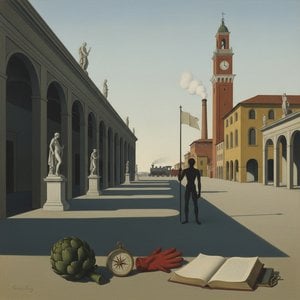
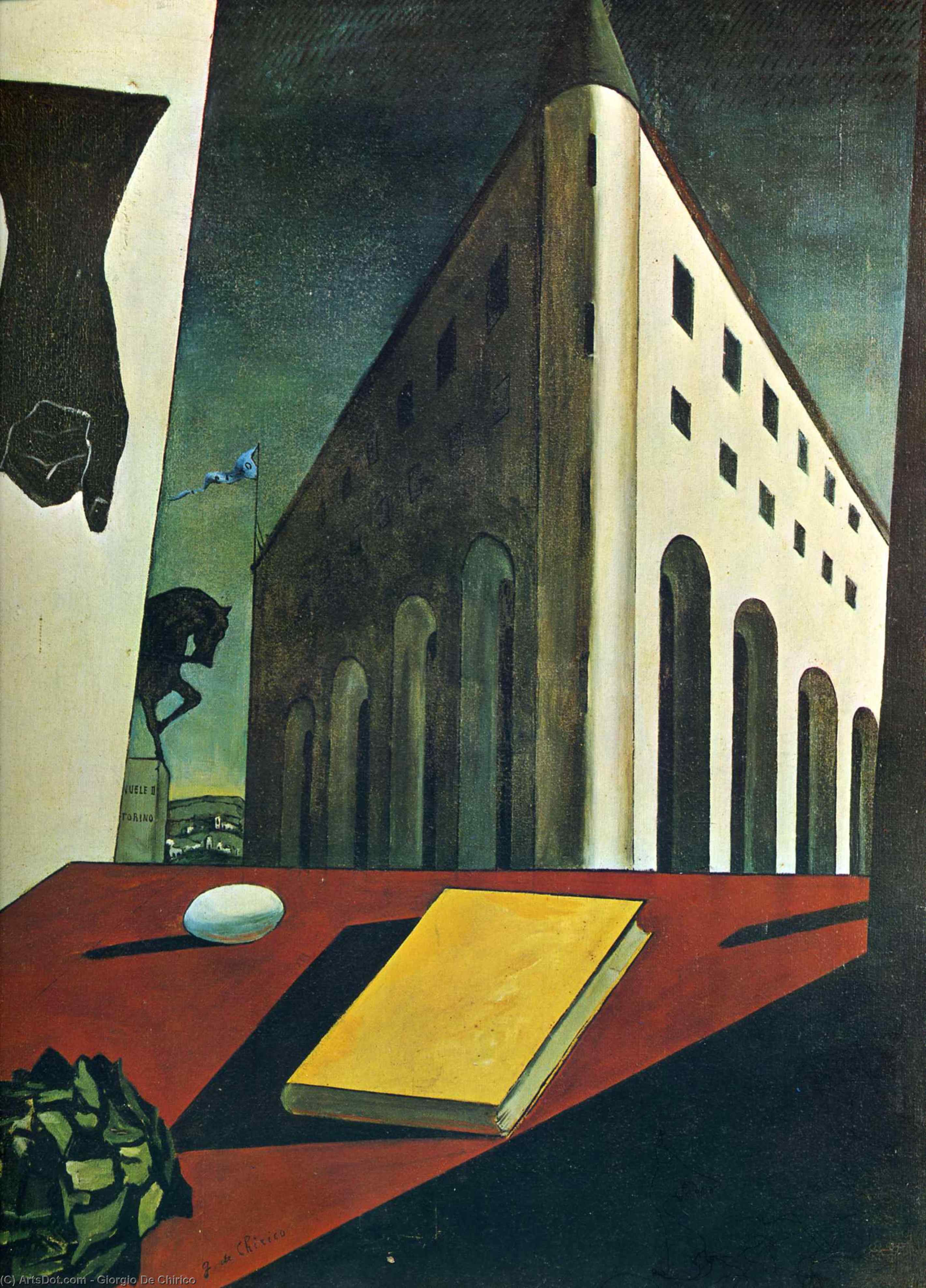
Vuonna 1909 alkoi ainutlaatuinen tyyli kehittyä de Chiricon tutkimuksissa – tyyli, jota hän itse nimitti “metafyysiseksi” taideksi. Tämä ei ollut pelkästään tyylillinen innovaatio; se oli syvällinen yritys vangita piilossa olevat todellisuudet arkipäivän elämän alla, paljastaa häiritsevää runoutta tuttuissa tiloissa. Merkittävä hetki tapahtui vierailun aikana Firenzessä ja kokemuksen Piazza Santa Crocessa, joka inspiroi hänen ikonista ‘Metaphysical Town Square’ -sarjaansa. Nämä maalaukset ovat tunnettuja kummituksellisesta hiljaisuudestaan, pitkistä dramaattisista varjoistaan, loogisesti epäloogisista perspektiiveistään ja klassisen arkkitehtuurin olemuksesta yhdistettynä häiritseviin elementteihin, kuten ilmeettömiin nukkeihimme ja uhkaaviin patsaisiin. Vaikutus on syvästi häiritsevää, herättäen nostalgiaa, eristyneisyyttä ja lähes sietämätöntä kaipuuta kadonnutta tai saavuttamattomaan. De Chirico perusti Scuola Metafisica -oppikoulun, joka vaikutti syvällisesti surrealismiin, vaikka hän myöhemmin etääntyi sen tulkinnoista. Hänen maalauksensa eivät olleet tarkoitettu unien kuvauksiksi, vaan pikemminkin yrityksiä vangita todellisuus näkyvän maailman ulkopuolelta – alue, jossa aika ja tila ovat nesteitä ja jossa tietoisuuden ja alitajunnan rajat hämärtyvät. Merkittäviä teoksia, kuten *The Vexations of the Thinker*, *The Enigma of an Autumn Afternoon* ja *The Song of Love* esittelee tämä kummituksellinen esteettikka, kutsuen katsojia pohdiskelemaan olemassaolon mysteereitä ja ihmisen havainnon haurautta.
Tyylin Muutos ja Perinnön Jättäminen
Ensimmäisen maailmansodan jälkeen, noin vuonna 1919, de Chiricon taiteellinen polku kääntyi yllättävästi. Hän hylkäsi varhaisemman metafyysisen lähestymistapansa ja omaksui sen sijaan perinteisempää neoklassista tai neobarokkityyliä. Tämä muutos kohtasi huomattavaa vastustusta; monet kriitikot valittivat menetetyntä innovatiivisuutta ja syyttivät häntä jättämästä taiteellisen tulipalon, joka oli määrittänyt hänen varhaisen tyylinsä. Kuitenkin de Chirico pysyi lujasti taiteellisissa valinnoissaan, palasi teemoihin menneisyydestä, mutta renderöi ne eri estetiikan avulla. Hän jatkoi maalauksen ja näyttelyjen järjestämistä tuottaen intensiivisen teknisen taitonsa ja sitoutumisensa. Vaikka kritiikki oli olemassa, hänen vaikutuksensa myöhemmän sukupolven taiteilijoihin ei ole kiistettävissä. Hänen tilan, perspektiivin ja symbolismin innovatiivinen käyttö haastoi perinteiset taiteelliset normit ja loi uusia ilmaisumuotoja.
Vaikutukset ja Kestävän Vaikutuksen Jättäminen
De Chiricon työ on ratkaiseva silta 1800-luvun lopun symbolistiliikkeelle ja varhaisen 20. vuosisadan surrealismin nousulle. Hän oli suoraan vaikuttanut taiteilijoihin, kuten Arnold Böckliniin ja Max Klingeriin, joiden lumoavat kuvat resonoi hänen oman intohimonsa mytologian ja alitajunnan kanssa. Filosofit, kuten Nietzsche ja Schopenhauer, tarjosivat hänelle kehyksen tutkia teemoja eksistentialismin, eristyneisyyden ja merkityksettömyyden tavoittelun näennäisesti merkityksettömässä maailmassa. Kuitenkin de Chiricon vaikutus ulottui paljon surrealismiin. Taiteilijat, kuten René Magritte ja Salvador Dalí, inspiroituivat hänen metafyysisistä maalauksistaan ottamalla käyttöön hänen yhdistelmien, epäloogisen perspektiivin ja symbolisen kuvaston tekniikoita luodakseen omat unimaailmansa. Hänen työnsä vaikutti myös myöhempiin liikkeisiin, kuten Magic Realismiin, joka pyrki esittämään arkipäivän todellisuuden lisääntynyttä mysteeriä ja psykologista syvyyttä. Tänä päivänä de Chiricon maalauksia esitellään suurissa museoissa ympäri maailmaa, mukaan lukien Museo, jonka hän on perustanut hänen teoksilleen Rooman Espanjalankadulla, varmistaen että hänen maineensa yhden merkittävimmistä 20. vuosisadan taiteilijoista säilyy vahvana. Hän jätti jälkeensä ei vain taideteosten kokoelman, vaan myös uuden tavan nähdä – tavan havainnoida maailmaa piilotettujen merkitysten, häiritsevän kauneuden ja kestävän mysteerin kautta.
Avainvaikutukset & Taiteellinen Sukupolvi
- Vaikutti: Arnold Böcklin, Max Klinger, Friedrich Nietzsche, Arthur Schopenhauer
- Vaikuttanut: Surrealismi, erityisesti taiteilijoita kuten René Magritte ja Salvador Dalí. Hänen työnsä vaikutti myös myöhempiin liikkeisiin, kuten Magic Realismiin.


 Esikatselu
 Osta käsinmaalattu taideteos
 Jaa teos
 Jaa
Jaa
 Tiedot
 Opas
Opas

 Lataa kuva
 Samanlaisia kohteita
 Röntgenkuvaus
 Diaesitys
 Q&A
Q&A Tilastot


 Lue lisää






































 Lasivaihtoehto on saatavilla vain alle 110 cm kokoisille teoksille