
Ilmainen taidekonsultointi

x
Tilaa painos Tilaa painosOsta kuva Osta kuva JaaJaa
DetailsDetails Lisää suosikkeihin Lisää suosikkeihin LataaLataa SamanlaisiaSamanlaisia X-RayX-Ray DiaesitysDiaesitys

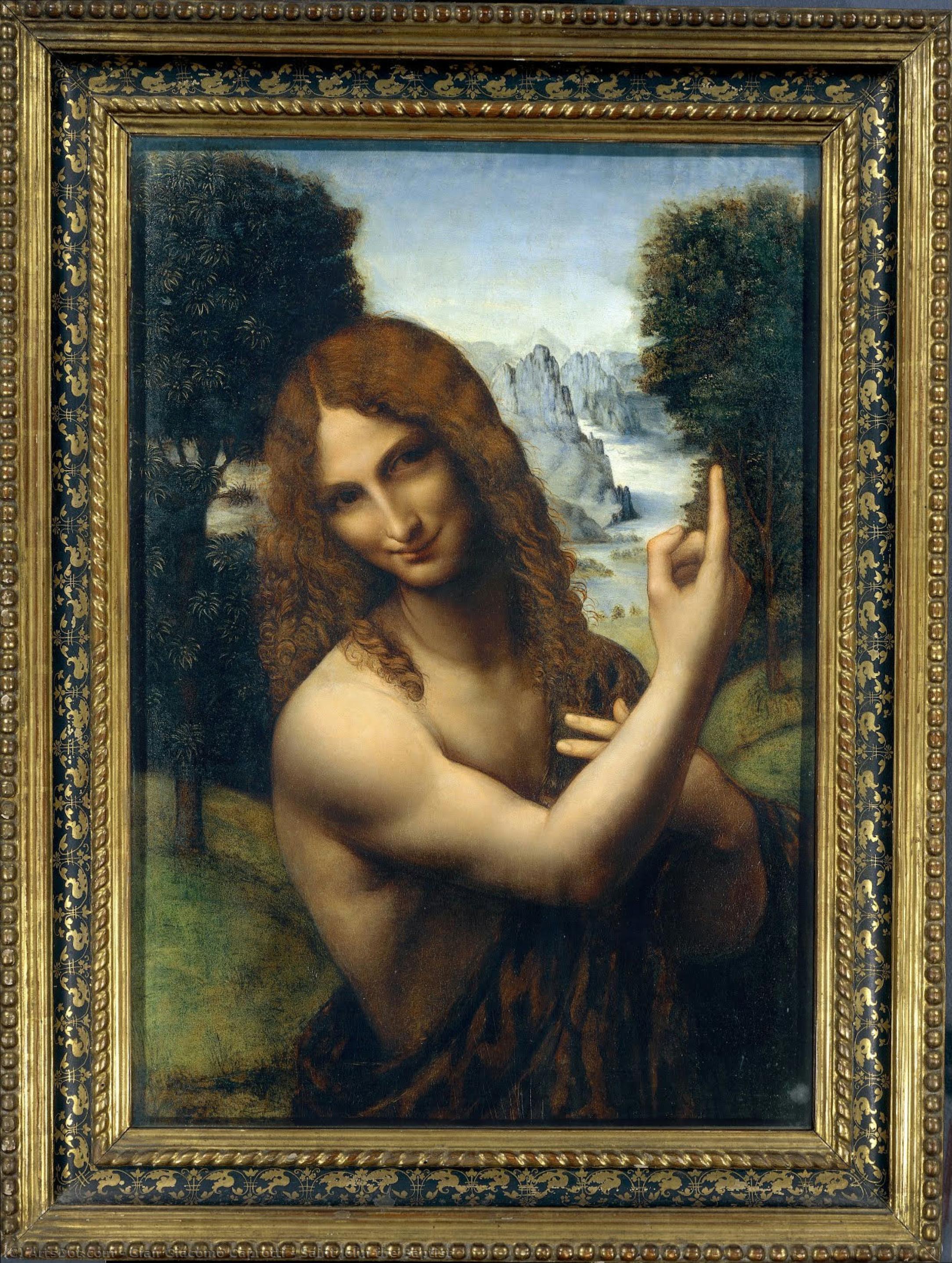
Saint John the Baptist

  • Teosvuosi1520
  • Mitat73.0 x 50.0 cm

gian giacomo caprotti (Salai), a student & companion of Leonardo da Vinci, was an Italian Renaissance artist known for tempera paintings like 'Saint John the Baptist'. Explore his unique style and legacy influenced by Da Vinci's mastery. Discover his

Käsinmaalattu öljykopio

Käsinmaalattu öljyväri kankaalle haluamassasi koossa ja kehyksissä, taiteilijoidemme valmistamana tilauksesta.

Standard
custom
CM
INCH

Valitse valmiista mitoistamme sellaiset, jotka vastaavat teoksen alkuperäisiä mittasuhteita.

leveys
korkeus

Voit syöttää omat mitat sopimaan tiettyyn kehykseen tai tilaan. Jos valitsemasi koko ei vastaa alkuperäisen kuvan mittasuhteita, rajaamme taideteoksen tai jatkamme maalausta käsin maalatuilla elementeillä. Digitaalinen esikatselu lähetetään hyväksyttäväksi ennen tuotannon aloittamista.
Huomioithan, että näytöllä oleva esikatselu ei vastaa todellista rajausta tai jatkamista. Vain digitaalinen mallikuva näyttää lopullisen sommittelun tarkasti.
Vaikka mittatilaustyöt ovat mahdollisia, suosittelemme valitsemaan mitan ennalta määritetystä listasta alkuperäisten mittasuhteiden säilyttämiseksi.

Esimerkkejä muutettavissa olevista asioista: Vaihda kasvot asiakkaan omaan valokuvaan; Lisää lemmikki (esim. korvaa kissa koiralla); Lisää piilotettu viesti taustaan; Muuta taustan maisemaa tai elementtejä.
Tilauksen jälkeen WahooArt.com -tiimi lähettää asiakkaalle ohjeet ja esikatselukuvan.

Maailmanlaajuinen toimitus () 3–4 viikossa tavallisen 5 viikon sijaan. (1 heinäkuu). Laadusta ei tingitä.

why_choose_icon
Ilmainen pikatoimitus ympäri maailman
why_choose_icon
Korkealaatuinen pellavakangas
why_choose_icon
Kattava kuljetusvakuutus
why_choose_icon
Tulliveron palautustakuu
why_choose_icon
Täydellinen värien vastaavuustakuu
why_choose_icon
60 päivän palautusoikeus (vain valmistusvirheet)
why_choose_icon
100% rahat takaisin -takuu
why_choose_icon
Määräalennus tarjous

Kokonaishinta

-

reproduction

Saint John the Baptist

Reproduktiotekniikka

Replikaatin koko

-

Kokonaishinta

-

Teoksen kuvaus

Also this painting has a troubled history of attributions: it was originally considered to be by Bernardino Luini, and then even by Leonardo, before being attributed to Leonardo’s most wayward and daring follower, Gian Giacomo Caprotti, called Salai (or Salaino), a name of Arabic origin which is said to mean “little devil”. Art historians today do not commit themselves, talking generically of a Leonardesque painter in the first quarter of the Cinquecento. The artist undoubtedly took inspiration from the Saint John the Baptist now in the Louvre, which is certainly by Leonardo, but there are some substantial differences: the cross that appears in the original is missing and the figure, which Leonardo sets against a dark background, is shown here with effeminate, almost affected features in an idyllic landscape.

Samankaltaisia teoksia

vincent willem van gogh - Tähtitorni (luonnos)
vincent willem van gogh
Tähtitorni (luonnos)
Gustav Klimt - Keuteritarina
Gustav Klimt
Keuteritarina
rabindranath thakur - Pään tutkimus (geometrinen)
rabindranath thakur
Pään tutkimus (geometrinen)
Francisco de Goya - Muertos recogidos
Francisco de Goya
Muertos recogidos
vincent willem van gogh - Sowers
vincent willem van gogh
Sowers
Pablo Picasso - Untitled
Pablo Picasso
Untitled
Jean-Antoine Watteau - Friar, standing
Jean-Antoine Watteau
Friar, standing
Paul Cézanne - The Promenade
Paul Cézanne
The Promenade

Taiteilijan elämäkerta

Gian Giacomo Caprotti (Salai): The Silent Companion of Leonardo

Gian Giacomo Caprotti, commonly known as Salai, remains an enigmatic figure in the annals of Renaissance art. Born around 1480 in Orano, Italy—a location shrouded in historical uncertainty—his life unfolded primarily within the orbit of Leonardo da Vinci’s workshop from approximately 1490 until his untimely death in 1524. Unlike many artists of his era who achieved fame through patronage or prolific output, Salai's artistic legacy rests largely on his association with Da Vinci and a singular contribution to one of history’s most celebrated paintings: Saint John the Baptist.

Early Life and Artistic Apprenticeship

Details surrounding Caprotti’s formative years are scarce, reflecting the limitations of archival records during the Renaissance. However, evidence suggests he hailed from humble origins—a fact that underscores the remarkable trajectory of his artistic journey. Entering Da Vinci's household as a boy, Salai swiftly ascended to become one of Leonardo’s most trusted pupils and confidantes. This relationship wasn’t merely professional; it was deeply personal, fostering an intimacy rarely seen amongst artists of the time. Da Vinci recognized Salai’s talent—particularly his aptitude for tempera painting—and nurtured his artistic development with unwavering dedication.

Collaboration with Leonardo da Vinci: A Master-Student Bond

The partnership between Caprotti and Da Vinci was transformative, shaping not only Salai's technique but also his worldview. Together they tackled ambitious projects, including the monumental Last Supper, where Salai served as a crucial assistant in preparing for the painting’s execution. Crucially, he is widely believed to be the model for Saint John the Baptist—a portrait that embodies Da Vinci’s masterful understanding of human anatomy and psychological nuance. This commission cemented Caprotti's reputation as Da Vinci’s foremost student and solidified his place within the artistic landscape of Florence.

Artistic Style and Technique: Tempera Mastery

Salai’s distinctive style is characterized by a profound sensitivity to color and texture, achieved primarily through the medium of tempera paint—a technique favored for its luminosity and permanence. Unlike oil paints, which require extended drying times, tempera pigments bind directly to the substrate (usually wood), resulting in vibrant hues that retain their brilliance across centuries. His Saint John the Baptist exemplifies this approach perfectly, capturing the saint’s serene gaze and muscular physique with remarkable precision. The painting's subtle gradations of color—particularly in the drapery—demonstrate Salai’s meticulous attention to detail and his ability to convey emotion through visual cues.

Influence and Legacy: Echoes of Da Vinci

Salai’s artistic output, though relatively limited compared to contemporaries like Raphael or Michelangelo, nonetheless exerted considerable influence on subsequent artists. His work stands as a testament to Da Vinci's stylistic vision—a fusion of anatomical realism and expressive idealism—and reflects the broader humanist ideals prevalent during the High Renaissance. Artists such as Giovanni Antonio Boltraffio and Raffaello Sanzio da Urbino acknowledged Salai’s mastery, adopting techniques reminiscent of Da Vinci’s own approach. Ultimately, Gian Giacomo Caprotti (Salai) remains a poignant reminder that artistic brilliance can emerge from unexpected sources—a silent companion whose contribution to one of art history's greatest achievements continues to inspire awe and admiration.
gian giacomo caprotti

gian giacomo caprotti

1480 - 1524 , Italy

Pikatiedot

  • Artistic Movement Or Style: Renaissance Art
  • Artists Or Movements Influenced By This Artist: ['Raphael']
  • Artists Who Influenced This Artist: Leonardo da Vinci
  • Date Of Birth: 1480
  • Full Name: gian giacomo caprotti
  • Nationality: Italian
  • Notable Artworks: ['Saint John the Baptist']
  • Place Of Birth: Orano, Italy





































