


 Oil On CanvasWallArtDutch Golden Age
 1654
1654 70.0 x 60.0 cm
 Staatliche Museen zu Berlin
Käsinmaalattu öljyväri kankaalle haluamassasi koossa ja kehyksissä, taiteilijoidemme valmistamana tilauksesta. ( Osta printti Osta kuva)





























Valitse valmiista mitoistamme sellaiset, jotka vastaavat teoksen alkuperäisiä mittasuhteita.

Voit syöttää omat mitat sopimaan tiettyyn kehykseen tai tilaan. Jos valitsemasi koko ei vastaa alkuperäisen kuvan mittasuhteita, rajaamme taideteoksen tai jatkamme maalausta käsin maalatuilla elementeillä. Digitaalinen esikatselu lähetetään hyväksyttäväksi ennen tuotannon aloittamista.
Huomioithan, että näytöllä oleva esikatselu ei vastaa todellista rajausta tai jatkamista. Vain digitaalinen mallikuva näyttää lopullisen sommittelun tarkasti.
Vaikka mittatilaustyöt ovat mahdollisia, suosittelemme valitsemaan mitan ennalta määritetystä listasta alkuperäisten mittasuhteiden säilyttämiseksi.
Maailmanlaajuinen toimitus () 3–4 viikossa tavallisen 5 viikon sijaan. (7 syyskuu). Laadusta ei tingitä.


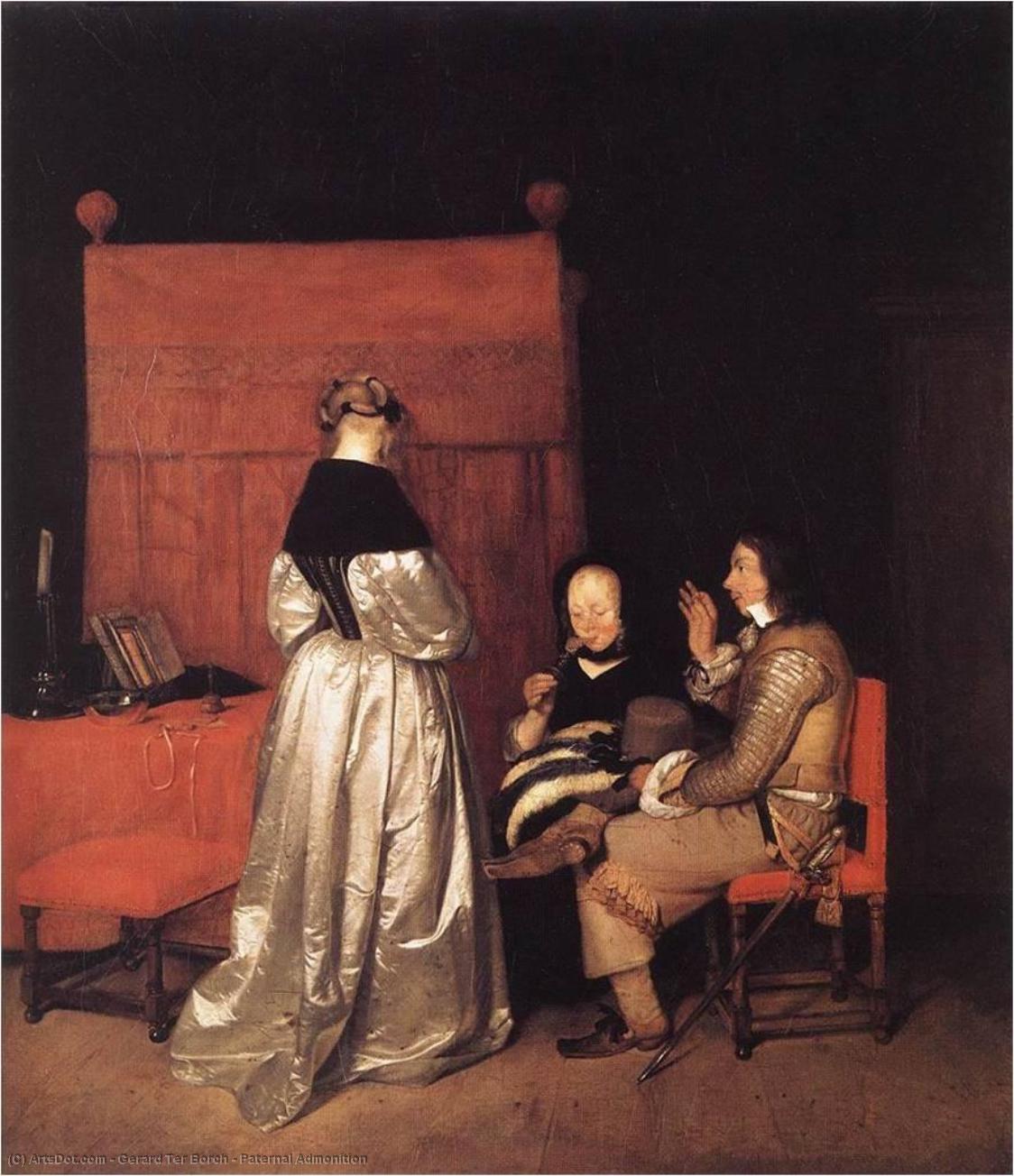
Paternal Admonition
Replikaatin koko
Gerard ter Borch's *Paternal Admonition*, painted around 1654, isn’t merely a portrait; it’s a meticulously crafted tableau of unspoken tension and veiled desire. Within the confines of a modestly furnished room—a subtle blend of domestic comfort and quiet restraint—three figures occupy a space brimming with psychological depth. The painting immediately draws the eye to the woman seated between two men, her posture suggesting both vulnerability and a carefully guarded composure. Her silver satin gown, shimmering with an almost ethereal light, acts as a focal point, demanding attention while simultaneously hinting at a hidden world of pleasure and intrigue.
Ter Borch’s genius lies not in dramatic gestures or overt displays of emotion, but rather in his ability to capture the subtle nuances of human interaction. The man, dressed in the formal attire of a military officer, holds a hat on his lap – a gesture that simultaneously conveys authority and a certain awkwardness. His gaze is directed towards the woman, yet his expression remains ambiguous, leaving us to ponder his intentions. The third figure, partially obscured behind the seated woman, adds another layer of complexity to the scene, suggesting a silent observer or perhaps even a participant in this unspoken exchange.
Technically, *Paternal Admonition* is a remarkable achievement. Ter Borch was a pioneer in Dutch genre painting, renowned for his unparalleled skill in rendering texture and light. He employed a technique of carefully layered glazes to create an astonishingly realistic depiction of fabrics – the luxurious sheen of the satin, the velvet upholstery, even the delicate folds of the woman’s dress are rendered with breathtaking detail. The use of chiaroscuro—the dramatic contrast between light and shadow—further enhances the painting's depth and atmosphere, drawing our attention to key elements while simultaneously creating a sense of mystery.
Notice how the light source seems to originate from an unseen window, casting soft shadows that accentuate the contours of the figures and their surroundings. This masterful manipulation of light not only adds visual interest but also contributes significantly to the painting’s overall mood—a blend of intimacy, restraint, and underlying tension.
The initial interpretation of *Paternal Admonition* as a scene of paternal guidance has been largely superseded by more nuanced readings. While the man undoubtedly holds a position of authority, many scholars now believe that the painting depicts an amorous negotiation between a soldier and a prostitute within a brothel setting. The presence of the bed, the mirror, and the various objects of feminine beauty on the table all lend credence to this interpretation.
However, Ter Borch’s genius lies in his refusal to offer easy answers. He presents us with a scene pregnant with ambiguity, inviting us to interpret the unspoken dynamics between the figures. The woman's averted gaze and the man's hesitant posture suggest a delicate dance of power and desire—a silent conversation that transcends simple categorization.
*Paternal Admonition* offers a fascinating glimpse into the social customs and moral sensibilities of 17th-century Holland. The painting reflects a society where appearances were carefully cultivated, and private interactions often concealed deeper desires. Ter Borch’s ability to capture this complex interplay of public and private life is what makes his work so enduringly captivating.
Reproductions of *Paternal Admonition* can bring this world into your own space, offering a subtle yet powerful reminder of the complexities of human relationships and the enduring allure of unspoken desires. Its quiet intensity and masterful technique make it a truly exceptional addition to any art collection or interior design scheme.

According to Arthur K. Wheelock Jr., Ter Borch “established a new framework for subject matter, taking people into the sanctum of the home”, showing the figures’ uncertainties and expertly hinting at their inner lives. His influence as a painter, however, was later surpassed by Vermeer.
Gerard ter Borch was born in December 1617 in Zwolle in the province of Overijssel in the Dutch Republic. He received an excellent education from his father Gerard ter Borch the Elder, also an artist, and developed his talent very early.
The inscription on a study of a head proves that Ter Borch was at Amsterdam in 1632, where he studied possibly under Willem Cornelisz Duyster or Pieter Codde. Duyster's influence can be traced in a picture bearing the date 1638, in the lonides Bequest (Victoria and Albert Museum). In 1634 he studied under Pieter de Molijn in Haarlem.
- **The Letter**: A masterpiece showcasing ter Borch’s skill in capturing texture and light.
- **The Gallant Conversation**: Engraved by Johann Georg Wille, this piece exemplifies the artist's ability to convey nuanced emotions.
- **Man on horseback (1634)**: An early work demonstrating ter Borch’s emerging talent.
- **Adrian Pauw’s arrival in Münster (1646)**: A significant piece that highlights the artist's narrative capabilities.
- The Hermitage: With six of his works, it boasts one of the largest collections.
- Berlin Museum: Features six pieces, showcasing ter Borch’s international appeal.
- Getty Center: Three of his paintings are part of this esteemed collection.
Ter Borch's influence on Dutch painters like Gabriel Metsu, Gerrit Dou, Eglon van der Neer, and Johannes Vermeer is well-documented. His innovative approach to genre painting has made him a pivotal figure in the history of art.

1617 - 1681 , Alankomaat

Explore the captivating world of Gerard ter Borch, a master of Dutch Golden Age genre painting. Discover his intimate scenes, masterful light, and lasting influence on art history. Learn more at WahooArt.

Explore the Dutch Golden Age of painting! Discover key artists like Vermeer & ter Borch, their innovative techniques, and the rich cultural context behind these Baroque masterpieces. Learn about collecting & appreciating this iconic art period.
Discover the breathtaking beauty of Dutch Golden Age landscapes. Explore the mastery of light, chiaroscuro, and 17th-century realism through an expert art history lens, celebrating the enduring legacy of the Dutch Masters for discerning collectors and art lovers.

Uppoudu hollantilaisen kultakauden taiteen maailmaan! Tutustu Rembrandtin, Vermeerin ja muiden mestareiden ikonisiin maalauksiin. Löydä inspiraatiota kotiisi WahooArt.com:ista – laadukkaat taidevedokset ja sisustustaulut jokaiseen tilaan. Explore the full collection online!

Embark on a cultural journey through the Dutch Golden Age. Explore the masterful interplay of light and shadow in 17th-century masterpieces, from Rembrandt to Vermeer, and discover how this era of profound realism continues to inspire fine art collectors today.

 Esikatselu
 Jaa
Jaa Jaa
Jaa
 Tarkemmat tiedot

 Lataa
Lataa
 Samanlaisia
 Röntgenkuva
 Diaesitys
 Näytä lisää







 Lasivaihtoehto on saatavilla vain alle 110 cm kokoisina teoksina


