Taiteilijan elämäkerta
Georges Seurat: Valon ja tieteen lumoissa
Georges Pierre Seurat, syntynyt Pariisissa 2. joulukuuta 1859, nousi keskeiseksi hahmoksi siirtymävaiheessa impressionismista moderniin taiteeseen. Hänen lyhyt mutta intensiivinen uransa mullisti maalaustaidon Pointillism-tekniikan kehittämisen myötä – tekniikan, joka perustui tieteellisiin periaatteisiin ja horjumattomaan pyrkimykseen optiseen totuuteen. Seuratin tarina on huolellisen havainnoinnin, älyllisen tarkkuuden ja syvän herkkyyden osoitus valon ja värin vivahteille – ominaisuuksia, jotka erottivat hänet aikalaistensa joukosta ja jatkavat yleisön lumoamista tänäkin päivänä. Hänen varhaiselämänsä, vaikka näennäisesti perinteinen, loi pohjan hänen tuleville taiteellisille tutkimuksilleen. Perhe muutti Boulevard de Magenta pian syntymänsä jälkeen, ja hänen isänsä, Antoine Chrysostome Seurat, entinen juridiikan virkamies ja kiinteistöspekulantti, tarjosi nuorelle Georgesille mukavan kasvatuksen, joka mahdollisti pääsyn taideopetukseen. Hän aloitti muodollisen koulutuksen École Municipale de Sculpture et Dessin -koulussa kuvanveistäjä Justin Lequienin oppilaana ja jatkoi myöhemmin opintoihin prestiżissä École des Beaux-Artsissa vuonna 1878, opiskellen Henri Lehmannin johdolla. Nämä varhaiset vuodet antoivat hänelle vankan perustan perinteisille tekniikoille, mutta jopa silloin ainutlaatuinen taiteellinen persoonallisuus alkoi hahmottua – hienostuneen herkkyyden ja nousevan kiinnostuksen järjestelmällistä analyysiä kohtaan yhdistelmä.
Akateemisista juurista kromoluminarismiin
Seuratin taiteellinen kehitys ei ollut äkillinen innovaatio, vaan pikemminkin asteittainen evoluutio, jota ruokki älyllinen uteliaisuus ja tarkka kokeilu. Aluksi hänen työnsä heijasti ajan akateemisia standardeja, osoittaen taitoa piirtämisessä ja kunnioitusta vakiintuneita sommitteluperiaatteita kohtaan. Hän alkoi kuitenkin pian kyseenalaistaa näitä käytäntöjä etsien tieteellisempää lähestymistapaa maalaustaidossa. Hän uppoutui syvälle väriteoriaan, tutkien tiedemiesten, kuten Michel Eugène Chevreulin ja Ogden Roodin kirjoituksia, jotka tutkivat vierekkäisten värien optisia vaikutuksia. Tämä tutkimus muodostui hänen vallankumouksellisen tekniikkansa, kromoluminarismin – värin tieteen – kulmakiveksi ja sen käytännön sovelluksen, Pointillism-tekniikan. Ydinidea oli yksinkertainen: levittää pieniä, erillisiä puhtaan värin pisteitä kankaalle ja luottaa katsojan silmän kykyyn optisesti sekoittaa ne ja luoda elävä, lumoava vaikutelma. Tämä ei ollut pelkästään kirkkaampien värien saavuttamista; se oli ihmisen näköjärjestelmän toiminnan ymmärtämistä valon ja värin suhteen ja tämän tiedon hyödyntämistä dynaamisemman ja mukaansatempaavamman maalauskokemuksen luomiseksi. Hän valmistautui huolellisesti suuriin kompositioihinsa Conté-lyijykynäpiirustuksilla karkealla paperilla, kartoittaen huolellisesti jokaisen pisteen sijoittelun ja osoittaen lähes matemaattista tarkkuutta taiteellisessa prosessissaan.
Innovoinnin virstanpylväät: Merkittävät teokset ja taiteellinen visio
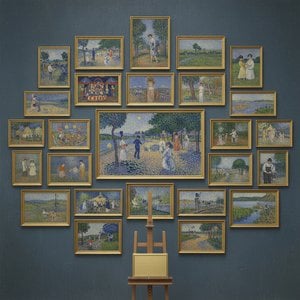
Seuratin tutkimusten ja kokeilujen huipentuma näkyy ehkä parhaiten A Sunday Afternoon on the Island of La Grande Jatte (1884-1886) -maalauksessa, joka oli monumentaalinen teos ja merkitsi Neo-impressionismin alkua. Tämä ikoninen maalaus, jossa kuvataan pariisilaisia nauttimassa rennosta iltapäivää Seinen rannalla, esittelee pointillistisen tekniikan täydessä laajuudessaan. Luvut, jotka on kuvattu huolellisesti sijoitetuista väripisteistä, tuntuvat kimaltelevan ja värisevän valossa luoden seesteisen hiljaisuuden ilmapiirin. Alfalfa, Saint-Denis (1886-1887) osoittaa hänen väriteoriansa soveltamisen maalaismaisemaan, kun taas aikaisemmat teokset, kuten Landscape at Saint-Ouen (1882-1883), paljastavat hänen tyylinsä kehittymisen ja kasvavan kiinnostuksen valon ja ilmakehän vaikutusten tallentamiseen. Jopa kuvaukset modernista Pariisin elämästä, kuten The Eiffel Tower (1889), muuttuivat hänen ainutlaatuisen tekniikkansa kautta, mikä osoittaa harmonisen yhdistelmän teollista nykyaikaa ja taiteellista innovaatiota. Bathers at Asnières (1884), toinen merkittävä teos, tutki vapaa-ajan ja modernin elämän teemoja hänen erityisellä tyylillään ja ennakoi *La Grande Jatten* hienostuneempaa lähestymistapaa. Nämä maalaukset eivät olleet pelkästään kohtauksia esittäviä kuvauksia; ne olivat huolellisesti rakennettuja visuaalisia kokeita, joiden tarkoituksena oli tutkia värin ja havainnon mahdollisuuksia.
Kestävä perintö: Vaikutus ja historiallinen merkitys
Huolimatta traagisesti lyhyestä elämästään – Seurat kuoli vain 31-vuotiaana vuonna 1891 – hänen vaikutuksensa taidemaailmaan oli syvällinen ja kauaskantoisa. Hänen työnsä haastoi perinteiset taiteelliset konventiot ja avasi tien lukuisille myöhemmille liikkeille. Korostus subjektiivisessa ilmaisussa ja uusien tekniikoiden tutkimisessa resonoitui artistien kanssa, jotka pyrkivät irtautumaan akateemisista rajoitteista. Seuratin vaikutusta voidaan nähdä Fauvism-liikkeessä, joka omaksui rohkeita värejä ja ilmeikkäitä siveltimenvetoja; Cubismissa, joka purki muodot geometrisiksi muodoiksi; ja Abstract Expressionismissä, joka priorisoi emotionaalista intensiteettiä ja spontaania eleitä. Seuratin tieteellinen lähestymistapa maalaustaidossa, vaikka aluksi kiistanalainen, laajensi lopulta taiteen mahdollisuuksien määritelmää. Hän osoitti, että taide voi olla sekä älyllisesti tarkkaa että emotionaalisesti koskettavaa – synteesi, joka inspiroi edelleen taiteilijoita tänäkin päivänä. Seuratin perintö ulottuu hänen teknisten innovaatioidensa ulkopuolelle; hän jätti jälkeensä teosten kokoelman, joka vangitsee modernin elämän olemuksen vertaansa vailla olevalla tarkkuudella ja kauneudella, mikä vahvistaa paikkansa todellisena modernin taiteen edelläkävijänä. Hänen maalauksensa ovat edelleen todisteita havainnoinnin voimasta, kokeilusta ja ihmisen kestävistä pyrkimyksistä ymmärtää ympäröivää maailmaa taiteellisen ilmaisun kautta.



 Esikatselu
 Vaihda tulosteeseen
 Jaa
Jaa Jaa
Jaa
 Tarkemmat tiedot

 Lataa
Lataa
 Samanlaisia
 Röntgenkuva
 Diaesitys
 Tilastot

 Näytä lisää






































 Lasivaihtoehto on saatavilla vain alle 110 cm kokoisina teoksina