


x


Museolaatuisia giclée- tai kankaitaulun tulosteita nopealla tuotannolla ja joustavilla viimeistelyvaihtoehdoilla.





























Valitse valmiista mitoistamme sellaiset, jotka vastaavat teoksen alkuperäisiä mittasuhteita.

Voit syöttää omat mitat sopiaksesi tiettyyn kehykseen tai tilaan. Jos valittu koko ei vastaa alkuperäisen kuvan mittasuhteita, rajaamme teosta tai laajennamme kuvaa peilatulla tai yhtenäisellä reunalla. Digitaalinen mallikuva lähetetään hyväksyttäväksi ennen tuotannon aloittamista.
Huomaathan, että näytöllä näkyvä esikatselu ei vastaa lopullista rajausta tai laajennusta. Vain mallikuva näyttää lopullisen sommittelun tarkasti.
Vaikka räätälöityjä kokoja on saatavilla, suosittelemme valitsemaan mitat valmiista listasta alkuperäisten mittasuhteiden säilyttämiseksi.
Toimitus maailmanlaajuisesti () kahdessa viikossa tavallisen 4–5 viikon sijaan. (6 heinäkuu)


untitled (5118)
Replikaatin koko
Georges Braque's “untitled (5118)” is not merely a still life; it’s an immersion into a world saturated with yellow, a vibrant exploration of form and color that stands as a pivotal moment in the artist’s journey. Created during a transitional period between his Fauvist beginnings and the revolutionary development of Cubism, this painting offers a compelling glimpse into Braque's artistic evolution. The canvas bursts forth with a bouquet of flowers contained within a vase, an arrangement seemingly simple yet profoundly sophisticated in its execution. A fragment of a chair subtly anchors the composition, hinting at an interior space and inviting contemplation on domesticity and fleeting beauty.
Braque’s technique in this work is particularly fascinating for its delicate balance between two significant artistic movements. The influence of Fauvism, with its bold, non-naturalistic color palette, is immediately apparent. Intense yellows dominate the canvas, radiating energy and a certain emotional ambiguity. Yet, even within this vibrant display, we see the seeds of Braque’s impending Cubist explorations. He deliberately flattens the perspective, minimizing traditional depth cues to emphasize the two-dimensional surface of the canvas. This isn't about replicating reality; it’s about capturing the *essence* of the flowers – their form, color, and emotional resonance – through expressive brushstrokes and simplified shapes. The visible texture, achieved with oil paint on canvas, adds a tactile quality, inviting the viewer to engage with the artwork on a visceral level.
Born in 1882, Georges Braque was at the heart of Paris’s avant-garde art scene. His early exposure to Impressionism and Post-Impressionism laid the foundation for his artistic development, but it was his encounter with Fauvism that ignited a passion for bold color. However, Braque wasn't content to remain within established boundaries. He embarked on a groundbreaking collaboration with Pablo Picasso, a partnership that would forever alter the course of art history and give birth to Cubism. “untitled (5118)” represents a crucial step in this evolution – a moment where Braque was actively experimenting, pushing the limits of representation, and foreshadowing the fragmented forms and multiple perspectives that would come to define his later work. The painting is a testament to his willingness to challenge conventions and embrace innovation.
The overwhelming presence of yellow in this composition is deeply evocative. While often associated with joy, optimism, and energy, yellow also carries connotations of caution, illness, or even madness. Braque masterfully exploits this duality, creating a sense of emotional tension that underlies the painting’s vibrant surface. The flowers themselves are traditional symbols of beauty, fragility, and the ephemeral nature of life. Their arrangement within what appears to be a domestic setting suggests themes of comfort, contemplation, and an appreciation for simple pleasures. For collectors and interior designers, this artwork offers a compelling blend of historical significance and aesthetic appeal. Its bold color palette and dynamic composition make it a statement piece capable of enlivening any space, while its relatively small scale allows for versatility in various settings.


1882 - 1963 , Ranska
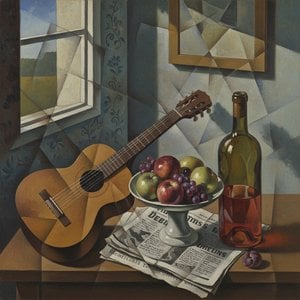
Explore the revolutionary world of Cubist Still Life with WahooArt. Discover Picasso & Braque's groundbreaking techniques, its philosophical roots, and lasting impact on modern art. Expert insights for collectors.

Explore the captivating world of Severin Roesen, a major American still life painter influenced by Dutch masters. Discover his lush compositions and the symbolism within his art – a window into 19th-century America.

Löydä täydellinen taide ruokailutilaasi! WahooArt tarjoaa laajan valikoiman korkealaatuisia öljyvärimaalauksia ja digitaalisia reproduktioita. Inspiroidu klassisesta asetelmataiteesta moderniin abstraktiin – asiantuntijoiden avustuksella.

Explore the rich history of still life painting with WahooArt. Discover Dutch Masters, decode vanitas symbolism & learn about collecting timeless art. Expert insights and museum-quality reproductions.
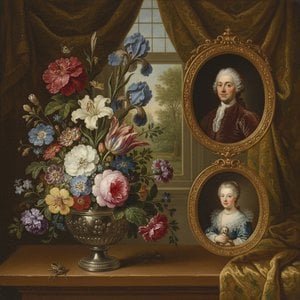
Discover the exquisite detail of Jan van Kessel the Elder's Baroque floral still lifes & captivating miniatures. Explore his artistic legacy, scientific precision, and lasting influence on 17th-century Flemish painting.


Pysy ajan tasalla uusimmista taideuutisista, eksklusiivisista tarjouksista ja sisustusideoista.
Kerro meille projektistasi, niin taideasiantuntijamme tarjoavat sinulle kolme henkilökohtaista taidesuositusta.
Anna meidän kuratoida 3 vaihtoehtoa juuri sinulle – Ilmaiseksi!
 Tilaa maalaus
 Jaa
Jaa Jaa
Jaa
 Tiedot

 Lataa
Lataa
 Samanlaisia
 X-lähikuva
 Diaesitys

 Näytä lisää







 Lasivaihtoehto on saatavilla vain alle 110 cm kokoisina teoksina


