Taiteilijan elämäkerta
Early Life and the Call of the Frontier
George Catlinin elämä alkoi Wilkes-Barressa, Pennsylvaniassa vuonna 1796. Hän oli viides kahdestatoista lapsista, ja hänen isänsä Putnam Catlin oli palettaritar, joka itse kokenut intiaanirohkeuden ja vankinaolon. Hänen äitinsä Polly Suttonin tarinat intiaanien hyökkäyksistä muokkasivat nuoren George’n mielikuvitusta ja herättivät syvän kiinnostuksen länteen – paikkaan, joka oli sekä vaarallinen että romanttinen ihanneluomus. Alun perin koulutukseltaan lakimies, Catlin löysi todellisen kutsunsa ei oikeussalissa vaan luovassa ilmaisussa, kun hän tunsi syvää velvollisuutta dokumentoida intiaanikulttuureja ennen kuin ne hävisivät lopullisesti. Hän jätti lakikantansa vain kaksi vuotta myöhemmin, ohjautuen taiteen maailmaan ja vakuutettuna siitä, että näiden kulttuurien perinteet ja arvot ansaitsevat huolellisen tallentamisen. Tämä ei ollut pelkkää uteliaisuutta; se oli ennakointia, tunne siitä, että länteen kohdistuva laajeneminen muuttaisi näitä yhteisöjä peruuttamattomasti. Varhaiset hänen töitään olivat kaiverruksia Erie-kanavan maisemista, jotka osoittavat hänen teknistä taitoaan ja tarkkuuttaan – ominaisuuksia, jotka myöhemmin nousivat esiin hänen kunnianhimoisemmissa projekteissaan. Nämä alkuinvestoinnit vahvistivat hänen havaintokykyään ja sitoutumisensa tarinankerrontaan visuaalisesti.
Documenting a Vanishing World: The Indian Gallery
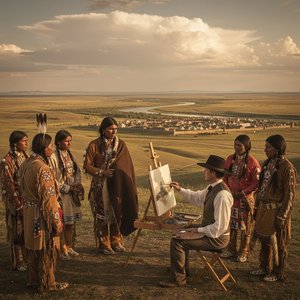
Catlinin merkittävin saavutus oli "Indian Gallery", yli 500 maalauksen kokoelma, joka on omistettu intiaanikulttuurien ja elämäntapojen kuvaamiseen. Hän aloitti matkustuksen Pohjois-Amerikan länsirinteeseen vuonna 1830, käyden Missouri-joen varrella ja tutkien alueita, joissa asui Mandan-, Sioux-, Blackfeet- ja Choctaw-intiaanit. Hän ei ollut vain tarkkailija; Catlin uppoutui näiden yhteisöjen elämään, osallistui seremonioihin, todisti päivittäistä elämää ja solmi suhteita heidän johtajiinsa. Hänen maalauksensa ovat vaikuttavia realistisuudessaan ja eloisuudessaan, vangiten ei vain fyysisiä muotoja vaan myös intiaanikulttuurien arvokkuutta ja monimutkaisuutta. Esimerkiksi *Sham Fight, Mandan Boys* on vilkas kuvaus nuorten Mandanin sotureiden leikkimielisestä taistelusta, joka esittää heidän urheilullisuuttaan ja yhteisöllistä henkeään. Samoin *Mó-sho-la-túb-bee, He Who Puts Out and Kills, Chief of the Tribe* -portraatti kuvaa voimakkaan johtajan, jolla on päättäväinen katse, joka välittää sekä auktoriteettia että viisautta. Catlinin tyyli on tunnettu tarkkuudestaan, usein sisältäen yksityiskohtaisia taustoja, jotka tarjoavat kontekstia hänen aiheilleen – maisemia, tipi-teltoja, seremoniallisia esineitä – kaikki maalattuja huolellisesti. Hän pyrki esittämään intiaanit ei stereotypioiden kohteina vaan yksilöinä, joilla oli rikas kulttuuriperinne ja monimutkaiset sosiaaliset rakenteet, haastaen hänen aikansa yleisiä ennakkoluuloja.
The Journey West and the Creation of a Legacy
Catlinin matka länteen oli vaativa ja muuttava kokemus. Hän kulki tuhansia kilometrejä, tutkien Mandanin, Siouxin, Blackfeetin ja Choctaw-intiaanien elämää. Hänen tavoitteenaan ei ollut vain dokumentoida näitä kulttuureja, vaan myös ymmärtää niitä syvällisesti. Hän oppi heidän kielensä, tapansa ja uskomuksensa, ja hän pyrki esittämään heidät kunnioituksella ja tarkkuudella. Catlinin maalaukset ovat arvokkaita historiallisen tiedon lähteitä, jotka tarjoavat näkymän kulttuureihin, jotka usein jätettiin huomiotta tai vääristeltiin. Hänen työnsä on myös merkittävä taiteellinen saavutus, joka osoittaa hänen taitonsa ja intohimonsa.
Challenges and Recognition
Vaikka "Indian Gallery" oli taideteos ja historiallinen dokumentti, Catlin kohtasi useita haasteita tunnustuksen ja taloudellisen tuen saamisessa. Hän näki, että kokoelman tulisi olla Yhdysvaltain hallinnon omaisuus, jotta se voitaisiin säilyttää kansalliseksi aarteeksi, mutta hänen ehdotuksensa hylättiin toistuvasti. Hänet ei kuitenkaan lannistunut; hän kiersi kokoelman ympäri Amerikkaa ja esitteli sen Lontoossa, Pariisissa ja Brysselissä 1840-luvulla ja 50-luvulla. Nämä eurooppalaiset näyttelyt herättivät laajaa ihailua ja esittelivät maailman, jota yleisö oli aiemmin tuntenut vain toissijaisesti. Catlin julkaisi myös useita kirjoja, joissa kuvattiin hänen matkojaan ja havaintojaan, mukaan lukien *Manners, Customs, and Condition of the North American Indians* (1841) ja *Last Rambles Amongst the Indians of the Rocky Mountains and the Andes* (1868), jotka vahvistivat hänen asemaansa johtavana asiantuntijana intiaanikulttuureista. Hän kuitenkin jatkoi taloudellisia vaikeuksia koko elämänsä ajan. Epätoivoissaan hän luovutti yli 400 maalausta pienempään "cartoon-kokoelmaan", mutta tämä yritys ei tuottanut merkittävää voittoa. Tämä aika oli ironista – taiteilija, joka omisti elämänsä katoavan kulttuurin säilyttämiseen, kamppaili omien selviytymistensä kanssa.
Legacy and Historical Significance
George Catlin kuoli vuonna 1872, jättäen jälkeensä perinnön, joka resonoi edelleen tänään. Vaikka hänen työnsä ei saavuttanut täyttä arvostusta elinaikanaan, se on sittemmin tunnustettu arvokkaaksi historiallisena tiedonlähteenä intiaanikulttuureista ennen laajenemista länteen. Hänen maalauksensa tarjoavat näkymän kulttuureihin, jotka usein jätettiin huomiotta tai vääristeltiin. Hän ei ollut pelkkä taiteilija; hän oli kronikööri, todistaja ja intohimoinen puolestapuhuja katoavasta elämäntavasta – perintö, joka inspiroi edelleen meitä ymmärtämään Amerikan historiaa ja kulttuuria.



 Esikatselu
 Vaihda tulosteeseen
 Jaa
Jaa Jaa
Jaa
 Tarkemmat tiedot

 Lataa
Lataa
 Samanlaisia
 Röntgenkuva
 Diaesitys
 Tilastot


 Näytä lisää






































 Lasivaihtoehto on saatavilla vain alle 110 cm kokoisina teoksina